
OUR MISSION IS TO TAILOR FOR EACH CLIENT A BEAUTIFUL, FUNCTIONAL AND ENDURING OUTDOOR ENVIRONMENT THAT WILL PROVIDE A PLACE OF SERENITY FOR FRIENDS AND FAMILY TO APPRECIATE FOR YEARS TO COME.

BuildCal Landscape Landscape Maintenance & Planting Article
Weeds Taking Over Your Beds and Gravel? Why Landscape Fabric Often Fails (and What Works)
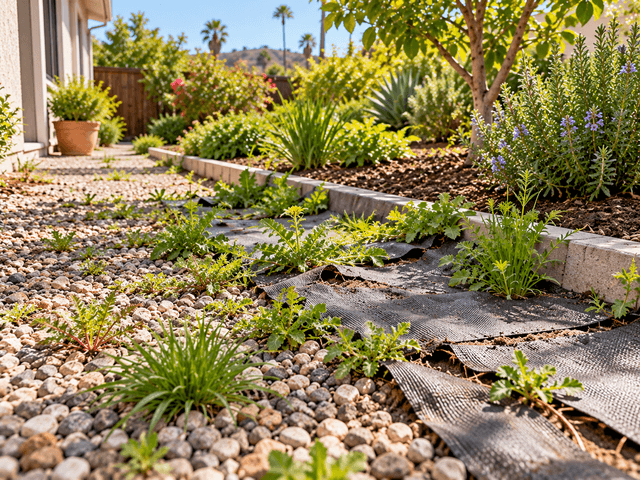
Does landscape fabric work for weeds? For a year or two, sometimes — but in most Southern California planting beds and gravel areas, woven or plastic weed fabric ends up making the problem worse, not better. Weeds root in the mulch and debris that collect on top of the fabric, the fabric clogs and starves the soil beneath it, and the edges lift and show through. The approach that actually holds weeds back long term is healthy soil, the right depth of mulch or gravel, clean edging, and sensible seasonal upkeep. Here's why the fabric usually disappoints, and what a licensed Glendale landscaper recommends instead.
Does landscape fabric work for weeds?
In planting beds, landscape fabric is rarely a lasting weed solution. Within a season or two, organic matter builds up on top of it and new weeds root in that layer — above the fabric, where it can't stop them — while the barrier blocks water, air, and compost from reaching the soil below. The one place fabric genuinely earns its keep is as a geotextile separation layer under a gravel or hardscape base, not as a weed barrier in a garden bed. For beds, mulch and soil health do the real work.
What does landscape fabric actually do in a bed?
Landscape fabric is a woven or spun sheet laid over soil and topped with mulch or gravel, meant to block weeds while letting some water through. The idea is reasonable; the problem is how it behaves over time in a real Southern California yard. Weed seeds blow in constantly and settle into whatever sits on top of the fabric. As mulch breaks down and dust and leaf litter accumulate, that top layer becomes a thin, fertile seedbed — and weeds happily root in it, right above the barrier that was supposed to stop them.
Meanwhile, the fabric works against the plants you want. It slows the natural cycle of compost and organic matter feeding the soil, it can clog and shed water instead of absorbing it, and desirable plant roots sometimes grow into it and get damaged during cleanup. Good planting beds depend on living, breathing soil, which is why thoughtful landscape design and planting treats soil health as the foundation rather than sealing it off.
Why does weed fabric fail in Southern California beds?
Weeds root on top, not underneath
This is the core issue. Fabric only blocks weeds coming up from below. The weeds most homeowners fight are growing in the mulch, dust, and decomposed debris that collect on the surface — so the barrier is in the wrong place to help.
The fabric clogs and starves the soil
Over time the weave fills with fine particles. Water can pool or run off instead of soaking in, air exchange drops, and the soil below slowly compacts and loses the organic matter that keeps plants healthy. A bed that should improve each year instead declines.
Edges lift and it shows through
As mulch thins and shifts, fabric edges work loose, curl up, and become visible — an unsightly result that also leaves gaps where weeds push through. Removing failed fabric later is a labor-intensive job, because roots and soil have grown into and over it.
What actually stops weeds in beds and gravel?
The durable approach is layered and low-tech, and it's what tends to keep weeds down season after season.
- Start with clean soil prep. Clear existing weeds and roots before planting or mulching, so you're not sealing problems in.
- Mulch at the right depth. A generous layer of mulch — maintained and topped up — smothers most germinating weeds and holds moisture in our dry climate. Our guide to the best mulch for Southern California covers the choices.
- Edge the beds cleanly. A defined edge or border keeps grass and weeds from creeping in from lawns and pathways.
- Plant densely. Well-chosen, appropriately spaced plants shade the soil and leave weeds little room or light.
- Use pre-emergent on a schedule, by the label. A pre-emergent applied at the right time of year can stop many weed seeds from sprouting. Follow the product label's rates and timing exactly — that timing is what makes it work.
- Keep up light, regular weeding. Pulling young weeds before they seed is far easier than fighting an established patch.
For gravel areas, the same principles apply: a proper, compacted base and depth matter more than a sheet of fabric. Our comparison of decomposed granite, gravel, and pavers walks through mud, weeds, and upkeep honestly, and if your weeds are coming up through a paved surface, weeds between pavers explains why that happens and how to stop it.
The one place fabric belongs
Landscape fabric isn't useless — it's just misused in beds. As a geotextile separation layer beneath a gravel path, decomposed-granite surface, or hardscape base, it keeps the aggregate from sinking into and mixing with the soil below, which helps the surface stay stable. That's a structural role under the base, not a weed barrier at planting level. Proper base preparation like this is part of quality hardscape construction, where what's underneath the surface matters more than the surface alone.
What to check before starting your landscaping project
- Are your weeds rooting in surface mulch and debris, or truly coming up from below?
- Is there old, failing landscape fabric that needs removing first?
- How healthy is the soil — compacted and water-shedding, or loose and absorbent?
- Is the mulch deep enough and topped up, or thin and patchy?
- Are the bed edges defined, or are weeds creeping in from a lawn or path?
- For gravel or paths: is there a proper compacted base, or just material over bare soil?
Bed and gravel weed control compared
| Approach | When you'd use it | Key considerations | Notes before starting |
|---|---|---|---|
| Landscape fabric in beds | Rarely recommended | Weeds root above it; clogs and starves soil; edges lift | Tends to fail and is costly to remove later |
| Mulch + soil health | Most planting beds | Depth matters; top up over time; feeds the soil | The reliable long-term approach in SoCal |
| Pre-emergent (by label) | Beds and gravel with recurring seed | Timing and label rates are everything | A supplement to mulch, not a standalone fix |
| Geotextile under base | Gravel paths and hardscape | Separation layer below aggregate, not a bed barrier | A structural use — correct and durable here |
What mistakes lead to a weedy, high-maintenance yard?
- Laying weed fabric over beds and expecting it to last.
- Mulching over existing weeds and roots instead of clearing first.
- Letting mulch get too thin, so weed seeds reach the soil.
- Skipping clean edges, so grass and weeds migrate in.
- Applying pre-emergent at the wrong time of year, so it misses the germination window.
- Building gravel areas over bare soil with no proper base.
How does BuildCal help you?
BuildCal is a licensed landscape contractor (California State License Board / CSLB) in Glendale, and we handle weeds the way that actually lasts: assessing your soil and existing beds, removing failed fabric where it's causing problems, and rebuilding beds with healthy soil, the right mulch, clean edging, and sensible planting. For gravel and hardscape, we prepare a proper base — using geotextile in its correct structural role underneath, not as a bed barrier. Every project starts with an on-site assessment and a written estimate and scope before work begins, and we'll give you a realistic, seasonal maintenance plan rather than a promise that weeds will never return.
Steps to request your project from BuildCal
- Share a few photos of your beds or gravel areas and a short description of the weed problem.
- Schedule an on-site assessment of the soil, drainage, edging, and existing materials.
- Receive a written estimate with scope, materials, and timeline.
- Approve the plan and schedule the work.
- Installation and a final walkthrough, with mulch and upkeep notes.
Frequently asked questions about landscape fabric and weeds
So does landscape fabric ever work for weeds?
It can suppress weeds briefly right after installation, which is why it seems to work at first. But in planting beds it usually fails within a season or two, because weeds root in the mulch and debris on top of it while it starves the soil below. Its genuinely useful role is as a separation layer under gravel or hardscape bases, not as a weed barrier in garden beds.
What's the best weed barrier for flower beds?
The most effective "barrier" for beds isn't a sheet at all — it's a maintained layer of mulch over clean, healthy soil, combined with dense planting and clean edges. This smothers most germinating weeds, holds moisture in our dry climate, and feeds the soil over time. A properly timed pre-emergent, applied by the label, can supplement it. Together these outperform fabric for long-term weed control.
Is mulch or landscape fabric better in Southern California?
For planting beds, mulch is the better choice in our climate. It conserves water, moderates soil temperature, suppresses surface weeds, and improves the soil as it breaks down — all things fabric works against. Mulch does need topping up over time, but that upkeep is minor compared with removing failed fabric later. Fabric's advantage only appears in a structural role beneath gravel or hardscape.
Can I just put gravel over landscape fabric to stop weeds?
Gravel over fabric over bare soil tends to disappoint. Dust and organic matter settle into the gravel and weeds root in that layer, while the fabric can shift and show through. A longer-lasting gravel area depends on a proper, compacted base and adequate depth. If you want the honest trade-offs between decomposed granite, gravel, and pavers for mud, weeds, and upkeep, our comparison guide covers them.
Why do weeds keep coming back in my gravel?
Usually because the weeds are growing in the fine material that collects on top of the gravel, not from the ground beneath. Wind-blown seed, dust, and decomposed debris create a shallow seedbed right in the surface. Adequate depth, a clean base, periodic refreshing of the gravel, and a label-timed pre-emergent manage this far better than a fabric sheet underneath ever will.
Do you remove old landscape fabric?
Yes. When failing fabric is causing lifted edges, poor drainage, or compacted soil, we remove it as part of rebuilding the bed properly. It can be labor-intensive because roots and soil grow into it, so we assess it on-site and include it in the written scope and estimate before any work begins.
Request your estimate today
If you're tired of asking whether landscape fabric works for weeds and just want beds and gravel that stay clean, BuildCal can help. Send us a few photos of your space to schedule an on-site assessment in Glendale or the greater Los Angeles area and get a written estimate before any work begins. Call (818) 303-1570 or request your free estimate online.
Thinking about a new outdoor space?
We’d love to hear your ideas. Let’s explore what’s possible—no pressure, just a friendly conversation.
Give us a call:
+1 (818) 303-1570
Frequently Asked Question
HOW CAN WE PLAN A LOW-MAINTENANCE LANDSCAPE?
There are several ways to create a lush and lasting low maintenance landscape. Such as: installing smaller planting beds, filling the property with hardy plants and border color (such as perennials), applying a 3” layer of mulch to retain moisture, picking correct plants for the existing sun exposure, soil conditions, and water availability.