
OUR MISSION IS TO TAILOR FOR EACH CLIENT A BEAUTIFUL, FUNCTIONAL AND ENDURING OUTDOOR ENVIRONMENT THAT WILL PROVIDE A PLACE OF SERENITY FOR FRIENDS AND FAMILY TO APPRECIATE FOR YEARS TO COME.

BuildCal Landscape Outdoor Lighting Article
Landscape Lighting Ideas for Safety & Curb Appeal
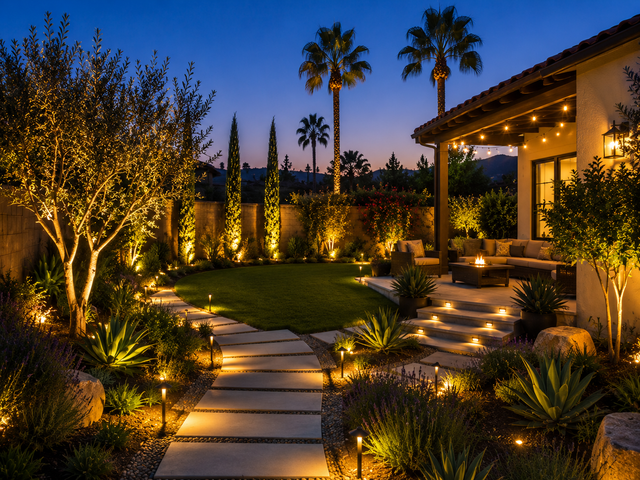
The right outdoor lighting does three jobs at once: it makes a yard safer to move through after dark, it boosts curb appeal by highlighting the home's best features, and it extends how long you can actually enjoy the space at night. The best landscape lighting ideas Glendale homeowners can use aren't about flooding the yard with light — they're about placing the right light, in the right amount, in the right spot.
This guide covers how to layer light, how to use it for safety and security, why energy-efficient low-voltage LED systems make sense, what smart controls add, and the design tips that separate a polished scheme from a harsh one. For help bringing it together, explore our landscaping and lighting services.
Lighting Layers
Good outdoor lighting borrows a principle from interior design: layering. Instead of one bright source, you combine several light types so the yard has depth, dimension, and function.
- Path and step lighting. Low fixtures that guide movement along walkways, stairs, and level changes — practical and welcoming. Pair them with a well-designed front yard walkway.
- Uplighting. Fixtures aimed upward to feature trees, columns, and architectural details — the backbone of curb appeal.
- Downlighting and moonlighting. Fixtures placed high in trees or eaves to cast a soft, natural glow over a patio or lawn.
- Accent and wash lighting. Spotlights for a focal point and gentle wash light to graze a textured wall or hedge.
Layering these turns a flat, dark yard into one with depth — especially effective around a patio or outdoor living area and throughout a finished backyard living space.
Safety & Security
Beyond beauty, outdoor lighting safety is one of the strongest reasons to invest in a system. Dark steps, uneven paths, and unlit entries are where accidents happen, and shadowy corners are what intruders look for.
Focus on the areas that matter most: illuminate steps and level changes, light the full length of walkways and the driveway, and brighten entries so visitors arrive safely and the door is clearly visible. For security, well-placed lighting that removes dark hiding spots is more effective — and far more pleasant — than a single glaring floodlight. Motion-activated fixtures at side gates and entries add a layer of deterrence while keeping the rest of the scheme calm and ambient. The goal is even, purposeful coverage that improves safety without turning the yard into a stadium.
Energy-Efficient LED
Modern landscape lighting runs on low-voltage LED systems, and for good reason. A low-voltage (12-volt) system steps power down from household current, making it safer to work around planting and easier to adjust as the landscape grows.
LED fixtures use a fraction of the energy of older halogen lamps and last far longer, which means lower running costs and less maintenance over time. They also run cool and come in a range of color temperatures. For landscape use, a warm white in the 2700K-3000K range gives an inviting, natural glow, while cooler tones tend to look harsh outdoors. Choosing quality low-voltage LED fixtures up front pays off in both efficiency and the quality of light. Energy-conscious lighting also pairs naturally with a water-wise, drought-tolerant landscape for an efficient yard overall.
Smart Controls
Controls are what make a lighting system effortless. At a minimum, a timer or photocell turns the lights on at dusk and off late at night, so you're never lighting an empty yard or forgetting to switch on.
From there, smart options add flexibility: app-based control to adjust lighting from your phone, separate zones so you can light the entry without lighting the whole backyard, dimming to set the mood, and scenes that combine zones for entertaining versus everyday use. Motion integration ties security lighting into the same system. Together, these controls improve both convenience and efficiency, since lights run only when and where you need them.
Design Tips
A few principles keep a landscape lighting scheme looking professional rather than busy:
- Less is more. Avoid the runway effect of evenly spaced path lights; light for pools and pockets of glow, not a continuous line.
- Light the effect, not the fixture. Conceal fixtures so you see the glow on a tree or wall, not the source.
- Keep color temperature consistent. A single warm tone throughout looks intentional; mixing colors looks accidental.
- Highlight a few focal points. Feature a specimen tree, a hardscape detail, or an outdoor kitchen rather than lighting everything equally.
- Plan with the landscape. Design lighting alongside planting and structures so it complements the overall design rather than being added on later.
Because outdoor lighting involves transformers, wiring, and fixture placement that affects the whole look, professional design and installation produce a cleaner, safer result. See finished schemes in our portfolio.
Light Up Your Yard the Right Way
If you want a yard that's safer at night and more striking from the curb, a thoughtfully designed lighting plan is one of the highest-impact upgrades available. Book a Lighting Consultation and we'll walk your space, identify the features worth highlighting, and design a layered, energy-efficient scheme for your Glendale, CA home. Call +1 (818) 303-1570 or contact us to get started — and explore our landscaping services for the full picture.
Frequently Asked Questions
What are the best landscape lighting ideas for a Glendale yard?
The best ideas layer several light types: path and step lights for safe movement, uplighting to feature trees and architecture, downlighting for a soft natural glow, and accent lighting for focal points. Layering this way - rather than relying on one bright source - gives the yard depth, improves safety, and boosts curb appeal after dark.
How does outdoor lighting improve safety and security?
Outdoor lighting safety comes from illuminating steps, level changes, walkways, driveways, and entries so people move through the yard without tripping or stumbling in the dark. For security, well-placed lighting removes shadowy hiding spots, and motion-activated fixtures at gates and entries add deterrence - which is more effective and more pleasant than a single glaring floodlight.
Is low-voltage LED landscape lighting energy efficient?
Yes. Low-voltage LED systems use a fraction of the energy of older halogen lamps and last far longer, lowering both running costs and maintenance. The 12-volt design is also safer to work around planting and easy to adjust as the landscape grows, making low-voltage LED the standard for modern landscape lighting.
What color temperature is best for landscape lighting?
For landscape use, a warm white in the 2700K to 3000K range gives an inviting, natural glow that flatters plants and architecture. Cooler, bluer tones tend to look harsh outdoors. Keeping a single consistent color temperature throughout the yard makes the whole scheme look intentional rather than pieced together.
Should I install landscape lighting myself or hire a pro?
Simple plug-in fixtures can be DIY, but a full layered system involves transformer sizing, wiring runs, and fixture placement that strongly affects the final look and safety. Professional design and installation produce a cleaner, more reliable result. Book a Lighting Consultation at +1 (818) 303-1570 to plan a scheme for your yard.
Thinking about a new outdoor space?
We’d love to hear your ideas. Let’s explore what’s possible—no pressure, just a friendly conversation.
Give us a call:
+1 (818) 303-1570
Frequently Asked Question
HOW DOES THE DESIGN PROCESS WORK?
While the process may vary depending on the designer, the client’s needs, and the complexity of the project, most residential design projects include the following:
Initial Consultation, This is a chance to meet the designer and review the requirements and objectives of the project. Many designers charge for this visit, so to get the most out of the experience, ask the designer the best way to prepare and be sure you understand exactly what will be covered at this meeting.
Concept Plan. After listening to your ideas and priorities, the designer analyzes the site’s character, strengths and problems, and then develops one or more alternative concept plans for review.
Master Plan. The final master plan represents the culmination of your choices with the designer, and typically includes a complete spatial layout for your outdoor living spaces and other hardscape or architectural concepts.
Planting Plan. This is a working drawing from which the garden will actually be planted, and includes botanical names, container sizes, specific plant locations, and planting instructions to the contractor.
Additional Plan Documents. Depending on the scoop of your project, your designer may also provide a lighting plan, specialized guidelines on planting or irrigation, or notes and sketches on design elements such as water features or furniture and accessories placement.
Installation Assistance Many landscape designers will assist you in soliciting and reviewing construction bids, including referring contractors appropriate for your project. Others may choose to provide drawings only. Designers often stay involved throughout the installation phase to advise on design modifications, material selections and purchase and placement of garden art and accessories.