
OUR MISSION IS TO TAILOR FOR EACH CLIENT A BEAUTIFUL, FUNCTIONAL AND ENDURING OUTDOOR ENVIRONMENT THAT WILL PROVIDE A PLACE OF SERENITY FOR FRIENDS AND FAMILY TO APPRECIATE FOR YEARS TO COME.

BuildCal Landscape Landscape Maintenance & Tree Care Article
Palm Trees in SoCal - Trimming, Skinning, Mess, Rats — and When One Should Come Out
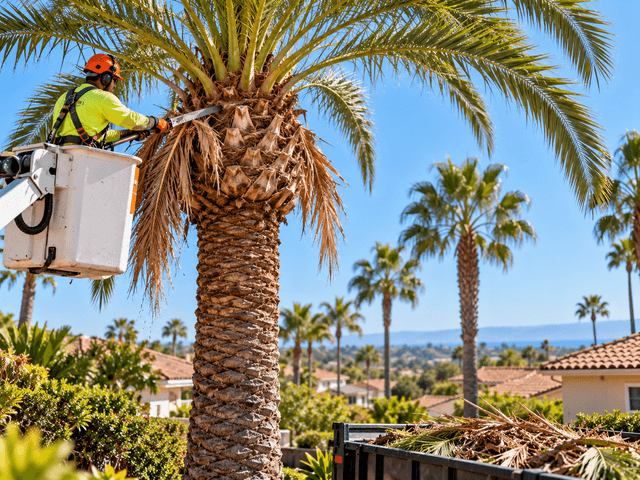
Good palm tree trimming in SoCal is mostly about restraint: remove the dead and dying fronds and the fruit stalks, skin the old frond bases without cutting live trunk, and keep the crown full. Over-pruning — the "hurricane" or "pineapple" cut that strips green fronds — stresses the palm and does more harm than good. Overgrown palms also hide rats, drop messy fronds, and sometimes outgrow their spot entirely. Here's how to keep your palms safe and tidy, when to call a specialist for tall work, how to handle the rat problem, and when removal is the honest answer.
When do you need palm tree trimming?
Most palms need attention once or twice a year, mainly to remove dead, browning, or hanging fronds and the flower and fruit stalks that create mess and attract pests. You need it sooner if fronds are dropping on walkways or cars, if a dense "skirt" of dead fronds has built up around the trunk (prime rat habitat), or if seed and fruit litter is staining hardscape. The goal is a clean, healthy crown — not a stripped one. Very tall palms are a safety job for crews with the right equipment.
What does palm tree trimming and maintenance involve?
Palm maintenance covers a few related tasks: removing dead or dying fronds, cutting off flower and fruit stalks, clearing fallen frond litter, and sometimes "skinning" the old leaf bases off the trunk for a clean look. Done well, it keeps the palm healthy, reduces mess, and removes the sheltered pockets pests love. Palm and tree work sits within BuildCal's landscape design, planting, and tree services, and because every palm's height, species, and setting differ, the right scope is confirmed during an on-site look rather than guessed from the curb.
Conservative trimming, not a "hurricane cut"
The single most important rule is to trim conservatively. Green, healthy fronds are the palm's food factory — stripping them up into a thin tuft (the "pineapple" or "hurricane" cut) stresses the tree, slows growth, and can invite problems. Proper trimming removes only fronds that are dead, dying, broken, or clearly hanging below horizontal, plus the fruit and flower stalks. A full, rounded crown is a healthy crown.
Skinning without cutting live tissue
"Skinning" removes the old, dry frond bases from the trunk for a smooth, finished appearance. The key is that it should take off only the loose, dead bases — never cut into the living trunk tissue underneath, which doesn't heal and can open the palm to stress and pests. It's a cosmetic refinement done carefully, not an aggressive carving.
Why do palms attract rats, and what should you do?
An untrimmed palm builds a thick skirt of dead fronds around the trunk, and that dense, dry, sheltered space is ideal cover for roof rats — common across the San Fernando and San Gabriel Valleys. Fruit and seed add a food source. Landscaping's role in the rat problem is habitat removal: clearing the frond skirt, removing fruit stalks, and eliminating the harborage that makes the palm attractive in the first place.
What landscaping should not do is poison. Rodenticides cause secondary poisoning in pets and the hawks and owls that help control rodents, and they don't fix the underlying shelter. If you have an active rat infestation, bring in a licensed pest-control professional for the animals themselves, and let a landscaper handle the frond cleanup and harborage removal that keep them from coming back.
Palm frond mess and cleanup
Beyond pests, overgrown palms are simply messy. Heavy fronds fall without warning — a real hazard over driveways, walkways, and parked cars — and fruit and seed stain patios and feed weeds. Regular palm frond cleanup keeps the area safe and tidy and protects your hardscape. If seed from a palm has been sprouting volunteer plants around the yard, our guidance on choosing native or non-native plants in Glendale is a useful companion read when you're rethinking what goes back in.
When should a palm tree come out?
Sometimes the honest recommendation is removal rather than endless maintenance. Common reasons include a palm that has outgrown its space or is crowding the house or power lines, one that is dead or declining, a species that drops excessive fruit and mess, or a tree whose constant pest and litter problems outweigh its value. Removing very tall palms is heavy, specialized work, and what's left behind matters too — our overview of tree stump removal options explains how the stump is handled afterward. If you're replacing the palm with something more suited to the yard, our guide to shade tree types for Southern California yards can help you choose.
Before removing any palm, verify local rules — some cities require a permit to remove certain trees, and street or parkway trees are typically protected. This is handled as part of the broader tree services BuildCal offers under additional yard and property services.
Who typically needs palm tree work?
This applies to homeowners with mature or overgrown palms, especially tall Mexican fan palms and similar species common across Glendale, La Crescenta, La Cañada, and the valleys. HOAs and property managers with rows of street or median palms rely on regular trimming for safety and appearance, and commercial properties use scheduled palm maintenance to keep entrances clean and hazard-free.
What to check before starting your palm project
- How tall is the palm, and can it be safely reached — or does it need a specialist crew and equipment?
- Are fronds dead and hanging, or are you being tempted into stripping healthy green ones?
- Is there a thick frond skirt or fruit load creating rat habitat and mess?
- Do you have an active rat problem that needs a pest professional, separate from the trimming?
- Is the palm threatening a roof, wall, walkway, or power line?
- If removal is likely, have you checked whether your city requires a permit?
Palm care tasks at a glance
| Task | When you'd need it | Key considerations | Notes before starting |
|---|---|---|---|
| Conservative trimming | Once or twice a year for most palms | Remove only dead/dying fronds and fruit stalks; keep crown full | Avoid the "hurricane"/"pineapple" cut |
| Skinning | For a clean, finished trunk | Remove loose dead bases only; never cut live trunk tissue | Cosmetic; done carefully |
| Frond-skirt / harborage removal | When rats or heavy litter are an issue | Clears shelter and food; no poisons | Pair with a licensed pest pro for active rats |
| Palm removal | Outgrown, declining, hazardous, or too messy | Tall-palm removal is specialized; stump handled separately | Verify local permit rules first |
What mistakes lead to a damaged palm or an unsafe job?
- Over-pruning healthy green fronds into a thin tuft, stressing the palm.
- Cutting into live trunk tissue while skinning.
- Attempting tall-palm work without the right training, equipment, or safety setup.
- Using rat poison instead of removing the frond skirt and calling a pest professional.
- Letting fruit and fronds build up over walkways and cars until they become a hazard.
- Removing a protected or street palm without checking whether a permit is required.
How does BuildCal help you?
BuildCal is a licensed landscape contractor (California State License Board / CSLB) in Glendale, and we approach palms the right way: conservative trimming that keeps the crown healthy, careful skinning that doesn't harm the trunk, and removal of frond skirts and fruit that create mess and pest habitat. For tall palms that call for specialized crews and equipment, safety drives the plan. We'll tell you plainly when a problem belongs to a licensed pest-control professional — active rats — rather than to a landscaper, and we help you weigh maintenance against removal when a palm has simply outgrown its place. Every job starts with an on-site assessment and a written estimate and scope, and we note that removal may require a city permit depending on the tree and location.
Steps to request your project from BuildCal
- Share a few photos of the palm and surroundings, with a short description of the problem.
- Schedule an on-site assessment of the palm's height, health, access, and setting.
- Receive a written estimate with scope, approach, and timeline.
- Approve the plan and schedule the work.
- Trimming or removal, followed by cleanup and a final walkthrough.
Frequently asked questions about palm tree trimming in SoCal
How often should palm trees be trimmed?
Most palms in Southern California do well with trimming once or twice a year, mainly to remove dead or dying fronds and the fruit and flower stalks. Species, location, and how much mess or pest activity a palm creates all affect the schedule. Street-facing and commercial palms are often done more regularly for safety and appearance. The aim is a clean, full crown — not frequent heavy pruning.
What is a "hurricane cut," and why is it bad?
A "hurricane" or "pineapple" cut strips most of the green fronds, leaving only a small tuft at the top. It's popular because it looks dramatic and delays the next trim, but it stresses the palm by removing the healthy fronds it needs to feed itself, can slow growth, and may make the tree more vulnerable. Proper trimming removes only dead, dying, or hazardous fronds and keeps the crown full.
What does "skinning" a palm mean?
Skinning removes the old, dry frond bases from the trunk to give it a clean, smooth appearance. The important limit is that it should take off only the loose, dead material — never cut into the living trunk tissue beneath, which doesn't heal and can stress the palm or invite pests. It's a careful cosmetic step, best left to someone who knows where that line is.
How do I get rid of rats living in my palm tree?
Two things work together. A landscaper removes the dead-frond skirt and fruit that give rats shelter and food — the habitat side of the problem. For the rats themselves, use a licensed pest-control professional rather than poisons, which endanger pets and predatory birds and don't address the shelter. Clearing the palm and keeping it trimmed makes it far less attractive to rodents going forward.
Do I need a permit to remove a palm tree?
Possibly. Some cities require a permit to remove certain trees, and street, parkway, or protected trees are typically regulated regardless of where they stand. Because the rules vary by city and situation, it's best to verify with your local authority before removal. We flag this during the on-site assessment so there are no surprises, and we factor it into the scope and timeline.
Can you remove a very tall palm safely?
Tall-palm removal is heavy, specialized work that requires the right crew, equipment, and safety setup — it's not a DIY job. The height, access, and what's around the palm (roofs, walls, power lines) all shape how it's done and how long it takes. We assess these on-site and build the safest practical approach into the written estimate before any work begins.
Request your estimate today
If you need palm tree trimming in SoCal, help with frond mess and rats, or an honest opinion on whether a palm should be removed, BuildCal can help. Send us a few photos of your palms to schedule an on-site assessment in Glendale or the greater Los Angeles area and get a written estimate before any work begins. Call (818) 303-1570 or request your free estimate online.
Thinking about a new outdoor space?
We’d love to hear your ideas. Let’s explore what’s possible—no pressure, just a friendly conversation.
Give us a call:
+1 (818) 303-1570
Frequently Asked Question
IS THERE A FEE FOR THE INITIAL CONSULTATION?
No, we do not charge for the initial site visit. This is your opportunity to share your ideas and vision for your landscape project, start the process of design by discussing initial ideas, pin-point any landscape problems you are having, and get a scope of the overall size of scope. Plus this gives you the opportunity to meet us, learn more about our company, and ask questions.