
OUR MISSION IS TO TAILOR FOR EACH CLIENT A BEAUTIFUL, FUNCTIONAL AND ENDURING OUTDOOR ENVIRONMENT THAT WILL PROVIDE A PLACE OF SERENITY FOR FRIENDS AND FAMILY TO APPRECIATE FOR YEARS TO COME.

BuildCal Landscape Landscape & Hardscape Article
Tree Stump or Dead Tree in the Way? Removal, Grinding, and What to Do With the Space
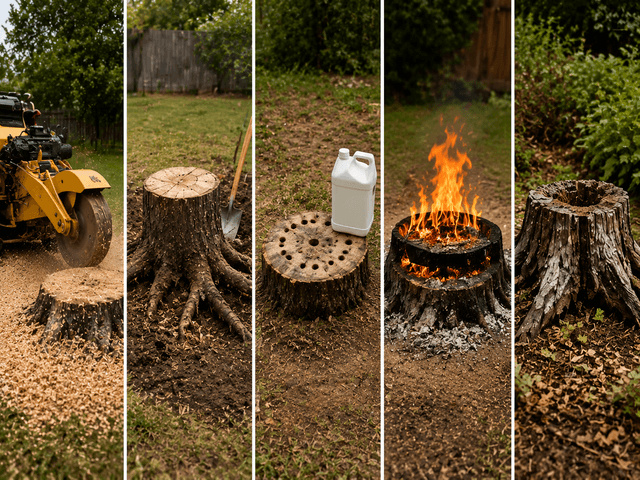
A tree comes down, and what's left is a stump — sometimes a low grindable stub, sometimes a wide root mass sitting exactly where you want a patio or a new tree. The right tree stump removal options depend far less on the stump itself than on what you plan to do with the space afterward. Grinding is often enough to reclaim a lawn or a simple planting bed, but it leaves substantial roots below grade — a problem when the next step is hardscape, a wall, a driveway, a utility run, or a replacement tree that needs real soil. Those situations usually call for fuller excavation. This guide compares grinding against full removal, then covers what comes next — replanting, turning a stump into a planter, and clearing roots for a patio — so the removal method fits the finished project instead of creating a repair later.
Which Tree Stump Removal Options Fit Your Project?
Stump grinding is often appropriate when the goal is to remove the visible stump and reclaim surface for lawn or shallow planting. Full stump removal is more disruptive but may be the better choice when roots occupy the footprint of a patio, walkway, wall, utility route, or new tree. It depends on stump size, root spread, access, soil, drainage, nearby structures, and the planned use of the space.
What Does Stump Removal Actually Involve?
Stump work begins with an assessment of the remaining trunk, surface roots, buried roots, soil, utilities, irrigation, paving, walls, fences, and access. The team should also identify whether the tree is dead, declining, hazardous, or part of a larger tree-health issue. A dead or unstable tree may require an arborist before landscape work starts.
Stump Grinding vs Removal What's the Difference?
The practical decision in stump grinding vs removal is how much of the stump and root system must be cleared for the next use. Grinding cuts the stump below the surrounding surface and produces chips. It is often faster and requires less excavation, but substantial roots may remain below grade. Full removal excavates the stump and a greater portion of the root mass, which can create a larger disturbed area but leaves more flexibility for construction or replanting.
When Is Dead Tree Removal Necessary?
Dead tree removal may be necessary when a standing tree has failed, is unstable, has major dead branches, obstructs construction, or presents a hazard to people, buildings, vehicles, fences, or utility lines. The removal method depends on the tree's size, lean, access, surrounding structures, and condition. A landscape contractor can coordinate the site afterward, but tree-risk decisions may require an arborist or tree-removal specialist.
Do You Need a Permit or HOA Approval?
Tree removal, stump excavation, grading, retaining walls, patios, fences, and utility work can be subject to different city, county, building, public-works, tree-protection, or HOA requirements. Rules can vary by location, tree type, size, property conditions, and project scope. A homeowner should confirm current requirements with the relevant Glendale or Los Angeles department and the HOA before work begins.
Can You Turn a Stump Into a Planter?
A stump into planter idea can work as a temporary decorative feature in some settings, but it is not a universal solution. A hollowed stump can retain moisture, continue to decay, attract insects, or become unstable. The planting cavity may also be too shallow or poorly drained for the intended plant. If the stump is near a foundation, walkway, utility, or high-use area, leaving it in place may limit future options.
Can You Replant After Stump Removal?
To replant after stump removal, first determine how much old root material remains and whether the soil is suitable for new growth. A replacement tree planted directly into a decaying stump cavity may have limited soil volume, poor drainage, or competition from decomposing roots. The right location for a new tree may be several feet away, depending on the old root zone and the mature size of the replacement.
For guidance on choosing plants for local conditions, BuildCal's list of drought-tolerant plants for Glendale is a useful starting point. Final selection should account for sun, soil, water, wind, maintenance, and the exact available space.
When Is Root Removal Needed for a Patio?
Root removal for patio work should be based on the proposed patio footprint, base depth, drainage, and the location of structural roots. A patio may need a stable, compacted base that cannot be built over large roots, voids, loose chips, or soil likely to settle. Removing roots without evaluating the tree can also create a stability problem if the tree remains standing.
BuildCal's hardscape services can be relevant when stump work is part of a patio, walkway, driveway, retaining wall, or grading project. Its guide to patio design ideas can also help homeowners consider circulation, furniture, shade, planting, and the shape of the finished space before excavation.
What to Check Before You Start a Stump Project
- Define the next use: Decide whether the area will become lawn, planting, a planter, a path, a patio, a wall, a driveway, or a utility route.
- Assess the tree condition: Determine whether a standing tree is dead, unstable, or part of a larger hazard that needs qualified tree evaluation.
- Locate infrastructure: Identify foundations, pipes, irrigation, drains, utilities, paving, walls, fences, and access routes before excavation.
- Map roots and grades: Note surface roots, slopes, low spots, erosion, compacted soil, and the likely area of disturbance.
- Choose the removal scope: Compare grinding, excavation, hauling, root treatment, backfill, soil replacement, and finish preparation.
- Plan drainage: Prevent water from collecting in the former root cavity or flowing toward the house, patio, wall, or neighboring property.
- Confirm approvals: Check city, HOA, utility, tree-protection, grading, and structural requirements before scheduling work.
Which Stump Solutions Fit Different Future Uses?
| Future use | Typical scope of work | Permit or HOA approval usually required? | Key consideration |
|---|---|---|---|
| Lawn or shallow bed | Grind below grade, remove chips, backfill, regrade, and repair irrigation or turf | Often depends on tree rules, property, and local conditions | Remaining roots must not create a soft spot or interfere with the finish |
| New planting | Remove unsuitable material, restore soil, check drainage, and install an appropriate plant | Tree and HOA requirements may apply | Do not automatically plant in the old stump cavity |
| Patio or walkway | Excavate the footprint, address roots and voids, prepare base, grade, drain, and install hardscape | May depend on patio, grading, drainage, structural, and HOA scope | Settlement and root conflicts must be solved before paving |
| Planter or garden feature | Evaluate whether to retain the stump or build a new contained planter with drainage | Usually depends on walls, height, property, and HOA requirements | Decaying wood is not a reliable permanent planter structure |
What Mistakes Lead to Repeat Repairs?
One common mistake is choosing grinding because it is the least disruptive without checking the next construction phase. Another is filling the cavity with loose chips and placing pavers over it. Organic material can decay and settle, leaving an unstable base — which is why proper base preparation matters as much as clearing the stump itself. Installing a new tree in the same restricted root zone can also create a second conflict with the patio, foundation, or pipes.
How Do You Choose a Contractor in Glendale?
Choose a licensed landscape or hardscape contractor who can explain tree removal, roots, soil, drainage, irrigation, and the finished project. Ask for comparable work, a clear scope, and pricing confirmed after a site visit. BuildCal has served Glendale, Los Angeles, and Southern California since 2012; its founder has landscape architecture training from Cal Poly Pomona and prior project-management experience.
How BuildCal Landscape Helps After Stump Removal
BuildCal can convert a cleared stump area into a landscape or hardscape feature. Its landscaping services in Los Angeles and nearby communities can include planting, lawns, artificial turf, irrigation, grading, drainage, soil preparation, and maintenance. When the next step is a patio, walkway, driveway, wall, or outdoor-living area, the company can evaluate how the removal work fits the broader site plan and which patio materials suit the finished space.
Final scope and pricing are confirmed after a consultation or site visit. The design should reflect the actual root condition, access, grade, drainage, existing structures, desired use, materials, and any required coordination with an arborist, utility, structural professional, city, or HOA.
Steps to Start Your Stump-to-Space Project With BuildCal
- Schedule a site assessment. Explain the stump or dead tree, the previous landscape problems, and what you want to build or plant in the space.
- Review the existing conditions. Evaluate roots, soil, drainage, grades, irrigation, utilities, paving, structures, access, and tree safety.
- Compare removal and reuse options. Decide between grinding, full removal, root excavation, a planter, replanting, lawn, or hardscape preparation.
- Confirm the complete scope. Review disposal, backfill, soil, grading, drainage, hardscape, planting, timeline, pricing, and any required approvals or professional coordination.
- Complete the installation. Prepare the space, install the agreed landscape or hardscape, test drainage and irrigation, and establish optional ongoing maintenance.
Frequently Asked Questions About Tree Stump Removal Options
What Are the Main Tree Stump Removal Options?
The main tree stump removal options are grinding the stump below grade or excavating the stump and more of its root mass. Grinding is often less disruptive for lawns and shallow beds. Full removal may be better before a patio, walkway, wall, driveway, utility route, or replacement tree. The correct choice depends on stump size, roots, access, soil, drainage, nearby structures, and the planned use of the space.
What Is the Difference Between Stump Grinding and Full Removal?
In a stump grinding vs removal decision, grinding cuts the visible stump below the surface and leaves some roots in place, while full removal excavates the stump and a larger portion of the root system. Grinding may be sufficient for lawn or planting work if settlement is addressed. Full removal creates more disturbance but can provide a cleaner footprint for hardscape, footings, utilities, or a new tree.
When Should I Schedule Dead Tree Removal?
Dead tree removal should be considered when a standing tree is unstable, has major dead branches, failed, blocks construction, or threatens people, structures, vehicles, fences, or utility lines. The method depends on tree condition, size, lean, access, and nearby obstacles. A qualified arborist or tree-removal specialist may be needed for hazard evaluation. Afterward, plan the stump, roots, drainage, and future use of the site.
Can I Turn a Stump Into a Planter?
A stump into planter feature may work as a temporary garden accent if the wood is stable, the location is safe, and drainage and planting depth are adequate. It is not a reliable permanent planter structure because wood can decay, retain moisture, attract insects, or become unstable. If the stump conflicts with a patio, foundation, walkway, utility, or future tree, removal and a contained planter may provide more flexibility.
Can I Replant After Stump Removal?
You can replant after stump removal, but the old root zone should be assessed first. Remaining roots, chips, poor drainage, compacted soil, or a buried cavity can limit new growth. Remove unsuitable material, restore soil and grade, check irrigation, and choose a replacement with mature roots and canopy suited to the space. The best planting location may be offset from the original stump rather than placed directly in its cavity.
Is Root Removal Needed Before Building a Patio?
Root removal for patio construction may be needed when roots, voids, or decaying material conflict with excavation, base preparation, drainage, or the finished footprint. Do not remove major roots from a living tree without qualified evaluation because stability may be affected. Mark the patio, steps, edges, and drains first, then determine whether the design can shift or whether the tree, stump, and root zone must be addressed before hardscape installation.
Start Your Stump-to-Space Landscape Project Today
If you are comparing tree stump removal options before a patio, planting, lawn, walkway, or hardscape project in Glendale or the surrounding Los Angeles area, contact BuildCal Landscape for a site assessment or call +1 (818) 303-1570. BuildCal can help you understand the removal scope and plan what comes next for the space.
Thinking about a new outdoor space?
We’d love to hear your ideas. Let’s explore what’s possible—no pressure, just a friendly conversation.
Give us a call:
+1 (818) 303-1570
Frequently Asked Question
WHAT DOES A LANDSCAPE DESIGN COST?
You purchase a landscape designer’s expert consultation time, and, typically, your project’s design plan. Landscape designers bill for their services in various ways. Design is ordinarily billed on an hourly basis or as a flat fee. It is important that the homeowner and the landscape designer have an early discussion and agreement about the cost of services.