
OUR MISSION IS TO TAILOR FOR EACH CLIENT A BEAUTIFUL, FUNCTIONAL AND ENDURING OUTDOOR ENVIRONMENT THAT WILL PROVIDE A PLACE OF SERENITY FOR FRIENDS AND FAMILY TO APPRECIATE FOR YEARS TO COME.

BuildCal Landscape Landscape Design & Site Prep Article
Builder Left You a Bare Dirt Lot? Turning a New-Construction Yard Into a Real Space in SoCal
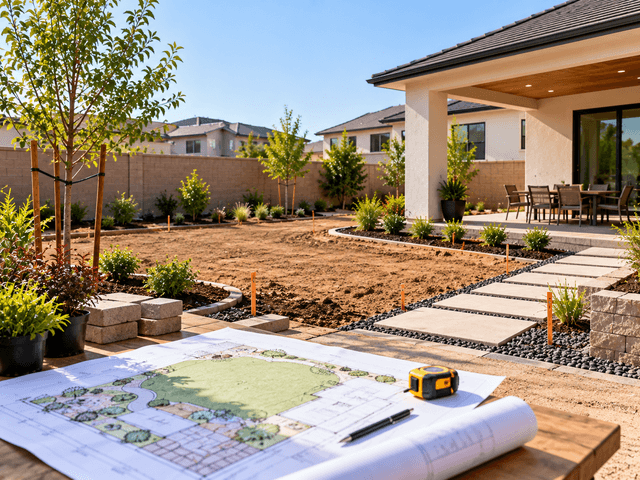
You closed on the new house, walked out the back door, and there it is: a rectangle of bare, compacted dirt with no idea what to do with it. Every new-construction and tract-home buyer hits this same wall, and the most common question — where to start with new-construction backyard landscaping — has a clear answer that saves thousands in do-overs: order of operations. A bare dirt yard is actually an advantage, a blank slate — but only if you build it in the right sequence. Fix the builder's rough grade and drainage first, plan the entire layout before buying a single plant, install hardscape and buried utilities before softscape, and put plants in last. Do it out of order — plant a garden, then realize water pools against the house or you need to trench a patio through it — and you pay twice. This guide lays out that sequence, how to phase it over time, and the mistakes that cost new-build owners the most.
Fix the Builder's Grade and Drainage First
Before anything pretty happens, deal with what the builder actually left you. A builder rough grade is usually just enough to pass final inspection — the lot is shaped around the house, often heavily compacted by equipment, and the drainage may not actually carry water away from your foundation the way you need it to over the long term.
- Watch where water goes in the first rain — toward the house, toward a corner, or pooling in the middle are all problems.
- Establish positive drainage so water sheds away from the foundation, not toward it.
- Address heavy compaction, which affects both drainage and future planting.
- Check for buried construction debris that can interfere with planting and grading.
- Decide whether the fix is regrading, drains, or a combination.
This is the single most important phase, and it is exactly what a grading and drainage checklist before hardscaping is for. Where water is already heading the wrong way, understanding whether to regrade or add a drain keeps you from building a beautiful yard on top of a water problem.
Plan the Whole Yard Before Buying Plants
The most expensive new-build mistake is buying plants on week one. Before anything goes in the ground, make a complete new build yard plan — the whole layout, even if you build it in stages. Planning the full picture first is what lets you phase the work without tearing up finished areas later.
- Map the zones you actually want: patio, lawn or lawn alternative, dining, play, garden, and service areas.
- Plan the access and circulation — how you move from the house through the yard.
- Locate utilities and route conduit and sleeves for lighting, drainage, and future features now, while the ground is open.
- Account for setbacks, easements, HOA rules, and any permit requirements before you design.
- Design the hardscape and planting together so they fit, rather than squeezing one around the other.
Put Hardscape and Drainage In Before Planting
Once the plan is set, build from the ground up — literally. Hardscape, drainage, and anything buried go in before the softscape, because installing a patio, wall, or drain line after planting means trenching right back through your new garden.
- Install drains, sleeves, and conduit first so they are buried under the finished surfaces.
- Build patios, walkways, walls, and other hardscape before beds and lawns go in.
- Set irrigation mainlines and valves while the hardscape is being built.
- Protect the established grade and drainage as you build so the finished surfaces shed water correctly.
Then Irrigation Soil Prep and Finally Plants
With the bones in place, the softscape comes last — and this is where new-build soil needs real attention. Tract soil is often poor subsoil or fill, compacted and low in organic matter, so planting into it as-is sets you up for failure.
- Install and test the irrigation — drip and efficient spray zones — before planting.
- Prepare the soil: decompact where needed and amend with organic matter so roots can establish.
- Plant in the right order — trees and large shrubs first, then smaller plants and groundcovers.
- Choose plants suited to the site and your water goals, such as proven SoCal performers.
- Mulch beds to hold moisture, moderate soil temperature, and suppress weeds.
Budget and Phase a New-Build Yard
A full yard is a big project, and most new-build owners do not finish it in one go — nor should they have to. The trick is phasing in the right order so early work never has to be undone. For dirt backyard ideas on a timeline, sequence by what is buried, not by what looks finished.
- Do the "invisible" work first — grade, drainage, sleeves, conduit, and irrigation mainlines — even if the surfaces come later.
- Build hardscape in the next phase, then softscape, then lighting and finishing touches.
- Prioritize the zone you will use most so you get value early.
- Get clear, itemized scopes so you can compare — our guide to comparing landscaping and hardscape quotes helps you phase and budget with confidence.
Common New-Build Yard Mistakes to Avoid
- Planting first — then digging it all up for grading, drainage, or a patio.
- Ignoring the builder's grade and drainage until water is already pooling against the house.
- Assuming the builder's rough grade is a finished, well-draining surface — it usually is not.
- Skipping buried sleeves and conduit, then cutting finished hardscape to add them later.
- Planting into unamended, compacted tract soil and wondering why plants struggle.
- Building without checking HOA approval and any grading, drainage, or structure permits.
- Buying plants for the whole yard before there is an overall plan to place them in.
Frequently Asked New-Build SoCal Yard Questions
Where Do I Start With a Bare Dirt Backyard?
Start with grading and drainage, not plants. On a new build, the first job is making sure water drains away from the house and the rough grade is corrected, then planning the whole layout — zones, access, and buried utilities — before buying anything. After that, hardscape and drainage go in, then irrigation and soil prep, and plants last. Doing it in that order is how you avoid expensive do-overs on a bare dirt yard.
Do I Really Need to Fix the Grading First?
Yes. A builder rough grade is typically shaped for the house and compacted by equipment, and it may not carry water away from your foundation the way you need long-term. Correcting the grade and establishing drainage before any hardscape or planting protects the house and everything you build afterward. Installing a patio or garden on top of a drainage problem just means tearing it out to fix the water later.
Can I Phase a New-Construction Yard Over Time?
Absolutely, and most people do. The key is phasing in the right order: do the buried work first — grading, drainage, sleeves, conduit, and irrigation mainlines — then hardscape, then softscape, then lighting and finishing. Sequencing by what is underground rather than by what looks done means each phase builds on the last instead of undoing it. You can spread the cost over time without paying twice.
How Long Does a New-Build Yard Take?
It depends on the size, scope, and whether you build it all at once or in phases. A full design with grading, drainage, hardscape, irrigation, and planting is a substantial project, while a phased approach spreads it across months or seasons. The most reliable way to get a realistic timeline is a site-specific plan that sets the sequence and the phases, so you know what happens when.
Start Your New-Build Yard Plan Today
If you are staring at a bare dirt lot wondering where to start with new-construction backyard landscaping, the answer is a plan built in the right order — grade and drainage first, plants last. Contact BuildCal Landscape for a new-build yard planning consultation or call +1 (818) 303-1570. Our landscape and hardscape services can correct the builder's grade, plan the layout and phases, and build the drainage, hardscape, irrigation, and planting so your Glendale or Los Angeles tract-home yard becomes a real, usable space.
Thinking about a new outdoor space?
We’d love to hear your ideas. Let’s explore what’s possible—no pressure, just a friendly conversation.
Give us a call:
+1 (818) 303-1570
Frequently Asked Question
HOW LONG DOES A PROJECT USUALLY TAKE?
Every property and client is different and therefore there is no set standard. The time required to complete a project relies completely on the amount of work which will be necessary. And the size of a property is not always a guide. For instance; a large property requiring minimal landscaping and irrigation installation will most likely be completed in a shorter amount of time than a small property requiring landscaping, a patio, spa, and a custom water fountain. Once a preliminary estimate is prepared, we will have a realistic estimate for project completion