
OUR MISSION IS TO TAILOR FOR EACH CLIENT A BEAUTIFUL, FUNCTIONAL AND ENDURING OUTDOOR ENVIRONMENT THAT WILL PROVIDE A PLACE OF SERENITY FOR FRIENDS AND FAMILY TO APPRECIATE FOR YEARS TO COME.

BuildCal Landscape Hardscaping & Driveways Article
Planning an EV Charger With Your Driveway or Hardscape in SoCal - Conduit, Trenching & Surfaces
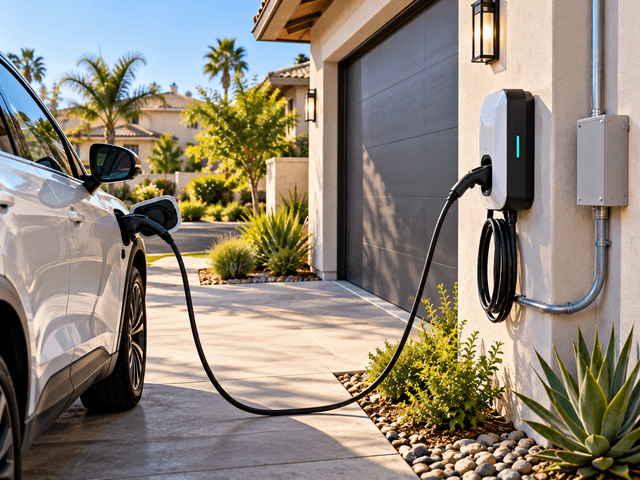
If you own an EV, or expect to soon, here is the single most common regret on EV and home forums: "I wish I'd run the conduit before I poured the driveway." Once a driveway is paved or poured, running a new circuit to a far-off charger often means cutting a trench through your brand-new surface, patching it, and living with the scar — or running an ugly surface conduit along the house. Smart EV charger driveway install planning avoids all of that by doing one simple thing: running the conduit pathway in a trench before the driveway goes in. The hardscape and the charger are really one project. This guide covers how to plan the charger and driveway together, where the conduit and trench go, how surface choice and panel access affect the run, how to coordinate the licensed electrician and permits, and how to future-proof for a second car — so you only open the ground once.
Plan the EV Charger and Driveway Together
The core idea behind good EV charger driveway install planning is sequence: decide where the charger will go before the driveway is built, so the conduit pathway can be installed underneath while the ground is already open. Thinking of them as one project saves money, mess, and regret.
- Decide the charger's final mounting location — the garage wall, a post, or a pedestal near the parking spot.
- Map the route from the electrical panel to that location, including under the driveway if needed.
- Confirm the charger model and parking layout so the cable reaches the car comfortably.
- Have the licensed electrician weigh in early on the circuit and panel so the pathway is sized correctly.
- Build the conduit pathway into the same project as the driveway, grading, and drainage.
Run Conduit and Trench Before You Pave
This is the whole point. Trenching for an EV charger is dramatically cheaper and cleaner before a driveway exists than after. Installing the ev charger conduit driveway pathway first means the electrician can simply pull wire later without touching your finished surface.
- Dig the trench along the planned route and lay conduit before the base and surface go in.
- Include a pull string in the conduit so wire can be pulled through later with no digging.
- Size the conduit for the circuit you need now — and ideally a bit more — so you are not undersized.
- Bury the conduit to the depth and in the conduit type the electrical code and your electrician specify, which is generally deeper where it runs under a driveway.
- Stub the conduit up with a junction box at both ends — near the panel and near the charger location.
- Document where the conduit runs so it is easy to find and connect to later.
THE ONE-TIME RULE
Open the ground once. Running conduit (and a spare) during the driveway build turns a future "cut and patch my new driveway" nightmare into a simple wire pull. It is the cheapest insurance in the whole project.
Choose the Driveway Surface and Panel Access
The driveway surface and where your panel sits both shape the plan. A paver driveway ev installation has one real advantage here: pavers can often be lifted and reset for future access, where cutting concrete is permanent.
- Pavers: Individual units can sometimes be lifted to reach a conduit or make a change, and damaged pavers can be replaced — see how pavers perform as a driveway surface.
- Concrete: A clean continuous surface, but cutting into it later for a missed conduit is costly and visible — another reason to run the pathway first.
- Keep the route and panel access clear so the charger circuit does not fight with gates, planting, or drainage.
- Coordinate the surface, base, grading, and driveway drainage as one system so water sheds properly around the finished install.
Coordinate a Licensed Electrician and Permits
This is the most important compliance point in the whole article: the hardscape contractor installs the trench, conduit, and driveway — a licensed electrician does all of the electrical work, runs the load calculation, makes the connections, and pulls the electrical permit. The two roles work together but are not interchangeable.
| Task | Who handles it |
|---|---|
| Trench, conduit pathway, driveway surface, base, drainage | Hardscape / landscape contractor |
| Load calculation, circuit, wiring, charger connection, any panel upgrade | Licensed electrician |
| Electrical permit and inspection | Licensed electrician |
| Utility coordination if a service/panel upgrade may be needed | Electrician with the utility |
| Any driveway, grading, or right-of-way permit | Hardscape contractor / homeowner, per local rules |
- A Level 2 (240V) home charger generally requires an electrical permit under the California Electrical Code (Article 625), and your licensed electrician should pull it.
- California requires local governments to offer expedited EV-charger permitting, so many cities process these quickly — confirm your city's current process.
- The electrician runs a load calculation to see whether your panel and service can handle the charger; an upgrade is sometimes needed but is not automatic.
- If a service or panel upgrade may be required, the electrician should coordinate with your utility before work, since the utility handles capacity up to the meter.
- Choosing experienced contractors matters — the same diligence you would apply when choosing a hardscape contractor applies to coordinating the driveway and the charger pathway.
Future-Proof for a Second Car and More Power
Since the ground is open, spend a little now to avoid redoing it later. A hardscape ev charger pathway is the ideal moment to plan for what you might add in a few years.
- Run a larger conduit (or a second one) so a future higher-amperage charger or second circuit has a path.
- Stub out an extra junction box for a second parking spot or future charger.
- Discuss future load with your electrician so the panel plan accounts for a possible second EV.
- Keep the documented route accessible so adding a second charger is a wire pull, not another excavation.
Frequently Asked EV Charger Driveway Questions
Can I Add an EV Charger After the Driveway Is Paved?
Yes, but it is usually harder, messier, and more expensive. Without a pre-installed conduit, running a new circuit to a charger across a finished driveway often means cutting and patching the surface or routing an exposed conduit along the house. That is exactly why EV charger driveway install planning recommends running the conduit pathway before paving — it turns a future demolition job into a simple wire pull by a licensed electrician.
Where Should the Conduit Go?
Along the planned route from your electrical panel to the charger's final mounting location, including under the driveway if the charger is on the far side. The ev charger conduit driveway run should include a pull string, be sized for the circuit (plus a little extra), and be buried to the depth and in the conduit type the code and your electrician specify — generally deeper under a driveway. Stub it up with a junction box at each end and document the route for easy future connection.
Are Pavers or Concrete Better for an EV Driveway?
Both work for the weight of a vehicle when built on a proper base. The practical difference for an EV setup is access: a paver driveway can often be lifted and reset to reach a conduit or make a change, while cutting into concrete later is permanent and visible. Either way, the smartest move is running the conduit pathway before the surface goes in, so the choice of surface is about looks and future flexibility rather than access.
Do I Need a Permit for a Home EV Charger?
Generally yes. A Level 2 home charger typically requires an electrical permit under the California Electrical Code, and your licensed electrician should pull it and handle the inspection. California requires cities to offer expedited EV-charger permitting, so the process is often fast, but requirements vary by jurisdiction. The driveway or trenching work itself may have separate permit considerations, so confirm both with your local authority before starting.
Plan Your EV-Ready Driveway Today
If you are doing EV charger driveway install planning, the cheapest, cleanest time to run conduit is before the driveway is built — not after. Contact BuildCal Landscape for a driveway and conduit-pathway consultation or call +1 (818) 303-1570. Our paver driveway and hardscaping services can build the driveway, trench, and conduit pathway and coordinate the timing with your licensed electrician — who handles all electrical work and permits — so your Glendale or Los Angeles driveway is EV-ready and you only open the ground once.
Thinking about a new outdoor space?
We’d love to hear your ideas. Let’s explore what’s possible—no pressure, just a friendly conversation.
Give us a call:
+1 (818) 303-1570
Frequently Asked Question
HOW DOES THE DESIGN PROCESS WORK?
While the process may vary depending on the designer, the client’s needs, and the complexity of the project, most residential design projects include the following:
Initial Consultation, This is a chance to meet the designer and review the requirements and objectives of the project. Many designers charge for this visit, so to get the most out of the experience, ask the designer the best way to prepare and be sure you understand exactly what will be covered at this meeting.
Concept Plan. After listening to your ideas and priorities, the designer analyzes the site’s character, strengths and problems, and then develops one or more alternative concept plans for review.
Master Plan. The final master plan represents the culmination of your choices with the designer, and typically includes a complete spatial layout for your outdoor living spaces and other hardscape or architectural concepts.
Planting Plan. This is a working drawing from which the garden will actually be planted, and includes botanical names, container sizes, specific plant locations, and planting instructions to the contractor.
Additional Plan Documents. Depending on the scoop of your project, your designer may also provide a lighting plan, specialized guidelines on planting or irrigation, or notes and sketches on design elements such as water features or furniture and accessories placement.
Installation Assistance Many landscape designers will assist you in soliciting and reviewing construction bids, including referring contractors appropriate for your project. Others may choose to provide drawings only. Designers often stay involved throughout the installation phase to advise on design modifications, material selections and purchase and placement of garden art and accessories.