
OUR MISSION IS TO TAILOR FOR EACH CLIENT A BEAUTIFUL, FUNCTIONAL AND ENDURING OUTDOOR ENVIRONMENT THAT WILL PROVIDE A PLACE OF SERENITY FOR FRIENDS AND FAMILY TO APPRECIATE FOR YEARS TO COME.

BuildCal Landscape Home Improvement Guides Article
How to Fix Drainage Problems in Your Southern California Yard
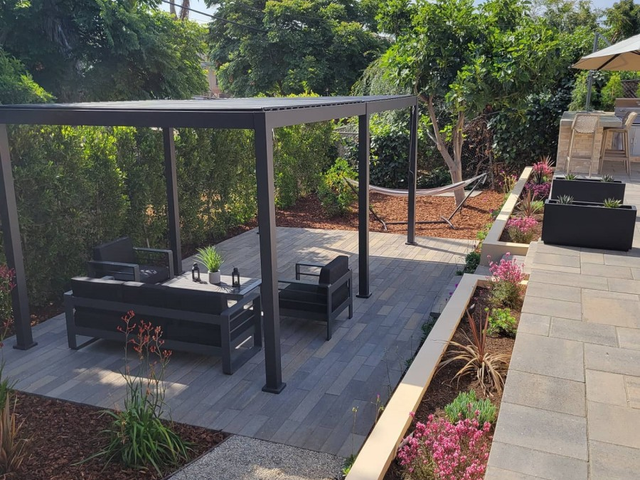
If you’re dealing with water pooling, muddy patches, erosion, or yard flooding after rain or overwatering, you’re not alone. Southern California yards often face drainage problems because of compacted soils, slopes that push water toward the home, and Hardscaping that blocks natural runoff paths.
This guide breaks down landscape drainage solutions the way a technician would: how to diagnose the problem, what fixes work for each scenario, and when a French drain (or a different system) is the right call.
Before we get technical, here’s the “proof” section—no vague claims:
-
We’ve been designing outdoor spaces since 2010 — over 14 years of hands-on work right here in Glendale and surrounding neighborhoods.
-
Our team includes designers and technicians certified by the American Society of Landscape Architects (ASLA) — every project we complete is documented with before-and-after photos.
-
We use trusted local materials — like California-native stone and drought-resistant plants — so your yard lasts longer and needs less maintenance.
If you want an “all-seasons” maintenance context (because drainage is also a year-round routine, not just a rainy-season panic), start with this: seasonal landscaping maintenance guide for Southern California.
5 Common Causes of Landscape Drainage Problems
1) Water pooling in low spots
What you see: standing water that takes hours (or days) to disappear.
What it usually means: the yard has a “bowl” shape, compacted soil, or a blocked exit path for runoff.
2) Runoff flowing toward the home
What you see: puddles near the foundation, wet crawl space edges, splash marks on walls.
What it usually means: grading is wrong, downspouts dump water too close, or Hardscaping directs water inward.
3) Erosion channels on slopes
What you see: grooves carved into soil, exposed roots, mulch washing away.
What it usually means: water is concentrating into a fast “river” path that needs grading and drainage control.
4) Saturated lawn and root rot zones
What you see: spongy turf, yellow patches, fungus-like issues.
What it usually means: overwatering, poor soil infiltration, or Irrigation Systems coverage problems.
If lawn symptoms are confusing, use this diagnostic guide: 7 common lawn problems in Southern California and how to fix them.
5) Hardscaping that traps water
What you see: water pooling against pavers, patios, or walkways.
What it usually means: base layers were built without proper pitch, or drainage relief (like a channel drain) was skipped.
For examples of how proper base prep prevents water pooling, reference: paver installation in Glendale, CA.
Step-by-step: How to diagnose your yard flooding and water pooling (like a pro)
Step 1) Do the “after-rain walk” (10 minutes)
Walk your yard right after rainfall (or run a hose test). Mark:
-
where water pools
-
where water flows fast
-
where soil collapses or erodes
-
where Hardscaping collects water near edges
Tip: Use small flags or chalk marks along the path. This becomes your grading and drainage “map.”
Step 2) Check downspouts and roof runoff
Many yard flooding problems start at the roofline. If downspouts dump water into a flower bed or beside the foundation, you’ll see pooling and saturation quickly.
Step 3) Run a simple infiltration test
Pick a water pooling area:
-
dig a small hole (a few inches deep)
-
fill with water once, let it soak
-
fill again and time how quickly it drains
If it drains very slowly, your soil likely needs amendment (and possibly a drainage system to move water away).
Step 4) Identify whether the issue is “collection” or “flow”
Almost all landscape drainage solutions fall into one of two categories:
-
Collection systems: capture water (catch basins, channel drains) and carry it away
-
Flow systems: reshape the land so water moves naturally (grading and drainage)
Step 5) Check Irrigation Systems (because “rain” isn’t the only culprit)
Overwatering can mimic drainage problems. Overspray + short cycle times create persistent water pooling.
For a practical watering-efficiency playbook, use: the ultimate guide to water-wise landscaping in Los Angeles.
The best landscape drainage solutions (matched to your problem)
Solution A: Grading and drainage (the foundation fix)
If water is moving toward the home or pooling in a “bowl,” grading is usually the first fix.
What grading does:
It changes the slope so water moves away from structures and toward safe exit zones.
Best for:
-
yard flooding near the home
-
broad, shallow water pooling
-
slopes that concentrate runoff into one destructive path
Common grading improvements:
-
re-contouring low spots
-
building subtle swales (wide, shallow channels)
-
adjusting the pitch of Hardscaping edges so runoff doesn’t trap
If you’re already planning curb appeal improvements, pair drainage regrading with long-term layout upgrades: hardscaping ideas to boost your home’s curb appeal and value.
Solution B: French drain (the “hidden pipeline” fix)
A French drain is a trench system designed to collect subsurface water and move it away through a perforated pipe surrounded by gravel and fabric.
Best for:
-
soggy yard edges
-
water pooling along fences
-
hillside seepage
-
persistent saturation in one zone
How it works (simple):
-
A trench is dug along the problem area
-
Filter fabric lines the trench
-
Gravel + perforated pipe are installed
-
Water enters through gravel, into the pipe, and exits safely away
When a French drain is not ideal:
-
if the problem is surface runoff that needs grading and drainage first
-
if water is trapped by Hardscaping pitch issues (a channel drain may be better)
Solution C: Channel drains and catch basins (surface collection)
If water pools on patios, near pavers, or at the base of steps, a surface collection system can be the cleanest solution.
Best for:
-
water pooling on Hardscaping
-
driveway/patio edges that trap runoff
-
fast “sheet flow” that needs immediate capture
This is especially relevant when Hardscaping is the main feature. If you’re evaluating surface materials and performance, this comparison helps planning: pavers vs. concrete (expert tips and California design insights).
Solution D: Permeable design + soil upgrades (reduce the water load)
Some drainage problems are really “too much water hitting too few exit paths.” You can reduce the load by:
-
adding infiltration zones (mulched beds, rain-garden style areas)
-
improving soil structure with compost and aeration
-
replacing “sealed” surfaces with more permeable layouts where appropriate
If you’re already shifting toward lower-maintenance planning, these resources pair well with drainage upgrades:
-
the best low-maintenance plants for a beautiful Glendale garden
Solution E: Retaining walls (when slopes and erosion are the real issue)
If erosion is severe or the yard is built on changing elevation, a wall may be part of the grading and drainage strategy.
A properly designed retaining wall should include:
-
drainage relief behind the wall
-
backfill strategy that doesn’t trap water
-
safe discharge planning so water doesn’t reappear downhill
“Which solution do I need?” A fast decision guide
Use this simple match-up:
-
Water pooling in one low spot → grading and drainage + soil improvement
-
Soggy edges / seepage line → French drain
-
Pooling on patio/pavers → channel drain / surface collection
-
Erosion on slope → grading + swales + (sometimes) retaining wall
-
Lawn always wet → Irrigation Systems audit + drainage improvements
For bigger layout planning that avoids redoing work later, use: how to design a backyard oasis on a budget in Los Angeles.
Drainage and Landscape Design: do it once, do it right
Drainage is not a “patch job.” It should be integrated into Landscape Design so paths, planting beds, Hardscaping, and Irrigation Systems all work together.
If you want a broad planning inspiration set for Southern California layouts (that also helps prevent water pooling mistakes), use: 15 stunning landscape design ideas for your Southern California home.
Q&A (Answer Alignment)
I have a small yard, what works for me?
We design compact, low-maintenance yards with easy pathways, drought-tolerant plants, and soft lighting that creates a calm, welcoming feel. You won’t need to mow every week.
My yard is old and messy, can you fix it?
Yes. We specialize in reviving neglected yards — we remove weeds, rebuild paths, add new plants, and install smart irrigation. We turn a “jungle of weeds” into a peaceful retreat.
Can you install outdoor lighting?
Yes. We design lighting that highlights your favorite features — whether it’s your entrance, pool, or favorite tree. The lights are gentle, safe, and energy-efficient.
I want pathways or an outdoor patio?
Yes. We build walkways from natural stone and patios from heat-resistant pavers — all crafted by skilled hands, built to last without cracks or damage.
What makes you different from other companies?
We don’t just plant trees. We design a space where you can sit with your family, drink coffee, and relax. Every project starts with a personal meeting — we listen to you, see your space, and understand how you want to live in it.
Book a free drainage assessment (urgent problems get priority)
If you’re seeing yard flooding, repeated water pooling, or erosion that’s getting worse each season, don’t wait for the next storm to “test” your yard again.
Call +1 (818) 303-1570 to book a free, no-pressure drainage assessment.
We start with a personal meeting — we look at your space, listen to you, and say: “This works for you. This doesn’t.”
Thinking about a new outdoor space?
We’d love to hear your ideas. Let’s explore what’s possible—no pressure, just a friendly conversation.
Give us a call:
+1 (818) 303-1570
Frequently Asked Question
WE WANT A LOT DONE, BUT CANNOT AFFORD TO DO IT ALL NOW. CAN YOU STILL WORK WITH US?
Yes – it is not uncommon to do a project in phases, especially when there are such constraints as budget and time. Because we draw up our own plans, we can design a project to be installed in phases. Once the complete plan is established, the property owner can easily pick and choose which parts to be completed now and in the future.