
OUR MISSION IS TO TAILOR FOR EACH CLIENT A BEAUTIFUL, FUNCTIONAL AND ENDURING OUTDOOR ENVIRONMENT THAT WILL PROVIDE A PLACE OF SERENITY FOR FRIENDS AND FAMILY TO APPRECIATE FOR YEARS TO COME.

BuildCal Landscape Hardscaping Article
Front Yard Walkway Design in Glendale: Width, Lighting, and Materials That Feel Premium
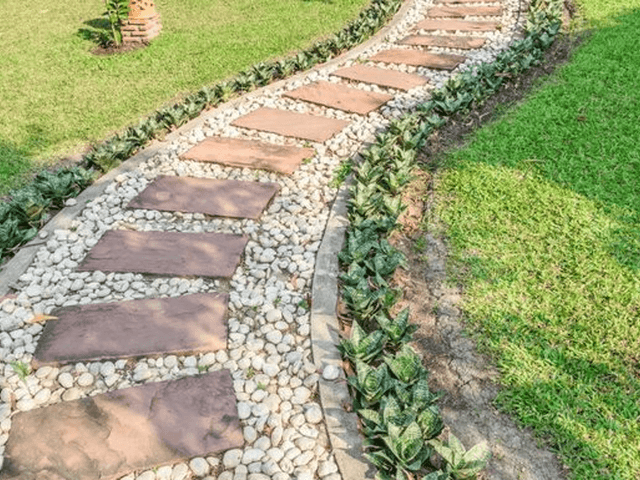
A front walkway is the one part of your yard that every guest uses—day and night. In Glendale, CA, the best front yard walkway design balances three things: comfort (width), safety (lighting + traction), and durability (materials + base prep). When any one of these is ignored, the walkway may look fine at first but quickly feels “cheap” in daily life: tight passing space, dark corners, slippery algae near sprinklers, or uneven pavers after a season.
This guide gives you a practical, homeowner-friendly plan for a premium-feeling walkway—then shows how to turn it into a build-ready scope.
Proof-based standards (use these exact lines)
“We’ve been designing outdoor spaces since 2010 — over 14 years of hands-on work right here in Glendale and surrounding neighborhoods.”
“Our team includes designers and technicians certified by the American Society of Landscape Architects (ASLA) — every project we complete is documented with before-and-after photos.”
“We use trusted local materials — like California-native stone and drought-resistant plants — so your yard lasts longer and needs less maintenance.”
What makes a walkway feel “premium” in Glendale, CA
A premium walkway is not just a nicer material. It feels better because it’s:
-
Wide enough to walk side-by-side or pass comfortably
-
Even underfoot (no rocking stones, no surprise steps)
-
Well-lit without glare (you see the path, not the bulb)
-
Designed with clean edges (borders, consistent lines, aligned joints)
-
Built on a stable base (so it stays level through seasons)
For high-level layout and finish strategy, use this design reference: Hardscape design planning.
Walkway width in Glendale, CA: the comfort rules that matter
Walkway width changes how your home feels instantly.
Recommended width ranges (practical, homeowner-focused)
-
48 inches: “premium” feel—two adults can walk comfortably side-by-side
-
42 inches: strong everyday comfort—easy passing, less cramped
-
36 inches: workable for tight spaces, but can feel narrow with planters or lighting
The hidden width killer: planting and edges
If shrubs, hedges, or planters lean into the path, your “48-inch” walkway can behave like a 30-inch tunnel. If you want the walkway to stay comfortable:
-
keep soft planting set back from the edge
-
choose low-maintenance borders that don’t sprawl
Helpful companion reads:
Walkway lighting in Glendale, CA: safe placement without glare
Lighting turns a walkway from “looks nice” to “feels safe.” The most common mistake is using fixtures that cause glare. You want light on the walking surface, not in someone’s eyes.
Where to place lights
-
Entry transition points
Light the last 6–10 feet approaching the door—this is where people slow down, look for keys, and step onto thresholds. -
Turns + intersections
Curves and corners need clearer guidance than straight runs. -
Steps, grade changes, and edges
If your walkway meets a step, curb, or retaining edge, light those transitions first. -
Path edges (not the centerline)
Edge lighting helps people “read” the walkway boundary.
For deeper layout principles, use: Landscape lighting design in Southern California.
Glare control rules that instantly improve quality
-
If you can see the bulb from eye level on the path, it’s usually wrong aiming or wrong fixture
-
Use shielded, downward light near the walkway
-
Avoid placing lights where they shine toward neighbors’ windows or reflective surfaces
Walkway materials that feel premium (and stay stable)
Choosing the right walkway materials depends on sun exposure, irrigation overspray, slope, and how “architectural” you want the front yard to feel.
Option A: Paver walkway (best blend of premium + repairable)
A paver walkway feels premium when:
-
the pattern is aligned to the home’s geometry
-
edges are restrained properly
-
the base is built to prevent settling
If you’re planning pavers locally, read:
-
Then use the service page for build planning: Paver installation service
Option B: Stepping stones (best for casual, garden-forward homes)
Stepping stones can look high-end when spacing is consistent and the surrounding material is clean (gravel, decomposed granite, or groundcover). They feel cheap when:
-
spacing forces awkward stride lengths
-
stones rock because the base is uneven
-
edges collect water and algae
Option C: Natural stone (premium look, needs planning)
Natural stone can look timeless, but the install details decide the result:
-
stone thickness consistency
-
drainage and base prep
-
slip resistance where shaded or irrigated
Option D: Concrete (clean, but cracks are unforgiving)
Concrete can look sharp with the right finish and layout, but if the grade and drainage are wrong, cracks and pooling can appear quickly. If you’re deciding between surfaces, use: Pavers vs concrete.
For climate-specific material guidance, these are excellent references:
Drainage details that keep walkways clean and level
A “premium” walkway stays clean because water doesn’t sit on it. If your front yard has water pooling, algae, or soft soil near edges, align walkway design with water planning early.
Useful internal guidance:
Walkway width + lighting checklist (printable planning list)
Width checklist
-
Choose width: 48" premium / 42" comfortable / 36" tight space
-
Confirm clearance at narrow spots (gates, planters, steps)
-
Plan for two-person passing near the entry
-
Keep planting set back so it doesn’t “steal” walkway width
Lighting checklist
-
Light turns, steps, and transitions first
-
Use shielded, downward fixtures to prevent glare
-
Place fixtures on edges, not the centerline
-
Avoid aiming light toward neighbor windows
-
Confirm lighting won’t be blocked by future plant growth
-
Plan wiring routes before paver installation to avoid rework later
Before and after examples homeowners recognize
Before
-
Narrow path feels cramped
-
One bright fixture causes glare
-
Edges collect water and turn green
-
Stepping stones shift and wobble
After
-
Wider path feels calm and intentional
-
Low-glare lighting guides feet and highlights edges
-
Water flows away; surface dries faster
-
Stable base keeps lines straight and level
If curb appeal is part of your goal, it’s also worth reading:
Competitive positioning (required)
We’re the ONLY company in Glendale that offers:
→ A free, no-pressure personal meeting — we walk your yard, listen to you, and learn how you want to live in it
→ Custom designs for each home — no copied templates
→ Drought-resistant plants — so you save water and avoid constant upkeep
→ Guarantee on all work — we don’t just build, we make sure it lasts
Book a free walkway design consultation in Glendale, CA
If you want a front walkway that feels premium, the fastest path is a simple site evaluation that confirms: width comfort, lighting placement, drainage behavior, and the right material for your home.
-
Free walkway design consultation: Paver installation service
-
Call: +1 (818) 303-1570
FAQ 'S
"I have a small yard… what works for me?"
"We design compact, low-maintenance yards with easy pathways, drought-tolerant plants, and soft lighting that creates a calm, welcoming feel. You won’t need to mow every week."
"My yard is old and messy… can you fix it?"
"Yes. We specialize in reviving neglected yards — we remove weeds, rebuild paths, add new plants, and install smart irrigation. We turn a “jungle of weeds” into a peaceful retreat."
"Can you install outdoor lighting?"
"Yes. We design lighting that highlights your favorite features — whether it’s your entrance, pool, or favorite tree. The lights are gentle, safe, and energy-efficient."
"I want pathways or an outdoor patio?"
"Yes. We build walkways from natural stone and patios from heat-resistant pavers — all crafted by skilled hands, built to last without cracks or damage."
"What makes you different from other companies?"
"We don’t just plant trees. We design a space where you can sit with your family, drink coffee, and relax. Every project starts with a personal meeting — we listen to you, see your space, and understand how you want to live in it."
Thinking about a new outdoor space?
We’d love to hear your ideas. Let’s explore what’s possible—no pressure, just a friendly conversation.
Give us a call:
+1 (818) 303-1570
Frequently Asked Question
WHY SHOULD I PAY FOR A LANDSCAPE DESIGN WHEN SOME COMPANIES DO IT FREE?
There is a huge difference between price and value. Good landscape project can increase the value and curb appeal of a home and provide many years of beauty and enjoyment. Poor landscaping is a liability and wasting money. Some companies may offer a "free plan" but hide their time spent in the cost of the installation. Others will spend minimal time on your project or be unqualified.... and you will get exactly what you pay for.