
OUR MISSION IS TO TAILOR FOR EACH CLIENT A BEAUTIFUL, FUNCTIONAL AND ENDURING OUTDOOR ENVIRONMENT THAT WILL PROVIDE A PLACE OF SERENITY FOR FRIENDS AND FAMILY TO APPRECIATE FOR YEARS TO COME.

BuildCal Landscape Patios - Project Planning Article
How to Fix Erosion on Sloped Yards in Glendale (Without Rebuilding Everything)
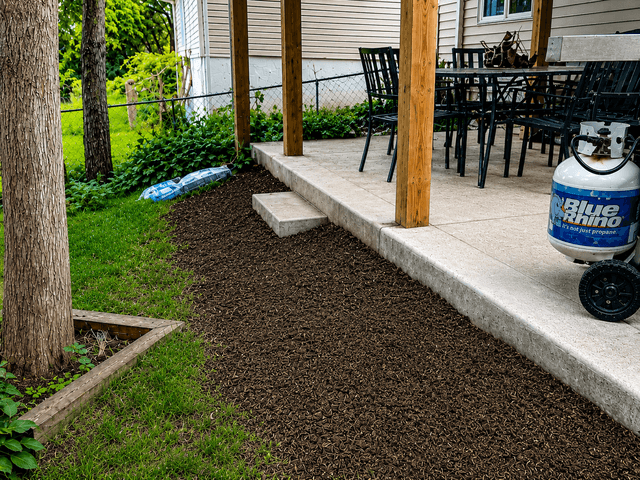
If you’re searching for slope erosion control Glendale, you’re probably seeing one of these red flags: bare soil that “slides” after watering, rills (tiny channels) forming after rain, mulch drifting downhill, or a slope that’s slowly creeping toward your patio or walkway. The good news: most sloped-yard erosion in Glendale, CA can be stabilized with targeted grading and drainage, smart planting, and strategic Hardscaping—without tearing the whole yard apart.
If you want a free site evaluation, call +1 (818) 303-1570.
Why sloped yards erode in Glendale (and why it gets worse fast)
A slope erodes when water moves faster than the soil can absorb it. On a hillside, that speed increases, especially when you have:
- Compacted soil (water can’t soak in)
- Poor drainage paths (runoff concentrates into a “mini river”)
- Overwatering or broken irrigation (constant saturation loosens soil)
- Sparse root coverage (nothing “locks” soil in place)
- Downspouts dumping onto the slope (high-volume bursts)
Erosion is not just cosmetic. It can undermine steps, patios, and even create pressure behind a retaining wall if water has nowhere to go.
Erosion Risk Scorecard (2 minutes)
Use this quick scorecard to decide whether you can start with simple fixes—or you need professional slope stabilization.
Give yourself points for each “Yes”:
- Slope is steeper than 3:1 (about 18–20°) — 2 points
- You see rills/gullies after watering or rain — 2 points
- Soil is bare (little plant cover) — 2 points
- Water pools at the bottom of the slope — 2 points
- Mulch/rocks move downhill regularly — 1 point
- You notice cracks, leaning posts, or shifting pavers nearby — 3 points
- A retaining wall bulges/tilts or has damp spots — 3 points
- Irrigation leaks or a sprinkler sprays the slope directly — 1 point
Your result
- 0–3 points: Start with weekend fixes + planting
- 4–7 points: You likely need drainage shaping + reinforced planting
- 8+ points: Treat it as a structural drainage problem—plan for drainage + possible retaining wall support
If you’re at 8+, book a free site evaluation at +1 (818) 303-1570 before erosion damages your Hardscaping.
What to do this weekend (fast, low-cost stabilization)
These steps reduce runoff speed immediately and buy you time.
- Redirect roof water
Make sure downspouts discharge into a safe drainage route—not straight onto the slope. - Stop overspray and fix leaks
If irrigation hits the slope face, you’re washing soil away. Repair broken heads and adjust spray patterns. - Add a temporary erosion blanket (or straw wattles)
Straw wattles placed along contour lines slow water and trap sediment. - Mulch correctly (not “loose and fluffy”)
Use heavier mulch and apply it evenly. On steeper slopes, mulch works best when paired with netting or plants. - Create a gentle “pause” line
Even a shallow contour berm can interrupt runoff and prevent rills.
For long-term water behavior, see water-wise landscaping in Los Angeles.
The smart way to fix slope erosion (without rebuilding everything)
1) Slow the water first (grading and drainage basics)
Before plants or walls, you need water control. The goal is to spread runoff, not concentrate it.
Common grading and drainage upgrades:
- Shallow contour swales to guide water safely
- Micro-terracing to reduce slope length
- Drainage collection at the bottom to prevent pooling
If your slope ties into a remodel or larger yard project, review Landscape Construction planning to avoid building Hardscaping on unstable grades.
2) Lock the soil with roots (hillside landscaping that actually works)
Plants prevent erosion when roots form a living “mesh.” For hillside landscaping, prioritize:
- Dense groundcovers that spread
- Shrubs with strong root systems
- Plant spacing that eliminates bare soil “runways”
To pick low-effort options, use low-maintenance plants for a Glendale garden and compare choices in native plants vs non-native in Glendale.
3) Reinforce the surface (Hardscaping that stabilizes, not destabilizes)
Hardscaping can help—or make erosion worse—depending on drainage and base prep.
Good slope-friendly Hardscaping includes:
- Steps with proper base and drainage breaks
- Reinforced pathways that don’t act like a water channel
- Paver edges and restraints that hold lines in place
If you’re deciding between surfaces, see pavers vs concrete and for local execution details use paver installation in Glendale, CA.
For design-level planning, use hardscape design in Los Angeles.
4) When a retaining wall is the right move (and when it’s not)
A retaining wall can solve slope issues, but only if water is handled correctly. A wall without proper drainage can trap water and increase pressure behind it.
A retaining wall is typically considered when:
- The slope is too steep for planting alone
- You need usable flat space
- Soil movement threatens patios, steps, or fences
Learn the essentials in retaining wall guidance—especially how drainage is handled behind the wall.
Signs you should stop DIY and call a pro
Call for a site evaluation if you notice:
- A new crack in concrete, steps, or near the top of the slope
- Soil pulling away from a walkway or patio edge
- A retaining wall that’s leaning, bulging, or staying damp
- Runoff flowing toward your home foundation
- Erosion that returns after each watering cycle
A slope can look “fine” until it suddenly shifts. That’s why grading and drainage come first—before adding more Hardscaping.
To discuss a plan, call +1 (818) 303-1570 for a free site evaluation.
Proof-based trust (no vague claims)
We’ve been designing outdoor spaces since 2010 — over 14 years of hands-on work right here in Glendale and surrounding neighborhoods.
Our team includes designers and technicians certified by the American Society of Landscape Architects (ASLA) — every project we complete is documented with before-and-after photos.
We use trusted local materials — like California-native stone and drought-resistant plants — so your yard lasts longer and needs less maintenance.
What makes the approach different (and why it works)
We’re the ONLY company in Glendale that offers:
→ A free, no-pressure personal meeting — we walk your yard, listen to you, and learn how you want to live in it
→ Custom designs for each home — no copied templates
→ Drought-resistant plants — so you save water and avoid constant upkeep
→ Guarantee on all work — we don’t just build, we make sure it lasts
Call +1 (818) 303-1570 for a free site evaluation.
FAQ’S
"I have a small yard… what works for me?"
"We design compact, low-maintenance yards with easy pathways, drought-tolerant plants, and soft lighting that creates a calm, welcoming feel. You won’t need to mow every week."
"My yard is old and messy… can you fix it?"
"Yes. We specialize in reviving neglected yards — we remove weeds, rebuild paths, add new plants, and install smart irrigation. We turn a “jungle of weeds” into a peaceful retreat."
"Can you install outdoor lighting?"
"Yes. We design lighting that highlights your favorite features — whether it’s your entrance, pool, or favorite tree. The lights are gentle, safe, and energy-efficient."
"I want pathways or an outdoor patio?"
"Yes. We build walkways from natural stone and patios from heat-resistant pavers — all crafted by skilled hands, built to last without cracks or damage."
"What makes you different from other companies?"
"We don’t just plant trees. We design a space where you can sit with your family, drink coffee, and relax. Every project starts with a personal meeting — we listen to you, see your space, and understand how you want to live in it."
Next step: stabilize the slope before it damages your Hardscaping
Slope erosion rarely fixes itself. The sooner you control runoff and reinforce the soil, the less invasive the solution needs to be.
For a free site evaluation, call +1 (818) 303-1570 and we’ll map out the safest path—whether you need drainage shaping, planting, Hardscaping reinforcement, or a retaining wall plan.
Thinking about a new outdoor space?
We’d love to hear your ideas. Let’s explore what’s possible—no pressure, just a friendly conversation.
Give us a call:
+1 (818) 303-1570
Frequently Asked Question
CAN YOU MAINTAIN MY LANDSCAPE AFTER THE FINAL INSTALLATION?
Yes – We have a complete team of highly trained maintenance professionals to provide weekly, daily or even monthly services for your property. While a growing number of people have become dissatisfied with the poor quality of the typical ‘mow, blow, and go’ service, we take the time to maintain your property to perfection while providing a reliable service you can trust.