
OUR MISSION IS TO TAILOR FOR EACH CLIENT A BEAUTIFUL, FUNCTIONAL AND ENDURING OUTDOOR ENVIRONMENT THAT WILL PROVIDE A PLACE OF SERENITY FOR FRIENDS AND FAMILY TO APPRECIATE FOR YEARS TO COME.

BuildCal Landscape Water-Wise Landscaping Article
Lawn Removal & Drought-Tolerant Conversion in LA - Rebates, Water Rules & Real Cost
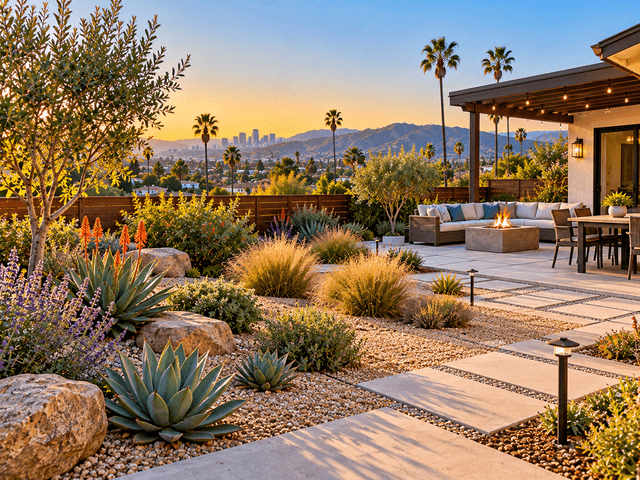
If you're looking into a lawn replacement rebate in Los Angeles, the appeal is simple: stop pouring water (and money) into thirsty grass, and get help paying for the switch. Regional turf-replacement rebate programs can offset part of the cost of converting lawn to a drought-tolerant, water-wise landscape — but they come with rules, and you generally must apply and get approved before removing any grass. What the conversion costs depends on your yard and design, not a flat figure. Here's how the rebates and water rules work, what drives the cost, and how a licensed contractor helps. This is general guidance, current as of October 2026.
How do lawn-removal rebates work in LA?
Regional programs — commonly offered through the Metropolitan Water District's SoCalWaterSmart and participating local water agencies — pay a rebate per square foot of live turf you replace with qualifying water-wise landscaping. As of October 2026 that's often around $3 per square foot (sometimes higher during limited-time increases), with a minimum area and conditions like a reservation before you start, a set number of plants per area, permeable surfaces only, and no synthetic turf. Amounts, funding, and eligibility change and run first-come, first-served, so always confirm current details with your own water provider before planning.
What does a drought-tolerant conversion involve?
Converting a lawn is more than killing grass and dropping in succulents. A proper conversion removes the turf, improves the soil, reworks irrigation to drip, adds appropriate drought-tolerant planting and mulch or permeable surfaces, and usually includes a stormwater feature to capture rain — which many rebate programs require. Done well, it cuts water use, lowers maintenance, and looks intentional rather than bare. BuildCal handles this through its drought-tolerant and water-wise landscaping, and our ultimate guide to water-wise landscaping in Los Angeles covers the approach in depth.
Apply before you remove the lawn
This is the rule that trips people up: most rebate programs require you to apply and receive a funding reservation before removing any turf. Tear out the grass first and you typically forfeit the rebate. The grass also usually has to be living turf — dead lawn or bare dirt generally doesn't qualify. Because the steps and paperwork matter, it's worth understanding the program before the first shovel goes in.
What are the rebate and water rules?
Rules vary by program and change over time, so treat this as general guidance and confirm current specifics with your water provider. As of October 2026, common requirements include:
- Pre-approval: Apply and reserve funds before removing any turf.
- Living turf: The area must be existing live grass, not dead lawn or dirt.
- Minimum area: Programs often set a minimum square footage (commonly around 250 sq ft).
- Plant coverage: A required density of plants per area (often three plants per 100 sq ft).
- Permeable surfaces only: No new impermeable hardscape in the converted area; permeable surfaces are allowed.
- No synthetic turf: Artificial grass generally doesn't qualify for these rebates.
- Stormwater feature: Many programs require capturing rainwater on-site (a swale or basin).
- Irrigation changes: Overhead spray usually must be removed or converted to drip.
Larger or more extensive conversions may also fall under California's Model Water Efficient Landscape Ordinance (MWELO), which sets landscape water-efficiency standards above certain project thresholds — another reason to confirm requirements before you design.
What drives the cost of a conversion?
Rather than a flat price, here's what moves it — because the rebate offsets part of the cost, not all of it. This framing is current as of October 2026, and a real figure comes from an on-site assessment.
- Area. Square footage of lawn removed and replaced.
- Turf removal and soil prep. Hauling the old lawn and improving the soil.
- Planting. Plant size, quantity, and type — our guide to the best drought-tolerant plants for Glendale landscapes shows the range.
- Irrigation. Converting spray to an efficient drip system.
- Surfaces and stormwater. Permeable pathways, mulch, and any required rain-capture feature.
- Design. A planned conversion that meets rebate rules and looks cohesive.
The rebate is best viewed as a potential offset against these costs — helpful, but not a full reimbursement, and never guaranteed since funds are limited.
Conversion planning at a glance
| Element | Why it matters | Rebate / water-rule consideration | Notes before starting |
|---|---|---|---|
| Pre-approval | Protects your rebate eligibility | Reserve funds before removing turf | Don't remove grass first |
| Planting | Core of the new landscape | Minimum plant density often required | Choose climate-appropriate species |
| Surfaces | Paths and ground cover | Permeable only; no synthetic turf for rebate | Plan permeability in |
| Irrigation | Long-term water savings | Convert overhead spray to drip | Protects the new planting |
| Stormwater | Often required by programs | On-site rain capture feature | Design it into the grading |
Who typically does this?
Homeowners with water-hungry lawns who want lower bills and less upkeep are the core audience — common across Glendale, La Crescenta, La Cañada, and the valleys. It also suits owners responding to water restrictions, those wanting a modern water-wise look, and HOAs or property managers converting common-area turf. If you're unsure what to replace the lawn with, our overview of lawn alternatives beyond artificial turf or gravel is a good starting point.
What mistakes cost people the rebate or the result?
- Removing the lawn before applying — forfeiting the rebate entirely.
- Assuming a fixed rebate amount; programs change and funds run out.
- Using synthetic turf or impermeable hardscape where the rebate bars them.
- Skipping soil prep and drip conversion, so the new planting struggles.
- Ignoring the required plant density or stormwater feature.
- Treating it as "just remove grass" instead of a designed landscape.
How do you choose the right landscaping company in Glendale?
Choose a licensed landscape contractor (CSLB) experienced with drought-tolerant conversions who understands current rebate and water rules and designs to meet them. Look for a clear written estimate and scope, climate-appropriate planting, proper drip irrigation, and attention to the permeability and stormwater requirements rebates often carry. A contractor who plans the conversion to qualify — rather than leaving you to navigate the rules alone — saves you both money and rework. Our guide to planning a drought-tolerant Southern California yard shows what that planning looks like.
How does BuildCal help you?
BuildCal is a licensed landscape contractor (California State License Board / CSLB) in Glendale, and we design and build drought-tolerant conversions that are meant to meet common rebate and water-wise requirements — proper turf removal, soil prep, drip irrigation, climate-appropriate planting, permeable surfaces, and stormwater capture. We start with an on-site assessment and a written estimate and scope before any work begins, and we'll point you to your own water provider to confirm current rebate amounts and eligibility. To be clear, rebate programs are run by the water agencies, not by BuildCal, and we don't control approvals or funding — we design the landscape so it's positioned to qualify.
Steps to request your project from BuildCal
- Share photos of your lawn area and a short description of your goals.
- Schedule an on-site assessment of the yard, soil, irrigation, and drainage.
- Receive a written estimate with scope, planting, irrigation, and timeline.
- Confirm current rebate details with your water provider, then approve the plan.
- Installation and a final walkthrough, with care and maintenance notes.
Frequently asked questions about lawn-removal rebates and conversion
How much is the lawn replacement rebate in Los Angeles?
It varies by program and changes over time. As of October 2026, regional turf-replacement rebates through SoCalWaterSmart and participating agencies are often around $3 per square foot of live turf replaced, sometimes higher during limited-time increases, with minimums and conditions. Funds are limited and first-come, first-served, so the amount isn't guaranteed. Always confirm the current rebate rate and eligibility directly with your own water provider before planning your conversion.
Do I have to apply before removing my lawn?
Almost always, yes. Most rebate programs require you to apply and receive a funding reservation before you remove any turf — if you tear out the grass first, you typically forfeit the rebate. The area usually also has to be existing living turf, not dead lawn or bare dirt. Because the sequence matters, understand your program's steps and get approved before the project starts. We plan the work around this requirement.
What can I replace my lawn with and still get the rebate?
Generally, qualifying water-wise landscaping with living, climate-appropriate plants at a required density, permeable surfaces, and often an on-site stormwater feature. Programs typically exclude synthetic turf and new impermeable hardscape within the converted area. The specifics vary, so confirm with your water provider. A designed conversion with drought-tolerant planting, mulch or permeable paths, and drip irrigation both qualifies and looks far better than bare gravel.
What does a drought-tolerant conversion cost?
There's no flat figure — it depends on the area, turf removal and soil prep, planting, drip irrigation, permeable surfaces, and any stormwater feature. The rebate offsets part of that cost but rarely all of it, and it isn't guaranteed. The reliable way to know is an on-site assessment and a written estimate. Costs vary with site conditions and design; this framing is current as of October 2026.
What is MWELO and does it apply to me?
MWELO is California's Model Water Efficient Landscape Ordinance, which sets landscape water-efficiency standards for projects above certain size thresholds — more often relevant to larger or more extensive conversions than small residential ones. Whether it applies depends on your project's scope and your jurisdiction. Because the thresholds and local rules vary, it's worth confirming during design. We factor any applicable requirements into the plan so the conversion is compliant.
Will a drought-tolerant yard really lower my water bill?
Replacing thirsty lawn with climate-appropriate planting and efficient drip irrigation generally reduces outdoor water use, which is usually the largest part of a SoCal water bill. The exact savings depend on your old usage, the new design, and how it's maintained, so we avoid promising a specific number. Combined with a potential rebate, the water savings are a major reason homeowners convert — but the results vary by yard.
Request your estimate today
If you're planning lawn removal and a drought-tolerant conversion in Glendale or the greater Los Angeles area, the best first step is a design and estimate for your actual yard — plus confirming the current rebate with your water provider. Send BuildCal a few photos of your lawn to schedule an on-site assessment and get a written estimate before any work begins. Call (818) 303-1570 or request your free estimate online.
Thinking about a new outdoor space?
We’d love to hear your ideas. Let’s explore what’s possible—no pressure, just a friendly conversation.
Give us a call:
+1 (818) 303-1570
Frequently Asked Question
IS THERE A FEE FOR THE INITIAL CONSULTATION?
No, we do not charge for the initial site visit. This is your opportunity to share your ideas and vision for your landscape project, start the process of design by discussing initial ideas, pin-point any landscape problems you are having, and get a scope of the overall size of scope. Plus this gives you the opportunity to meet us, learn more about our company, and ask questions.