
OUR MISSION IS TO TAILOR FOR EACH CLIENT A BEAUTIFUL, FUNCTIONAL AND ENDURING OUTDOOR ENVIRONMENT THAT WILL PROVIDE A PLACE OF SERENITY FOR FRIENDS AND FAMILY TO APPRECIATE FOR YEARS TO COME.

BuildCal Landscape Water-Wise Landscaping Article
Artificial Turf Installation in SoCal - True Cost, Base Prep, Drainage & Is It Worth It
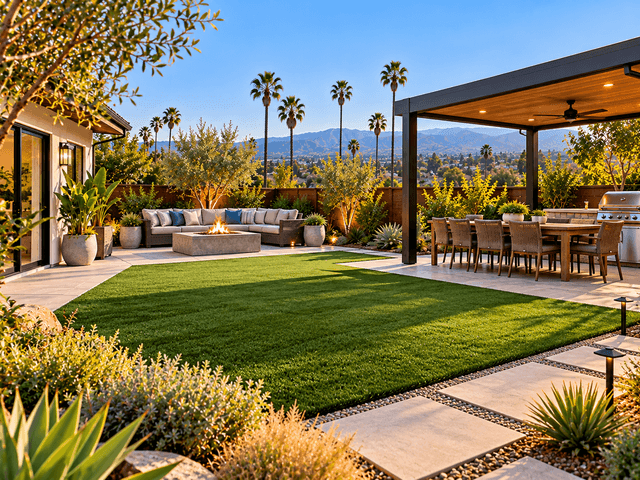
When homeowners research artificial turf installation cost in SoCal, they usually find a wide range — because the real cost isn't the grass, it's everything underneath it. Proper base preparation and drainage are what separate a turf lawn that stays flat, drains, and (for pet owners) stays odor-free from one that ripples, puddles, and smells within a year. Artificial turf has genuine upsides and real trade-offs, including summer heat, so "is it worth it?" depends on your yard and priorities. Here's an honest look at what drives the cost, what a lasting install requires, and the rules to check first. This is general guidance, current as of October 2026.
What drives artificial turf cost, and is it worth it?
The main cost drivers are the area, how much demolition and base preparation the site needs, the turf product and quality, drainage work, and any special requirements for pets. The turf itself is a smaller part of the number than the base beneath it. Whether it's worth it depends on your goals: turf is low-maintenance and stays green, but it gets hot in direct summer sun and quality varies widely. For the right yard and owner, it's a strong choice — just budget for the base and drainage, not only the grass.
What does artificial turf installation involve?
A quality turf install is mostly groundwork. It means removing the existing lawn or surface, excavating and building a compacted aggregate base graded for drainage, adding a weed barrier and the right sub-layers, then laying, seaming, securing, and infilling the turf. For pet areas, drainage and the right infill are what keep it sanitary. The turf you see is the final step; the base and drainage below determine whether it lasts. This work falls under BuildCal's landscaping and ground-surface services, and our overview of artificial turf in Glendale covers the basics.
Why base prep and drainage decide everything
This is the heart of it: a turf lawn is only as good as the base under it. A properly excavated, compacted, and graded base lets water drain through instead of pooling, keeps the surface flat without ripples or low spots, and — critically for pet owners — lets urine flush through rather than sitting and causing odor. Skip or rush the base to hit a lower price, and the turf develops puddles, wrinkles, and smell within a season. Our guide on preparing a Los Angeles site for artificial grass walks through what proper prep looks like, and how to tell artificial turf was installed badly shows the warning signs.
Honest pros and cons
Turf isn't right for every yard. Here's a balanced view.
- Pros: very low maintenance (no mowing or watering the lawn), stays green year-round, durable under foot traffic and pets, and no muddy spots.
- Cons: it gets noticeably hot in direct summer sun — a real consideration in SoCal, especially for pets and bare feet; quality varies widely between products; it's a bigger upfront cost than seed or sod; and it eventually needs replacement at end of life.
On water savings, it's fair to say turf eliminates lawn irrigation, but we avoid overstating it — the overall savings depend on what you replace and how the rest of the yard is watered. Turf is one water-wise option among several, including drought-tolerant planting.
What drives the cost?
- Area. Square footage sets the baseline.
- Demolition. Removing existing lawn, roots, or hardscape first.
- Base preparation. Excavation depth, aggregate, and compaction — the biggest quality factor.
- Drainage. Grading and any added drainage, especially for pet areas or poor-draining soil.
- Turf product. Quality, pile, and type vary widely in cost.
- Pet requirements. Specialized infill and drainage for sanitation.
- Access and site conditions. Slopes and tight access raise labor.
Artificial turf considerations at a glance
| Factor | Why it matters | Key consideration | Notes before starting |
|---|---|---|---|
| Base prep | Determines flatness and lifespan | Excavation, aggregate, compaction | Don't cut costs here |
| Drainage | Prevents puddles and pet odor | Grading + sub-layers that drain | Critical for pet areas |
| Turf quality | Look, feel, durability | Product and pile vary widely | Match to use and budget |
| Summer heat | Comfort underfoot | Turf heats up in direct sun | Consider shade / placement |
| Local rules | Where turf is allowed | Some cities/HOAs restrict it | Confirm before installing |
Are there rules on artificial turf?
Sometimes, and they cut both ways. Some jurisdictions and HOAs encourage or allow artificial turf as a water-saving measure, while others restrict it — for example in certain front-yard or parkway areas, or with specific quality and drainage standards. Rules vary by city and HOA and change over time, so this is general guidance: confirm what applies to your property before installing. Our article on whether artificial turf is restricted in California covers the landscape, and note that turf generally doesn't qualify for turf-replacement rebates the way live drought-tolerant planting can.
Who typically chooses artificial turf?
Pet owners wanting a clean, mud-free, durable surface are a core audience, along with busy homeowners seeking a low-maintenance lawn, families wanting a consistent play surface, and owners of shaded or high-traffic yards where real grass struggles. It's common across Glendale, La Crescenta, La Cañada, and the valleys. It suits those who prioritize low upkeep and a green look over a living lawn — and who accept the summer-heat trade-off.
What mistakes lead to a failed or disappointing turf lawn?
- Choosing on price and getting a thin base that ripples and puddles.
- Skipping proper drainage, leading to standing water and, for pets, odor.
- Buying the cheapest turf product and being unhappy with look and durability.
- Ignoring summer heat when placing turf in full-sun play or pet areas.
- Not checking city or HOA rules before installing.
- Hiring an unlicensed installer with no accountability for base and drainage.
How do you choose the right landscaping company in Glendale?
For turf, the installer's groundwork is everything. Choose a licensed landscape contractor (CSLB) whose quote specifies excavation, base depth, compaction, and drainage — not just the turf product and price. Ask how they handle pet-area drainage and your soil type, and whether they'll confirm local rules. A written estimate and scope that details what goes below the surface is the sign of an installer who'll deliver a turf lawn that lasts rather than one that fails in a year.
How does BuildCal help you?
BuildCal is a licensed landscape contractor (California State License Board / CSLB) in Glendale, and we install artificial turf the way that lasts — proper demolition, an excavated and compacted base graded for drainage, the right sub-layers and infill (including pet-specific drainage where needed), and clean seaming and securing. We start with an on-site assessment of your yard, soil, drainage, and how you'll use the space, give you an honest read on whether turf or drought-tolerant planting better fits your goals, and flag any local rules to confirm. You get a written estimate and scope before work begins, with the base and drainage spelled out, not just the grass.
Steps to request your project from BuildCal
- Share photos of the area and a short description of how you'll use it (pets, play, looks).
- Schedule an on-site assessment of the yard, soil, drainage, and access.
- Receive a written estimate with scope, base and drainage details, product options, and timeline.
- Approve the plan and schedule the work.
- Installation and a final walkthrough, with care and maintenance notes.
Frequently asked questions about artificial turf installation
How much does artificial turf cost to install in SoCal?
There's no honest flat figure, because the cost depends on the area, demolition, base preparation, drainage, the turf product, and any pet requirements. The grass itself is a smaller part of the total than the base and drainage beneath it, which is where quality and lifespan come from. The reliable way to know is an on-site assessment and a written estimate. Costs vary with site conditions and product; this framing is current as of October 2026.
Why is base preparation so important for turf?
Because the base, not the grass, determines whether the turf stays flat, drains, and lasts. A properly excavated, compacted, and graded base lets water pass through, prevents ripples and low spots, and — for pet owners — lets urine flush through instead of sitting and smelling. A rushed or thin base causes puddles, wrinkles, and odor within a season. Paying for proper base and drainage is what makes the difference between a turf lawn that lasts and one that fails.
Does artificial turf get hot in the SoCal sun?
Yes — this is a genuine trade-off. Artificial turf absorbs heat and can get noticeably hot in direct summer sun, which matters for bare feet, kids, and pets. Shade from trees or structures helps, as does placement and product choice. It's worth considering where the turf will go and how much full sun it gets before deciding. We factor sun exposure into the recommendation so you're not surprised by a hot surface in July.
Is artificial turf good for dogs?
It can be very good for dogs when installed correctly — it's durable, mud-free, and easy to rinse. The key is drainage and the right infill: pet installs need a base and sub-layers that let urine flush through, plus infill that resists odor. Done poorly, a pet turf area traps moisture and smells. That's why the groundwork matters even more for pet owners, and why we build pet-area drainage into the install.
Am I allowed to install artificial turf where I live?
Usually, but not always, and the rules vary. Some cities and HOAs allow or encourage turf as a water-saving measure, while others restrict it in certain areas like front yards or parkways, or set quality and drainage standards. Because local rules differ and change, confirm what applies to your property before installing. We'll flag the question during the assessment, but checking with your city and HOA is the sure way to know.
Does artificial turf qualify for a water rebate?
Generally no. Regional turf-replacement rebate programs typically fund replacing lawn with living, water-wise planting and usually exclude synthetic turf. So while artificial turf eliminates lawn watering, it normally won't earn the rebate that a drought-tolerant plant conversion can. If maximizing rebate value matters to you, that's worth weighing. We can lay out both options — turf and living drought-tolerant landscaping — so you choose with the full picture.
Request your estimate today
If you're weighing artificial turf installation cost in Glendale or the greater Los Angeles area, the smartest step is a real plan for your actual yard — with the base, drainage, and product spelled out, not just the grass. Send BuildCal a few photos of your space to schedule an on-site assessment and get a written estimate before any work begins. Call (818) 303-1570 or request your free estimate online.
Thinking about a new outdoor space?
We’d love to hear your ideas. Let’s explore what’s possible—no pressure, just a friendly conversation.
Give us a call:
+1 (818) 303-1570
Frequently Asked Question
CAN YOU PROVIDE A LANDSCAPE PLAN?
Yes – we have our own Design group who can draw anything from basic hand-drawn layouts and sketches, highly detailed concept plans, or a complete set of working construction drawings. Clients will often call upon us to provide this service as a first step to their overall project.