
OUR MISSION IS TO TAILOR FOR EACH CLIENT A BEAUTIFUL, FUNCTIONAL AND ENDURING OUTDOOR ENVIRONMENT THAT WILL PROVIDE A PLACE OF SERENITY FOR FRIENDS AND FAMILY TO APPRECIATE FOR YEARS TO COME.

BuildCal Landscape Landscaping Article
Is Artificial Turf Being Restricted in California? What SoCal Homeowners Should Know
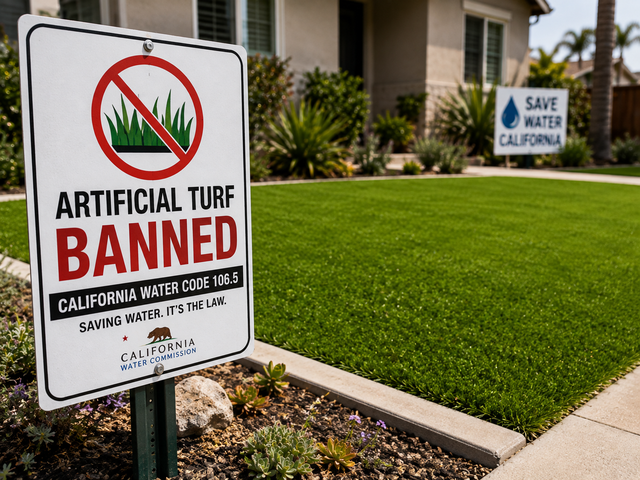
If you've seen headlines about California cracking down on fake lawns, you're not imagining it. The rules around synthetic grass have genuinely shifted, and "is there an artificial turf ban California homeowners need to worry about?" has quietly become one of the most common questions we hear. The honest short answer: there is no statewide ban on home lawns — but the legal landscape changed in a way that matters, and a few Southern California cities have already acted.
This is an up-to-date, plain-English explainer of where things actually stand: what the state changed, which SoCal cities are restricting turf, why the concern is growing, and what it all means for your yard. It isn't legal advice, so verify your own city's current ordinance before installing anything. And if you'd rather skip the uncertainty entirely, a living, water-wise landscape design avoids all of it. Let's break it down.
Is There a Statewide Artificial Turf Ban in California?
No. California has not banned artificial turf statewide, and your single-family home lawn is not outlawed. But two separate state actions have fueled the "is fake grass banned" headlines, and it helps to keep them straight.
First, a 2023 state law commonly cited as SB 676 handed local governments back the power to regulate — or even ban — residential artificial turf, a power they had been denied for years. Second, a different law, AB 1572, restricts using drinking water to irrigate "non-functional" turf. That one, however, is about decorative real grass at commercial, industrial, institutional, and homeowners-association common-area properties, phasing in from 2027, and it specifically does not apply to single-family homes and does not apply to artificial turf at all.
The two get blurred together into a "turf ban" that doesn't exist at the state level. What's real is subtler and arguably more important: the door to local artificial grass regulations, which had been held shut, is now open.
What Changed - SB 676 and Local Authority
For years, an older state law barred California cities and counties from prohibiting artificial turf on residential property — homeowners effectively had a protected right to install it. SB 676, authored by state Senator Ben Allen and signed in 2023, repealed that protection.
Two things followed. Cities and counties can now enact turf ordinance California rules that restrict or ban synthetic lawns on residential property. And the law redefined "drought-tolerant landscaping" to exclude synthetic grass and artificial turf. That second point is the quiet game-changer: cities still cannot stop you from installing living, drought-tolerant landscaping, but artificial turf no longer enjoys that protected status. In effect, the state has tilted the playing field toward living, water-wise yards and away from plastic ones — which is exactly why drought-tolerant landscaping is having a moment.
Which SoCal Cities Are Restricting Turf?
This is where it gets local — and where it pays to check your own city. Several California cities have already moved to restrict synthetic turf. San Marino, right here in the Los Angeles area, and Millbrae in Northern California have adopted ordinances limiting plastic turf.
Closer to the spotlight, the City of Beverly Hills has been actively weighing a ban on new synthetic turf in front yards, with proposals that included a lengthy phase-out period for existing installations and an allowance for turf in side and back yards. The details have moved back and forth through its planning commission and city council, so its exact current rules are worth confirming directly rather than assuming. The broader pattern is unmistakable: more SoCal cities are considering artificial grass regulations, and the trend leans toward restricting front-yard synthetic lawns while encouraging native and drought-tolerant planting. Even where turf remains allowed, some cities cap how much of a yard it may cover.
Because this is a fast-moving, city-by-city picture, the single most important step before installing turf is to confirm your own city's current ordinance. If you're comparing your options, our honest look at artificial turf versus natural grass is a useful starting point, and our overview of the professional design process shows how a compliant plan comes together.
Why the Concern - PFAS, Heat & Microplastics
The restrictions aren't only about water — increasingly they're about chemistry and heat. The biggest single driver is the PFAS turf concern: per- and polyfluoroalkyl substances, the so-called "forever chemicals" that don't break down in the environment and have been linked to serious health issues. Lawmakers behind the recent changes cited PFAS, along with other toxins such as lead, as a core reason for restoring local control.
Beyond chemistry, there's heat. Artificial turf absorbs sun and can run dramatically hotter than living grass — surface temperatures measured tens of degrees higher, hot enough to be uncomfortable or unsafe for children and pets on a summer afternoon, and adding to the urban "heat island" effect. Add the microplastics that synthetic fibers shed into soil, storm drains, and waterways, plus the end-of-life recycling problem when worn turf is torn out, and it's easy to see why lawmakers and residents alike have grown wary. These are the same concerns environmental researchers and clean-water advocates have been raising for years.
What This Means for Your Yard
For most Southern California homeowners today, the practical takeaways are straightforward:
- Your existing home lawn isn't illegal, and there is no statewide artificial turf ban.
- But your city may already restrict new turf, or may soon, so check the current ordinance before you install.
- Where bans are adopted, existing turf is often grandfathered with a phase-out window — meaning turf installed now could face removal down the road.
- Installing artificial grass today carries a new kind of risk it didn't a few years ago: regulatory uncertainty on top of the familiar issues of fading, heat, and eventual replacement.
If you were considering turf mainly to save water and cut upkeep, it's worth knowing there's a path that sidesteps all of this — and delivers the same benefits. A low-maintenance landscaping approach built on living plants is increasingly the smarter long-term bet.
The Future-Proof Alternative - Living, Water-Wise Landscaping
Here's the reassuring part. The very goals that made turf popular — low water use, low maintenance, year-round curb appeal — are exactly what a well-designed living landscape delivers, without the PFAS, the heat, or the regulatory question marks. The best turf alternatives are climate-adapted, water-wise designs, and crucially, the state protects your right to install living drought-tolerant landscaping, so no city can ban it.
A future-proof, low-water yard usually combines drought-tolerant plants suited to the local climate and a native and Mediterranean plant palette with permeable gravel or decomposed granite, generous mulch, and efficient drip irrigation. Shade trees keep the yard cool, proper drainage keeps it healthy, and thoughtful landscape design ideas tie it all together. Designs like these stay cool, support pollinators, never fade or shed microplastics, and won't be caught out by the next city ordinance.
Not sure where to begin? Grab our free Turf-Free Low-Water Yard Guide — a practical starting point for planning a beautiful, water-wise yard that works with SoCal's climate and rules instead of against them. See finished living landscapes in our portfolio.
Plan a Water-Wise Yard That's Built to Last
Whether you're worried about where the turf rules are heading or you're ready to skip the plastic entirely, the smartest move is a living, water-wise design tailored to your yard and your city's requirements. Book a free low-water design consult and we'll assess your space, walk through your options, and design a landscape that saves water, stays cool, and won't run afoul of changing regulations. Call +1 (818) 303-1570 or contact us to get started — and explore our full water-wise landscape design services.
Frequently Asked Questions
Is artificial turf banned in California?
No, there is no statewide artificial turf ban, and your single-family home lawn is not outlawed. However, a 2023 state law (SB 676) gave cities and counties the power to regulate or ban residential artificial turf, and some have. A separate law, AB 1572, restricts watering decorative real grass at non-residential properties and does not ban home lawns or artificial turf. The key is to check your own city's current ordinance.
Is fake grass banned in Beverly Hills or other SoCal cities?
Some Southern California cities have moved to restrict synthetic turf. San Marino has an ordinance limiting plastic turf, and Beverly Hills has been actively weighing a ban on new synthetic turf in front yards, with a proposed phase-out for existing lawns and allowances for side and back yards. Because these rules vary and change city by city, confirm your city's current ordinance before installing anything.
What is SB 676 and how does it affect artificial turf?
SB 676 is a 2023 California law that repealed the older rule barring cities from banning residential artificial turf, restoring local authority to regulate or prohibit it. It also redefined drought-tolerant landscaping to exclude synthetic grass and artificial turf. So cities still cannot ban living drought-tolerant landscaping, but artificial turf no longer has that protected status, opening the door to local turf ordinances.
Does artificial turf contain PFAS or other harmful chemicals?
Concerns raised by lawmakers and researchers are a major driver of the new regulations. Synthetic turf and its components have been associated with PFAS forever chemicals and other substances such as lead, and turf can also run very hot and shed microplastics into soil and waterways. Living, water-wise landscapes avoid these issues, which is a big part of why they are increasingly favored.
What are the best turf alternatives for a low-water yard?
The best turf alternatives are climate-adapted living designs: drought-tolerant and California-native plants, permeable gravel or decomposed granite, mulch, and efficient drip irrigation. They deliver the low water use, low maintenance, and curb appeal people want from turf, while staying cool and remaining protected under state law. Book a free low-water design consult at +1 (818) 303-1570 to plan yours.
Thinking about a new outdoor space?
We’d love to hear your ideas. Let’s explore what’s possible—no pressure, just a friendly conversation.
Give us a call:
+1 (818) 303-1570
Frequently Asked Question
CAN YOU PROVIDE A LANDSCAPE PLAN?
Yes – we have our own Design group who can draw anything from basic hand-drawn layouts and sketches, highly detailed concept plans, or a complete set of working construction drawings. Clients will often call upon us to provide this service as a first step to their overall project.