
OUR MISSION IS TO TAILOR FOR EACH CLIENT A BEAUTIFUL, FUNCTIONAL AND ENDURING OUTDOOR ENVIRONMENT THAT WILL PROVIDE A PLACE OF SERENITY FOR FRIENDS AND FAMILY TO APPRECIATE FOR YEARS TO COME.

BuildCal Landscape Landscaping Article
Native & Mediterranean Plant Palette for Glendale Yards
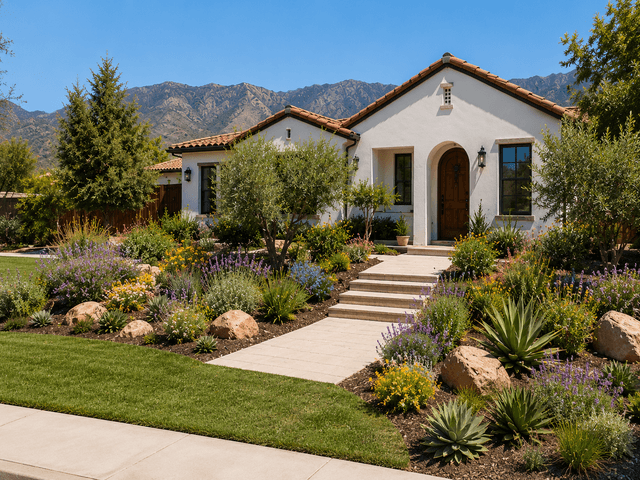
The secret to a yard that thrives with less water and less work isn't a sprinkler schedule — it's plant choice. The best plants for Glendale landscaping are the ones already adapted to our climate and soil: California natives and Mediterranean-climate species that expect hot, dry summers and can handle clay. Match the palette to the place, and the garden largely takes care of itself.
This guide is a climate- and soil-specific plant palette for Glendale, CA: how to read your conditions, plus native trees, shrubs and groundcover, Mediterranean accents, and how to pair it all with the right irrigation. For tailored help, explore our landscaping services, and read on.
Glendale Climate & Soil
Glendale sits in a Mediterranean climate: hot, dry summers and mild, wetted winters, with strong sun and real heat. The soils tend to be clay-heavy, and many lots are sloped. Those three facts — summer drought, clay, and slope — should drive every plant decision.
The practical takeaway: choose drought plants Glendale soil can actually support, and group them by water need so each zone gets only what it requires. Clay holds water and drains slowly, so good drainage and grading and planting on mounds or amended beds help roots breathe. A broader drought-tolerant landscaping approach ties it together, and our list of drought-tolerant plants for Glendale is a great companion to this palette.
Native Trees
Trees set the structure of a yard. These California natives and climate-adapted options handle Glendale's heat and dry summers once established:
- Coast Live Oak (Quercus agrifolia). A magnificent evergreen native and a keystone for wildlife — give it room and avoid summer water near the trunk.
- Western Redbud (Cercis occidentalis). A small native tree with vivid spring magenta blooms and good drought tolerance.
- Toyon (Heteromeles arbutifolia). A large evergreen native shrub or small tree with red winter berries.
- Desert Willow (Chilopsis linearis). A heat-loving small tree with orchid-like flowers for hot, sunny spots.
For more on selecting trees for shade as well as structure, see our guide to the best shade trees for Southern California. Always plan for mature size and keep aggressive roots away from foundations and pipes.
Shrubs & Groundcover
Shrubs and groundcover are where a native palette really shines — color, texture, pollinator habitat, and weed suppression with minimal water.
- Manzanita (Arctostaphylos). Sculptural evergreen shrubs with smooth red bark and early flowers; low-growing forms make excellent groundcover.
- Ceanothus (California lilac). Clouds of blue spring bloom; available as shrubs or spreading groundcovers.
- Sages (Salvia). Cleveland sage and white sage offer fragrance, flowers, and tough drought tolerance.
- California Buckwheat (Eriogonum) and Coffeeberry (Frangula californica). Reliable, wildlife-friendly natives for sun and slopes.
- Groundcovers. Spreading ceanothus, native yarrow, and ornamental native grasses knit beds together and hold slopes.
For screening, denser shrubs double as living privacy — see our roundups of the best plants for a privacy hedge and privacy hedges for Southern California.
Mediterranean Accents
Because Glendale shares a climate with the Mediterranean, plants from that region thrive here and blend beautifully with natives. Mediterranean plants California gardeners love add fragrance, silvery foliage, and long bloom:
- Lavender and Rosemary. Aromatic, pollinator-friendly, and unbothered by heat and lean soil.
- Fruitless Olive and Westringia (coast rosemary). Silvery, structural, and very drought-tolerant.
- Rockrose (Cistus), Germander (Teucrium), and Jerusalem Sage (Phlomis). Tough flowering shrubs for full sun.
- Agave, succulents, and ornamental grasses. Sculptural focal points and movement with almost no water.
Layered with natives, these accents give a yard year-round interest — exactly the kind of palette featured in our landscape design ideas for Southern California homes.
Pairing with Irrigation
A climate-smart palette only works if the watering matches it. The most common way to kill drought-tolerant and native plants is overwatering, so design the irrigation around the plants, not the other way round.
- Hydrozone. Group plants with similar water needs so each zone is watered correctly.
- Use drip. Efficient drip irrigation delivers water to roots with little waste.
- Water to establish, then taper. Give new plants regular water the first year, then cut back — established natives often want little to no summer water.
- Mulch generously. Mulch locks in moisture, moderates soil temperature, and suppresses weeds.
Done this way, a native and Mediterranean palette becomes genuinely low-maintenance — beautiful, water-wise, and easy to live with.
Plant a Yard That Thrives
The right palette starts with your specific yard — its sun, slope, and soil. Request a Landscaping Estimate and we'll assess your conditions and design a native and Mediterranean planting plan suited to your Glendale, CA home. Call +1 (818) 303-1570 or contact us to get started, and browse our portfolio for inspiration.
Frequently Asked Questions
What are the best plants for Glendale landscaping?
The best plants are those adapted to Glendale's Mediterranean climate and clay soil: California natives like manzanita, ceanothus, sages, and Coast Live Oak, paired with Mediterranean species such as lavender, rosemary, fruitless olive, and ornamental grasses. Grouped by water need and watered with drip, they thrive with little water and upkeep.
What native plants grow well in Glendale?
Strong native plants Glendale yards support include Coast Live Oak, Western Redbud, and Toyon among trees and large shrubs; manzanita, ceanothus, Cleveland and white sage, California buckwheat, and coffeeberry among shrubs; and spreading ceanothus, native yarrow, and native grasses for groundcover. They support pollinators and handle summer drought once established.
What Mediterranean plants work in California gardens?
Mediterranean plants California gardens love include lavender, rosemary, fruitless olive, westringia, rockrose, germander, and Jerusalem sage, plus agave, succulents, and ornamental grasses. Because California and the Mediterranean share a climate, these plants thrive here and blend seamlessly with natives for fragrance, silvery foliage, and long bloom.
What plants handle Glendale's clay soil and drought?
Many natives and Mediterranean plants tolerate clay once drainage is addressed - manzanita, ceanothus, sages, toyon, rockrose, and westringia among them. The keys for drought plants Glendale soil are planting on mounds or amended beds so roots aren't waterlogged, choosing species matched to the conditions, and avoiding overwatering.
How often should I water native and Mediterranean plants?
Water new plantings regularly through their first year to establish roots, then taper off - many established natives want little to no summer water, and overwatering is the most common way to kill them. Group plants by water need and use drip irrigation. Request a Landscaping Estimate at +1 (818) 303-1570 for a plan suited to your yard.
Thinking about a new outdoor space?
We’d love to hear your ideas. Let’s explore what’s possible—no pressure, just a friendly conversation.
Give us a call:
+1 (818) 303-1570
Frequently Asked Question
DO YOU USE A LOT OF HARSH CHEMICALS AND PESTICIDES IN YOUR LANDSCAPE MAINTENANCE SERVICE?
No – We prefer a more naturalistic approach to practices of fertilization, pest problems, and weed control. While uses of chemicals are at times necessary, they should always be used minimally and in the recommended application