
OUR MISSION IS TO TAILOR FOR EACH CLIENT A BEAUTIFUL, FUNCTIONAL AND ENDURING OUTDOOR ENVIRONMENT THAT WILL PROVIDE A PLACE OF SERENITY FOR FRIENDS AND FAMILY TO APPRECIATE FOR YEARS TO COME.

BuildCal Landscape Drainage & Grading Article
Yard Drainage Installation in Glendale - French Drains, Grading, Cost & When Permits Apply
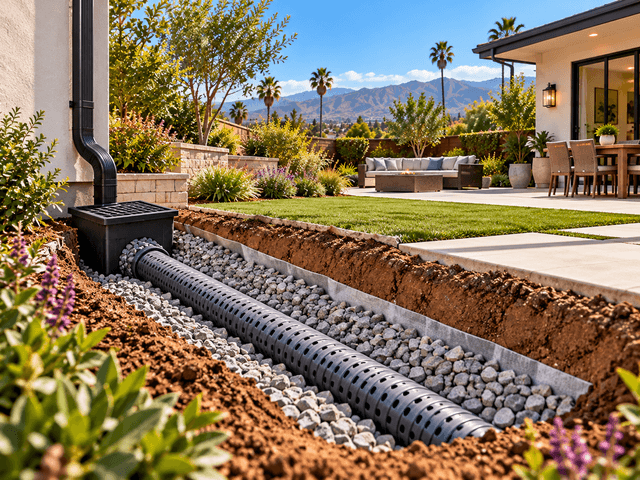
If you're pricing yard drainage installation because water pools after every rain or runs toward the house, the cost depends on the fix — surface drains, a French drain, channel drains, or regrading each solve a different problem and carry different cost drivers. Getting it right matters beyond the puddle: standing water and poor grading can, over time, work against your foundation, invite moisture problems, and erode a hillside. Here's how the main drainage methods compare, what drives the cost, and when grading work may need a city permit. This is general guidance, current as of October 2026.
What does yard drainage installation involve?
Drainage work moves water away from where it's causing problems — off the surface, away from the house, and off a slope — using the right method for the cause. Options include surface drains and catch basins for pooling, a French drain to collect and carry subsurface water, channel (trench) drains across hard surfaces, and regrading to reshape how water flows. The best fix depends on your soil, grade, and where the water comes from, which is why it starts with an on-site assessment. Significant grading or hillside work may require a permit — confirm with your city.
Why drainage matters beyond the puddle
A wet yard is annoying, but the reason to fix it properly is to protect the home. Water that pools against the house or isn't graded away can, over time, contribute to foundation moisture issues; chronic damp areas can encourage mold; and uncontrolled runoff on a slope erodes soil and undermines hardscape. None of this is cause for alarm — it's simply why drainage is worth doing right rather than patching. For the why-it-happens side, our guide on why your yard floods — clay soil, grading, and runoff explains the common SoCal causes, and our overview of landscape drainage solutions covers the fixes. This work sits within BuildCal's hardscape and drainage construction.
The main drainage methods and their cost drivers
Rather than prices, here's what drives the cost of each approach — because matching the method to the problem is what makes the fix last. This framing is current as of October 2026.
Regrading
Reshaping the ground so water flows away from the house and toward a safe outlet. Often the most fundamental fix. Cost drivers: the area regraded, how much soil is moved, slope, and access. Significant grading may trigger a permit.
French drain
A gravel-filled trench with a perforated pipe that collects subsurface and surface water and carries it away. Good for soggy areas and water moving through soil. Cost drivers: trench length and depth, gravel and pipe, outlet location, and digging conditions (clay and rock slow it down).
Surface drains and catch basins
Grated inlets in low spots that capture pooling water and pipe it away. Good for defined puddle areas and downspout runoff. Cost drivers: number of basins, pipe runs, and where the water can discharge.
Channel (trench) drains
Long, narrow grated drains across driveways, patios, or thresholds that intercept sheet flow on hard surfaces. Cost drivers: length, cutting into existing hardscape, and connection to an outlet.
Often the right solution combines methods — regrading plus a French drain, or catch basins feeding one outlet. Our comparison of a French drain vs. regrading helps you see which fits your situation.
Drainage methods at a glance
| Method | When you'd use it | Key cost drivers | Notes before starting |
|---|---|---|---|
| Regrading | Water flows toward the house | Area, soil moved, slope, access | May need a grading permit |
| French drain | Soggy ground, subsurface water | Trench length/depth, gravel, pipe, outlet | Clay/rock slows digging |
| Surface drains / basins | Defined puddles, downspout runoff | Number of basins, pipe runs, discharge | Needs somewhere to drain to |
| Channel drains | Sheet flow across hardscape | Length, cutting hardscape, outlet | Common at driveways/thresholds |
When does drainage work need a permit?
Smaller drainage installs often don't require a permit, but significant grading — reshaping larger areas, moving substantial soil, or hillside work — commonly does, and hillside and flood-prone areas tend to be regulated more strictly. Thresholds vary by city and change over time, so this is general guidance: confirm with your local building or public works department before major grading. A licensed contractor identifies whether your project crosses that line during the assessment. This matters especially on the foothill slopes around Glendale, La Crescenta, and La Cañada.
Who typically needs drainage work?
Homeowners with standing water, a soggy lawn, water pooling against the house, or a driveway that floods are the core audience — along with hillside owners dealing with runoff and erosion, common across the foothills. It's also essential before building hardscape: our grading and drainage checklist before hardscaping explains why. HOAs and property managers address drainage to protect common areas and structures.
What mistakes lead to a failed or costly drainage fix?
- Treating the symptom (a puddle) without diagnosing the cause (grade, soil, runoff source).
- Installing a drain with nowhere proper to discharge the water.
- Ignoring the grade, so water keeps heading toward the house.
- Undersizing pipe or spacing for the volume of water.
- Doing major grading without checking permit requirements.
- Hiring an unlicensed contractor for work that affects the foundation and slope.
What to check before starting your drainage project
- Where does water pool or flow, and where is it coming from (roof, slope, neighbor)?
- Is water heading toward the house or foundation?
- What's the soil — clay-heavy and slow-draining?
- Is there a safe, legal place to discharge collected water?
- Does the project involve significant grading or hillside work that may need a permit?
- Is the contractor licensed and experienced with grading and drainage?
How do you choose the right landscaping company in Glendale?
Drainage is diagnosis before installation, so choose a licensed landscape contractor (CSLB) who assesses the cause — grade, soil, runoff source — before recommending a method, and whose scope specifies where the water will go. Look for experience with Glendale-area clay soils and hillside sites, a clear written estimate, and knowledge of when grading needs a permit. A contractor who leads with "let's find where the water comes from" rather than "we'll drop in a drain" is the one who'll actually solve it.
How does BuildCal help you?
BuildCal is a licensed landscape contractor (California State License Board / CSLB) in Glendale, and we approach drainage by diagnosing the cause first — the grade, the soil, and where water enters and needs to go — then choosing the right method or combination: regrading, a French drain, surface basins, or channel drains. We build the fix to protect the home from pooling, moisture, and erosion, confirm a proper outlet for the water, and flag whether significant grading or hillside work needs a permit. You get a written estimate and scope before any work begins, with pricing confirmed after an on-site assessment.
Steps to request your project from BuildCal
- Share photos of where water pools or flows, and a short description of the problem.
- Schedule an on-site assessment of the grade, soil, water sources, and access.
- Receive a written estimate with the recommended method, scope, and timeline, including any permit steps.
- Approve the plan and schedule the work.
- Installation and a final walkthrough, with cleanup and aftercare notes.
Frequently asked questions about yard drainage installation
How much does yard drainage installation cost?
There's no honest flat figure, because it depends on the method — regrading, French drain, surface basins, or channel drains — and the length, depth, soil, access, and where the water can discharge. A simple surface fix is very different from regrading a hillside or trenching a long French drain through clay. The reliable way to know is an on-site assessment and a written estimate. Costs vary with site conditions; this framing is current as of October 2026.
What's the best way to fix a flooding backyard?
It depends on the cause, which is why diagnosis comes first. Pooling in defined low spots may call for surface drains or catch basins; soggy ground or subsurface water suits a French drain; water heading toward the house usually needs regrading; sheet flow across a driveway suits a channel drain. Often the right answer combines methods. The reliable fix starts by finding where the water comes from and where it can safely go, not by guessing.
What is a French drain and when do I need one?
A French drain is a gravel-filled trench with a perforated pipe that collects water from soggy ground and carries it to a safe outlet. It's a good fit when water moves through the soil and creates persistently wet areas, rather than just pooling on the surface. Its cost depends on trench length and depth, the gravel and pipe, the outlet location, and how hard the ground is to dig — clay and rock slow it down. We assess whether it's the right tool for your situation.
Can poor drainage really damage my house?
Over time, it can work against it. Water that pools against the house or isn't graded away may contribute to foundation moisture issues, chronic damp areas can encourage mold, and uncontrolled runoff on a slope erodes soil and can undermine hardscape. This isn't cause for panic — it's simply why fixing drainage properly, with water directed safely away from the structure, is worth doing rather than patching the surface symptom.
Do I need a permit for drainage or grading work?
Smaller drainage installs often don't, but significant grading — reshaping larger areas, moving substantial soil, or hillside work — commonly requires a permit, and hillside and flood-prone areas are regulated more strictly. Thresholds vary by city and change, so this is general guidance: confirm with your local building or public works department before major grading. We identify whether your project needs a permit during the assessment and include it in the scope.
Do you need a licensed contractor for drainage?
For work that affects your grade, foundation, and slope, you want one. Drainage and grading influence how water interacts with your home and property, and mistakes can be costly — a drain with no proper outlet, or grading that sends water the wrong way. A licensed landscape contractor (CSLB) brings the diagnosis, the equipment, and accountability, plus knowledge of when a permit is required. A written scope specifying where the water goes is the sign of doing it right.
Request your estimate today
If you're dealing with standing water, a flooding yard, or hillside runoff in Glendale or the greater Los Angeles area, the first step is finding where the water comes from and where it should go. Send BuildCal a few photos of the problem areas to schedule an on-site assessment and get a written estimate — including any permit steps — before work begins. Call (818) 303-1570 or request your free estimate online.
Thinking about a new outdoor space?
We’d love to hear your ideas. Let’s explore what’s possible—no pressure, just a friendly conversation.
Give us a call:
+1 (818) 303-1570
Frequently Asked Question
WE WANT A LOT DONE, BUT CANNOT AFFORD TO DO IT ALL NOW. CAN YOU STILL WORK WITH US?
Yes – it is not uncommon to do a project in phases, especially when there are such constraints as budget and time. Because we draw up our own plans, we can design a project to be installed in phases. Once the complete plan is established, the property owner can easily pick and choose which parts to be completed now and in the future.