
OUR MISSION IS TO TAILOR FOR EACH CLIENT A BEAUTIFUL, FUNCTIONAL AND ENDURING OUTDOOR ENVIRONMENT THAT WILL PROVIDE A PLACE OF SERENITY FOR FRIENDS AND FAMILY TO APPRECIATE FOR YEARS TO COME.

BuildCal Landscape Hardscaping Article
French Drain vs. Regrading: Which Fix Does Your Yard Actually Need?
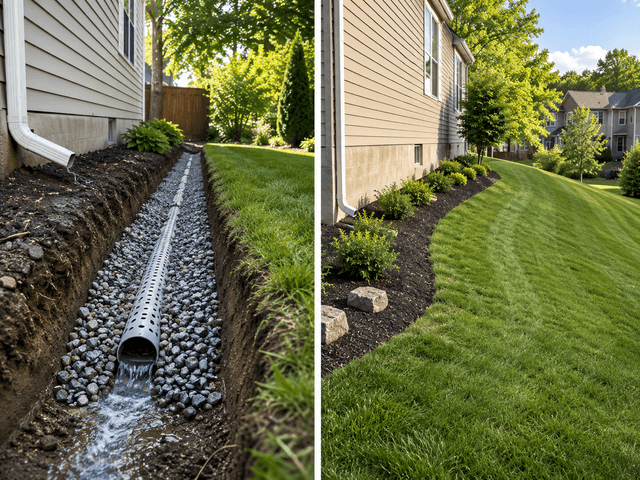
You have a soggy spot, a puddle that won't leave, or water running toward the house — and someone's told you to install a French drain. Someone else says you need to regrade. A third contractor is quoting swales, downspout extensions, and "a full drainage system."
How do you know which one you actually need?
Here's the honest french drain vs regrading answer this piece is built around: the right fix depends entirely on where the water is coming from, where it's going, and what your soil is doing. Pick the wrong solution and you can spend real money and still have a wet yard. Pick the right one — often a combination — and the problem quiets down for good. This is a decision guide, not a sales pitch. For a broader view of hardscape work, see our hardscaping services, and read on.
Diagnose Before You Buy
Drainage forum threads land on the same insight over and over: a soggy lawn is usually a grading problem, not a drain problem — and a French drain alone won't fix saturated or clay soil. That single sentence would save countless homeowners from paying for the wrong fix.
Before you commit to any solution, answer three questions about your yard:
-
Where is the water coming from? Roof and downspouts, uphill neighbor, the yard itself, or a rising water table?
- Where does the water go — or fail to go? Does it pool because the ground is flat or slopes the wrong way? Or does it soak in slowly because of clay soil?
- What does the ground look like the day after rain? Still puddled means grading or soil; damp but not puddled means the surface flow is working but the soil holds water.
Get those three answers and the right fix usually reveals itself. Our broader guide to yard drainage solutions walks through the diagnostic lens in more depth.
The Four Fixes and What Each Actually Does
Almost every residential drainage issue is solved with one — or a combination — of these four fixes. Match the fix to the cause, not the other way around.
Regrading: The Fix for Surface Water
Regrade yard, in plain English, means reshaping the ground so water runs the way you want it to. It's the go-to solution when the yard is flat, slopes toward the house, or has low spots that puddle. Because it works with gravity rather than fighting it, regrading is usually the most durable, lowest-maintenance fix — no pipes to clog, nothing hidden to fail.
Best for:
-
A flat yard or one sloping toward the house.
- Puddles that appear in the same low spots after every rain.
- Water pushing back toward the foundation.
Trade-offs: regrading is disruptive to install (soil work, sod loss, some short-term mess) and requires an outlet — somewhere lower the water can safely run to. But once done well, it just works. It's the same principle behind the proper base and grading any quality hardscape design starts from.
French Drain: The Fix for Subsurface Water
A French drain is a perforated pipe in a gravel-filled trench, wrapped in filter fabric. It captures water that's already in the soil and carries it to an outlet. Its job is groundwater and slow-percolating subsurface flow, not surface puddles.
Best for:
-
A persistently soggy lawn where water is coming up through the soil, not sitting on top of it.
- Water seeping through a retaining wall or hillside.
- A high water table or a spring in the yard.
- Water infiltrating a below-grade area, footing, or foundation.
Trade-offs and the key myth: a French drain is not a cure-all. In heavy clay soil, water can't move to the pipe quickly enough for the drain to keep up — you'll still have a soggy lawn. On a yard sloping the wrong way, the French drain fills up while surface water sheets over the top. Installed for the wrong problem, French drains disappoint. Installed for the right one, they work brilliantly. The same subsurface principle drives good retaining wall drainage.
Swale: A Softer Alternative to a French Drain
A swale is a shallow, gently sloped depression — sometimes planted, sometimes lined with rock — that guides surface water across the yard to an outlet. In a swale vs french drain choice, the swale wins on cost, simplicity, and durability whenever the water is surface flow you can route above ground.
Best for:
-
Directing sheet flow across a yard toward a drain, street, or planted infiltration zone.
- Slowing runoff from a slope or uphill neighbor.
- Rain-garden or infiltration designs that let water soak in on the way through.
Trade-offs: swales need enough length and drop to work, and they're visible — some yards can't accommodate one gracefully. Where they fit, they're often the most elegant, low-maintenance solution and can look genuinely beautiful when planted.
Downspout Drainage: Fix the Roof Water First
Downspout drainage is the fix homeowners most often overlook — and the first one every professional checks. Roofs shed astonishing volumes of water in a single storm. If your downspouts dump it right at the foundation or into a soggy corner, no amount of French drain or regrading downstream will keep up.
Best for:
-
Puddles or wet basements directly beneath downspouts.
- Erosion at the base of downspouts.
- Any drainage plan — this step almost always comes first.
Fixes range from simple splash blocks and above-ground extensions to buried solid pipe carrying downspout flow to a safe outlet away from the house. It's usually the highest-impact, most affordable step and is often bundled with other fixes. This is the same principle behind managing water on and around a patio.
How to Decide: Match the Fix to the Cause
Use these one-liners to shortlist your fix before a professional confirms it on site.
- Puddles on the surface, especially near the house → Regrade first. Downspouts probably need attention too.
- Soggy lawn that squelches days after rain → Likely a grading or soil issue, not a French drain problem. Regrade, or add a swale, and consider soil amendment.
- Water seeping up through the ground or through a wall → A French drain is the tool - subsurface capture is its job.
- Runoff sheeting across the yard from a slope or neighbor → Swale, sometimes combined with regrading.
- Puddles right under a downspout → Downspout drainage - fix this before anything else.
- Heavy clay soil holding water → A drain alone won't solve it. Combine regrading to move water off the surface with soil work or planted infiltration.
Yards with more than one cause need combined fixes — buried downspouts plus a light regrade, a French drain paired with a swale, and so on. Grab our free Drainage Decision Flowchart — a one-page decision tree that walks you from symptom to likely fix — so you can vet any contractor's proposal against a clear standard.
Red Flags in a Drainage Bid
Because drainage is invisible once installed, this is a category where the wrong bid is easy to accept. Watch for these:
-
A French drain proposed without a clear plan for the outlet, or on a flat yard with no drop.
- Any drainage plan that ignores downspouts and roof water.
- A one-size solution proposed without an on-site diagnosis of where water comes from.
- No mention of soil type when the yard is soggy for days.
- A pipe-only proposal for a problem that's really about grade.
A good contractor walks the yard the day after a rain, asks about downspouts and uphill neighbors, and proposes the least-invasive fix that solves the actual cause. Comparing bids on diagnosis and workmanship is exactly why it helps to compare quotes carefully.
Get an Honest Drainage Assessment
Before you spend money on the wrong fix, get a clear diagnosis of what your yard actually needs. Book a free drainage assessment and we'll walk your yard, trace the water, check downspouts and grade, and tell you honestly whether it's a regrade, a French drain, a swale, downspout work, or a combination - and lay out the most durable solution. Call +1 (818) 303-1570 or contact us to schedule, and explore our hardscape and drainage work.
Frequently Asked Questions
French drain vs regrading - which does my yard need?
The french drain vs regrading choice comes down to where the water is: on the surface or in the soil. If water pools on top of a flat yard or one sloping the wrong way, regrading is the right fix. If water is coming up through soggy soil, seeping through a wall, or the water table is high, a French drain is the right fix. Many yards need both - regrade to move surface flow, French drain to capture subsurface water. Downspout drainage almost always comes first.
Will a French drain fix a soggy lawn?
Sometimes, but often not. A soggy lawn is usually a grading or soil problem, not a subsurface water problem. In heavy clay soil, water can't move to the drain quickly enough for a French drain to keep up. On a yard sloping toward the house, surface water sheets over the top of the drain. Diagnose the cause first - it's often a regrade, a swale, downspout work, or a combination that actually fixes a soggy lawn fix scenario.
What's the difference between a swale and a French drain?
A swale is an above-ground shallow channel that guides surface water across the yard to an outlet. A French drain is a buried perforated pipe in gravel that captures subsurface water. In a swale vs french drain choice, swales win for surface flow when there's room for one - they're simpler, cheaper, more durable, and can look beautiful when planted. French drains are the right tool for subsurface water, seeps, or a high water table.
Do I need to bury my downspouts?
If your downspouts dump water at the foundation or into a soggy area, yes - proper downspout drainage is usually the first and highest-impact fix. Options range from simple splash blocks and above-ground extensions to buried solid pipe carrying the flow to a safe outlet away from the house. Nearly every yard drainage plan starts by dealing with roof water, since no downstream fix keeps up if downspouts are dumping at the base of the house.
How do I get an honest drainage diagnosis?
Walk your yard the day after rain and note where water pools, where it flows, and where downspouts discharge. Then get an on-site assessment from a professional who checks grade, downspouts, and soil before proposing anything. Be wary of a bid that skips diagnosis or proposes a single fix without explaining why. Book a free drainage assessment at +1 (818) 303-1570 to get a clear read on what your yard needs.
Thinking about a new outdoor space?
We’d love to hear your ideas. Let’s explore what’s possible—no pressure, just a friendly conversation.
Give us a call:
+1 (818) 303-1570
Frequently Asked Question
WILL YOU WORK WITH MY HOA?
Yes - While individual requirements of HOAs can be as diverse of the properties they represent, a set of established and agreed upon standards must be maintained. We will work closely with your HOA to conform to all specifications and approval processes while bringing out your property's absolute best.