
OUR MISSION IS TO TAILOR FOR EACH CLIENT A BEAUTIFUL, FUNCTIONAL AND ENDURING OUTDOOR ENVIRONMENT THAT WILL PROVIDE A PLACE OF SERENITY FOR FRIENDS AND FAMILY TO APPRECIATE FOR YEARS TO COME.

BuildCal Landscape Landscape Design & Water-Wise Article
The Strip Between Sidewalk & Street - Parkway (Hellstrip) Landscaping That's Legal and Low-Water
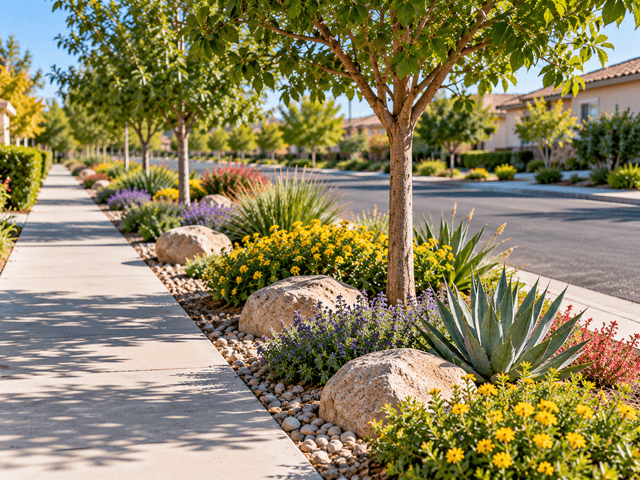
Looking for parkway landscaping ideas for that dead strip of grass or dirt between the sidewalk and the curb? The good news is you can turn it into a low-water, attractive planting — but the "hellstrip" sits in the public right-of-way, so city rules govern what you can plant, how tall it can grow, and what has to stay clear for drivers and people getting out of cars. In Glendale and Los Angeles the rules differ, and both favor drought-tolerant plants and safe access. Here's how to upgrade the strip the right way, within the rules, with a licensed landscaper handling the details.
What makes parkway landscaping legal and low-water?
A compliant parkway keeps plants low enough to preserve sightlines (roughly knee-high, and lower near driveways and corners), maintains a firm, walkable path so people can step out of a car and reach the sidewalk, keeps clearance around street trees and utilities, and uses drought-tolerant planting suited to our climate. Depending on the city, work above a certain height — or adding trees and hardscape — may require a permit. Because the strip is public land, confirming the local rules before planting is the step that keeps the project legal.
What does parkway landscaping involve?
Parkway (or "hellstrip") landscaping replaces tired lawn, weeds, or bare dirt in the curb strip with low-water plants, permeable materials, and a defined walking path. Done well, it cuts water use, improves curb appeal, and can help capture rain rather than shedding it to the gutter. The catch is that it's public right-of-way, so the design has to satisfy both good horticulture and the city's safety and access rules. This kind of work fits squarely within BuildCal's drought-tolerant and water-wise landscaping, where plant selection, grading, and compliance all come together.
Why low-water planting is the right fit
The parkway is one of the hottest, driest, most reflected-heat spots on a property, and both Glendale and LA actively encourage drought-tolerant, climate-appropriate plants there. California-friendly species handle the conditions, need far less water, and stay healthier long term. Our guide to the best drought-tolerant plants for Glendale landscapes is a good starting point, and the broader guide to water-wise landscaping in Los Angeles covers the approach across the region.
What are the parkway rules in Glendale and Los Angeles?
These are general summaries, not legal advice — rules change and vary by block, so always confirm current requirements with your city before you dig. This information is current as of October 2026.
Glendale (Parkway Landscaping Ordinance)
- A permit is generally required to install anything over 12 inches tall in the parkway — live plants or non-living items alike.
- Swapping a grass parkway for a mix of plantings and non-living materials (pavers, decomposed granite, gravel, wood chips) generally does not require a permit.
- Living plants must cover at least 30% of the parkway area, and drought-tolerant, California-friendly plants are encouraged.
- Prohibited: non-living materials over 18 inches, plants poisonous to the touch, fruit- or vegetable-bearing plants, ivy and dense ground covers, artificial turf, and anything that blocks vision, a hydrant, or pedestrian passage — or that could harm a city street tree.
City of Los Angeles (Residential Parkway Guidelines)
- Residential parkways (properties with 1–10 units) can be exempt from a permit when plantings and irrigation meet the city's guidelines — but trees always need a tree permit, and non-vegetative items like paving, decomposed granite, and raised planters need the appropriate permits.
- Plants must stay under 36 inches at maturity, dropping to 24 inches within the 45-foot visibility triangle at intersections and within 5 feet of a driveway or curb ramp. Continuous hedges or screens aren't allowed.
- A walkable "convenience strip" at least 18 inches wide must run along the back of the curb so people can exit vehicles onto firm footing, and a paved "house walk" at least 48 inches wide is required at intervals where street parking exists.
- Keep plants at least 24 inches from a street tree trunk and 12 inches from utilities and hydrants. Loose materials like gravel or mulch are generally only allowed as plant mulch (with plants covering about 80% at maturity) and not on steeper slopes.
Visibility, access, and safety come first
Across both cities the theme is the same: the parkway has to stay safe. That means keeping plants low enough that drivers can see pedestrians and oncoming traffic, especially near corners and driveways, and leaving a firm, stable path so anyone stepping out of a parked car has somewhere solid to land rather than sinking into loose gravel or crushing plants. Designing for those sightlines and that access from the start is what separates a parkway that passes inspection from one a city asks you to tear out.
Low-water materials and permeable surfaces
Beyond plants, the right ground materials make a parkway durable and water-smart. Permeable surfaces and proper mulch help water soak in rather than run off, suppress weeds, and keep the strip tidy. Our guide to the best mulch for Southern California covers the choices, and the same drought-tolerant thinking that works in the parkway applies to the rest of the frontage — our drought-tolerant front yard planning guide helps tie the whole street-facing look together.
Who typically needs parkway landscaping?
Mostly homeowners tired of struggling lawn or bare dirt in the curb strip who want a cleaner, lower-water look — common across Glendale, La Crescenta, La Cañada, and the valleys. It also appeals to owners pursuing water savings, HOAs standardizing streetscapes, and commercial or multi-unit properties that need compliant, low-maintenance frontage. Anyone replacing lawn as part of a broader front-yard redesign usually folds the parkway into the plan.
What to check before starting your parkway project
- Which city or jurisdiction governs your parkway, and what are its current rules?
- Does your plan need a permit (over a height threshold, or adding trees or hardscape)?
- Are there corners, driveways, or curb ramps that require lower planting for visibility?
- Is there a firm, walkable path for people exiting parked cars?
- Are there street trees or utilities you must keep clearance from?
- Are your plant choices drought-tolerant and allowed (no ivy, fruit, or poisonous species where prohibited)?
Parkway planning at a glance
| Element | When it matters | Key considerations | Notes before starting |
|---|---|---|---|
| Plant height | Always — especially near corners/driveways | Keep low for sightlines; no continuous hedges in LA | Lower limits apply in visibility zones |
| Walkable path | Where people exit parked cars | Firm strip along the curb; paved house walks in LA | Don't force people onto loose gravel or plants |
| Permits | Over height limits, or adding trees/hardscape | Glendale: over 12 in; LA: trees and non-veg items | Verify with the city first |
| Plants & materials | Every parkway | Drought-tolerant; min living coverage; no ivy/artificial turf where barred | Check prohibited lists per city |
What mistakes lead to a failed or non-compliant parkway?
- Planting tall or hedge-like material that blocks driver and pedestrian sightlines.
- Leaving no firm path, so people step out of cars into gravel or onto plants.
- Using prohibited materials or species — ivy, artificial turf, or fruiting plants where they're barred.
- Skipping the permit for height, trees, or hardscape where one is required.
- Crowding street trees or utilities instead of keeping required clearance.
- Loose gravel on slopes or spilling onto the sidewalk, creating a hazard.
How does BuildCal help you?
BuildCal is a licensed landscape contractor (California State License Board / CSLB) in Glendale, and parkway projects are exactly where local knowledge pays off. We design the strip around your city's rules — plant heights, living-coverage minimums, walkable paths, and street-tree and utility clearances — using drought-tolerant plants and permeable materials suited to Southern California. We start with an on-site assessment of the parkway, sightlines, access, and existing trees, flag any permit requirements, and provide a written estimate and scope before work begins. The result is a low-water parkway that looks intentional and holds up to both the climate and a city inspection.
Steps to request your project from BuildCal
- Share a few photos of your parkway and frontage, with a short description of what you want.
- Schedule an on-site assessment of the strip, sightlines, access, and any street trees.
- Receive a written estimate with scope, plants, materials, and timeline, including permit steps.
- Approve the plan and schedule the work.
- Installation and a final walkthrough, with planting and upkeep notes.
Frequently asked questions about parkway landscaping
Do I own the parkway in front of my house?
Usually the homeowner is responsible for maintaining it, but the parkway strip itself is part of the public right-of-way, which is why the city sets rules for what you can plant and build there. You can absolutely improve it, but the design has to meet local requirements for height, access, and clearance. Treat it as "yours to maintain, the city's to regulate," and confirm the current rules before starting.
Do I need a permit to landscape my parkway?
It depends on the city and the work. In Glendale, a permit is generally required to install anything over 12 inches tall, though swapping grass for low plantings and non-living materials often doesn't need one. In Los Angeles, guideline-compliant residential plantings can be permit-exempt, but trees and hardscape still require permits. Because rules vary and change, verify the current requirements with your city before you begin.
What are the best plants for a parkway in Southern California?
Low-growing, drought-tolerant, California-friendly plants are the best fit — they handle the hot, dry curb-strip conditions, use little water, and keep sightlines clear. Avoid anything that forms a tall hedge, bears fruit, or is prohibited locally, such as ivy. Our guide to the best drought-tolerant plants for Glendale landscapes is a useful starting point, and the right mix depends on your sun exposure, soil, and city rules.
Can I put gravel or decomposed granite in the parkway?
Sometimes, within limits. Glendale allows a mix of plantings and non-living materials but caps non-living material height and still requires minimum living-plant coverage. Los Angeles generally allows loose materials only as plant mulch, not as a standalone surface, and not on steeper slopes. Permeable materials can work well when used correctly, so the key is matching them to your city's rules and keeping a firm, walkable path.
How low do the plants have to be?
Low enough to preserve visibility. Los Angeles generally caps parkway plants at 36 inches at maturity, dropping to 24 inches within the corner visibility triangle and near driveways and curb ramps, with no continuous hedges. Glendale ties its height rules to permitting and prohibits anything that blocks vision. The practical goal everywhere is keeping drivers' and pedestrians' sightlines clear, especially near intersections and driveways.
Why does the path for exiting cars matter so much?
Because people park along the curb and step directly into the parkway, cities require a firm, stable landing and walkable access to the sidewalk. Los Angeles specifies a walkable strip along the curb and paved "house walks" at intervals where parking exists. If your design forces people onto loose gravel, mud, or plants, it won't comply — and it's genuinely unsafe. Building that access in from the start avoids both problems.
Request your estimate today
If you want parkway landscaping ideas turned into a low-water strip that's actually legal in Glendale or the greater Los Angeles area, BuildCal can design and build it to your city's rules. Send us a few photos of your parkway to schedule an on-site assessment and get a written estimate — including any permit steps — before work begins. Call (818) 303-1570 or request your free estimate online.
Thinking about a new outdoor space?
We’d love to hear your ideas. Let’s explore what’s possible—no pressure, just a friendly conversation.
Give us a call:
+1 (818) 303-1570
Frequently Asked Question
WHAT PHASES OF LANDSCAPING SHOULD BE DONE FIRST, AND LAST?
What we call 'hardscape' should be installed first – such as walkways, walls, stonework, patios, and such. Then will come all of the irrigation and electrical installation work, to be followed finally with landscape plantings, or ‘softscape.’