
OUR MISSION IS TO TAILOR FOR EACH CLIENT A BEAUTIFUL, FUNCTIONAL AND ENDURING OUTDOOR ENVIRONMENT THAT WILL PROVIDE A PLACE OF SERENITY FOR FRIENDS AND FAMILY TO APPRECIATE FOR YEARS TO COME.

BuildCal Landscape Landscaping & Design Article
Landscaping in La Cañada Flintridge - Hillside, Fire-Wise & Permit Considerations
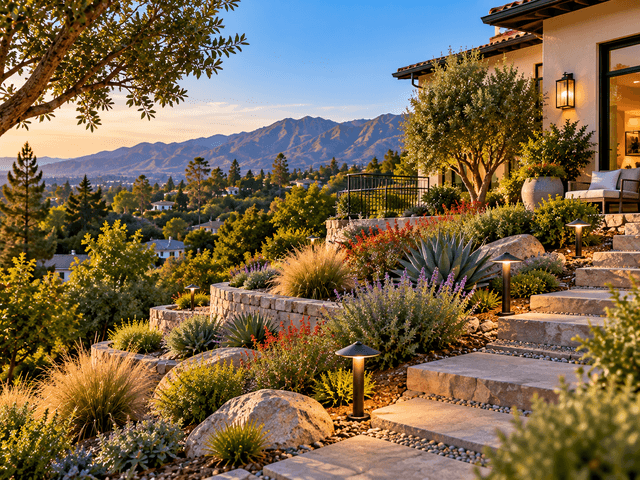
Landscaping in La Cañada Flintridge isn't the same as landscaping a flat valley lot. These foothill properties bring slopes, native soils, and wildfire exposure that shape every decision — from how you grade and drain a hillside to how you plant for defensible space. Done right, a foothill landscape is beautiful, stable, and fire-wise; done without accounting for the terrain and fire zone, it can erode, flood, or add fuel near the home. Here's what makes foothill landscaping different, the hillside and fire-wise considerations that matter, and the permits to check. This is general guidance, not legal advice, and is current as of October 2026.
What's different about foothill landscaping here?
La Cañada Flintridge sits in the San Gabriel foothills, so landscaping has to manage slope and wildfire risk, not just looks. That means proper hillside grading and drainage to control runoff and erosion, fire-wise planting and defensible space around the home (much of the area falls in a Very High Fire Hazard Severity Zone), erosion control on slopes, and climate- and foothill-appropriate planting, often natives. Hillside grading and some work can trigger city permits and fire-zone requirements, so confirm with the city and fire authority before starting.
What does foothill landscaping involve?
A foothill landscape is a design-build project where the terrain leads. It typically combines grading and drainage to handle how water moves down a slope, retaining and hardscape to create usable level space, erosion control to hold soil, and planting chosen for the climate, slope, and fire exposure. The right approach depends heavily on the site's grade, soil, sun, and fire-zone status — which is why it starts with an on-site assessment. BuildCal handles this through its landscape design and build services, and our hardscaping ideas for a La Cañada backyard show what's possible on these lots.
Hillside grading, drainage, and erosion control
On a slope, water management is the foundation everything else depends on. Uncontrolled runoff erodes soil, undermines hardscape, and can send water toward the house or down onto neighbors. Proper hillside work means grading that directs water safely, drainage to carry it to a stable outlet, and erosion control — terracing, retaining, planting, and ground stabilization — to hold the slope. Our guide on fixing erosion on sloped yards covers the common foothill problems. Significant grading on a hillside is also where permits most often come into play.
Creating usable space on a slope
Much of the value in a foothill landscape is turning steep, unusable ground into flat, livable "rooms" — a patio, a lawn area, a garden terrace — using retaining walls and terracing. This is structural work: retaining walls over certain heights or supporting a slope generally need a permit and engineering, and the grading behind them has to be done right. It's the difference between a hillside yard you can actually use and one that slowly slides.
Fire-wise landscaping and defensible space
Because much of La Cañada Flintridge and the surrounding foothills sits in a Very High Fire Hazard Severity Zone, fire-wise landscaping isn't optional — it's part of protecting the home. California's defensible-space rules (Public Resources Code 4291) generally call for managing vegetation 100 feet out from the structure, organized in zones:
- Zone 0 (0–5 ft), ember-resistant: the most critical zone closest to the house — kept clear of combustible material, with hardscape or noncombustible surfaces instead of bark mulch against the structure. (Zone 0 rules are being finalized by the state and phased in, so confirm current requirements.)
- Zone 1 (5–30 ft), "lean, clean, and green": dead vegetation removed, plants kept low and well-irrigated, trees pruned.
- Zone 2 (30–100 ft), reduced fuel: thinned and spaced vegetation, with more clearance on steeper slopes.
Fire-wise design balances these requirements with an attractive yard — using fire-resistant planting, smart spacing, and hardscape near the home. Our overview of fire-wise landscaping and defensible space in SoCal goes deeper. Always confirm current defensible-space rules with CAL FIRE or your local fire authority, as requirements evolve.
Native and foothill-appropriate planting
Planting in the foothills does best when it suits the native soil, slope, and dry climate. California natives and climate-appropriate species handle the conditions, need less water, stabilize slopes with their roots, and — chosen well — support fire-wise goals. They also look at home against the San Gabriel backdrop in a way that thirsty, out-of-place lawns don't. Our guide to caring for natives in a La Cañada garden covers keeping them healthy once established.
Foothill landscaping considerations at a glance
| Consideration | Why it matters here | Key point | Notes before starting |
|---|---|---|---|
| Grading & drainage | Slopes shed water fast | Direct runoff to a safe outlet | May need a grading permit |
| Erosion control | Slopes lose soil | Terracing, retaining, planting | Protects the slope and home |
| Defensible space | Very High Fire Hazard Zone | Manage vegetation ~100 ft in zones | Confirm current fire rules |
| Native planting | Dry climate, slopes | Low-water, slope-stabilizing, fire-wise | Match to soil and sun |
| Permits | Hillside & structural work | Grading, retaining walls, trees | Verify with city/fire authority |
Who typically needs this?
Foothill homeowners in La Cañada Flintridge, La Crescenta, and the surrounding San Gabriel foothills are the core audience — owners of hillside lots who want usable, beautiful, and fire-wise outdoor space, those dealing with erosion or drainage on a slope, and anyone bringing an older foothill yard up to current defensible-space standards. Higher-value foothill properties often involve more extensive grading, retaining, and design, which makes experienced, licensed work especially important.
What mistakes lead to a failed foothill landscape?
- Ignoring drainage, so runoff erodes the slope or floods the house.
- Building retaining walls or regrading without required permits and engineering.
- Planting flammable vegetation close to the home in a fire zone.
- Choosing thirsty, shallow-rooted plants that don't suit the slope or climate.
- Treating defensible space as an afterthought instead of part of the design.
- Hiring a crew without hillside and fire-wise experience.
What to check before starting your foothill project
- How steep is the slope, and how does water currently move across it?
- Is your property in a Very High Fire Hazard Severity Zone?
- Will the project involve significant grading or retaining walls (likely permits)?
- Does the planting plan meet defensible-space goals near the home?
- Are the plants suited to foothill soil, slope, and low water?
- Is the contractor experienced with hillside and fire-wise work, licensed, and insured?
How do you choose the right landscaping company?
For foothill work, experience with slopes and fire zones matters as much as design. Choose a licensed landscape contractor (CSLB) who understands hillside grading and drainage, builds retaining properly with the required permits and engineering, and designs fire-wise, defensible planting. Look for a clear written estimate and scope, knowledge of La Cañada Flintridge and foothill requirements, and native/climate-appropriate plant expertise. A contractor who leads with the terrain and fire realities — not just a pretty rendering — is the one who'll build something that lasts here.
How does BuildCal help you?
BuildCal is a licensed landscape contractor (California State License Board / CSLB) based in Glendale, close to and experienced with the foothill communities of La Cañada Flintridge and La Crescenta. We design and build foothill landscapes around the terrain and fire realities: hillside grading and drainage, erosion control, retaining and terracing to create usable space, and fire-wise, native-forward planting that supports defensible space. We start with an on-site assessment of the slope, soil, drainage, and fire-zone considerations, flag any grading, retaining, or fire-zone permits to confirm with the city and fire authority, and provide a written estimate and scope before any work begins.
Steps to request your project from BuildCal
- Share photos of your property and slope, with a short description of your goals.
- Schedule an on-site assessment of the grade, soil, drainage, and fire-zone considerations.
- Receive a written estimate with scope, materials, and timeline, including any permit steps.
- Approve the plan and schedule the work.
- Installation and a final walkthrough, with planting, care, and defensible-space notes.
Frequently asked questions about landscaping in La Cañada Flintridge
What makes landscaping in La Cañada Flintridge different?
The foothill terrain and wildfire exposure. These properties have slopes that shed water fast and lose soil to erosion, native soils, and — across much of the area — Very High Fire Hazard Zone status. That means grading, drainage, erosion control, and fire-wise defensible-space planting all matter alongside looks. A flat-lot approach doesn't translate here. Successful foothill landscaping is designed around the slope, the soil, the water, and the fire realities from the start.
Do I need a permit to landscape a hillside here?
Often, for parts of it. Significant grading, retaining walls (generally over about four feet or supporting a slope), and tree work commonly require permits, and fire-zone requirements add their own rules. Planting itself usually doesn't need a permit, but the structural and grading work frequently does. Requirements vary and change, so this is general guidance — confirm with the City of La Cañada Flintridge and the local fire authority before starting. We identify likely permits during the assessment.
What is defensible space and do I need it?
Defensible space is managed, fire-resistant landscaping around a home in a fire hazard area — generally extending 100 feet out under California's PRC 4291, organized in zones from an ember-resistant area right next to the house out to reduced-fuel zones farther away. If your property is in a Very High Fire Hazard Severity Zone, which covers much of the foothills, it's required and important for protecting the home. Rules, especially for the zone closest to the house, are evolving, so confirm current requirements with CAL FIRE or your local fire authority.
What plants are best for a foothill yard?
California natives and climate-appropriate species generally do best — they handle the dry climate and native soil, need less water, stabilize slopes with their roots, and, chosen well, support fire-wise goals. The right palette depends on your sun, soil, slope, and defensible-space zones, so plant selection and placement matter as much as the species. We design planting that suits the foothill conditions and keeps the home's defensible space in mind, rather than fighting the terrain.
How do you stop erosion on a slope?
With a combination of grading, drainage, structure, and planting. Grading directs water safely, drainage carries it to a stable outlet, retaining walls and terracing hold soil and create usable space, and deep-rooted, climate-appropriate planting stabilizes the surface. The right mix depends on the slope's steepness, soil, and how water moves across it. Erosion control is one of the most important parts of foothill landscaping, which is why we assess the slope and water flow before recommending an approach.
Do you work throughout the foothills, not just La Cañada?
Yes. We're based in Glendale and work across the foothill communities including La Cañada Flintridge, La Crescenta, and the surrounding San Gabriel foothill areas. The same hillside, drainage, erosion, and fire-wise principles apply across these neighborhoods, adjusted for each property's specific slope, soil, and fire-zone status. Wherever your foothill property is, we start with an on-site assessment and confirm the local city and fire-authority requirements that apply to it.
Request your estimate today
If you're planning landscaping in La Cañada Flintridge or the surrounding foothills, the right first step is an on-site look at your slope, soil, drainage, and fire-zone considerations. Send BuildCal a few photos of your property to schedule an assessment and get a written estimate — including any permit steps — before work begins. Call (818) 303-1570 or request your free estimate online.
Thinking about a new outdoor space?
We’d love to hear your ideas. Let’s explore what’s possible—no pressure, just a friendly conversation.
Give us a call:
+1 (818) 303-1570
Frequently Asked Question
WILL YOU WORK WITH MY HOA?
Yes - While individual requirements of HOAs can be as diverse of the properties they represent, a set of established and agreed upon standards must be maintained. We will work closely with your HOA to conform to all specifications and approval processes while bringing out your property's absolute best.