
OUR MISSION IS TO TAILOR FOR EACH CLIENT A BEAUTIFUL, FUNCTIONAL AND ENDURING OUTDOOR ENVIRONMENT THAT WILL PROVIDE A PLACE OF SERENITY FOR FRIENDS AND FAMILY TO APPRECIATE FOR YEARS TO COME.

BuildCal Landscape Hardscaping & Accessible Design Article
Aging-in-Place & Accessible Yards in SoCal - Level Paths, Ramps & No-Trip Hardscape
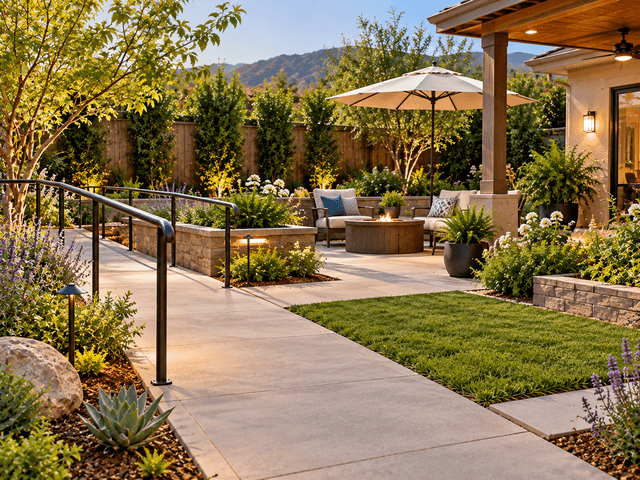
When a parent starts struggling with the back steps, or mobility changes after a surgery, families often assume the yard is about to become off-limits. It does not have to. With the right surfaces, grades, and lighting, a backyard can stay safe and genuinely usable as mobility changes — a place to garden from a chair, roll a walker to the patio, or sit outside without fear of a fall. Accessible backyard design for aging in place is less about medical equipment and more about thoughtful landscape choices: level, firm, slip-resistant surfaces instead of loose gravel and sudden steps; gentle ramps where grade changes; paths wide enough for a wheelchair or walker; lighting that makes every edge visible at night; and planting that can be tended without constant bending or heavy upkeep. This guide walks through each of those, with realistic dimensions and a reminder to tailor the design to the person who will use it.
Choose Level Firm and Slip-Resistant Surfaces
Surfaces are the foundation of a safe yard. The goal is firm, stable, level, and slip-resistant — which rules out several popular materials and favors others. Loose gravel and deep decomposed granite that look great in a photo can trap walker tips and wheelchair casters and shift underfoot.
| Surface | Accessible? | Why |
|---|---|---|
| Smooth, firm pavers or concrete | Yes | Stable and level for wheels, walkers, and canes; choose slip-resistant finishes |
| Stabilized / bound decomposed granite | Sometimes | Can work when firmly stabilized; loose DG does not |
| Loose gravel or deep DG | Avoid on routes | Shifts underfoot and catches wheels and walker tips |
| Stepping stones with gaps | Avoid on routes | Uneven spacing and gaps are trip and wheel hazards |
- Keep surfaces flush and even, with no sudden lips, raised edges, or trip points.
- Choose finishes that stay slip-resistant when wet, especially near a hose, pool, or sprinkler overspray.
- Set drainage so water sheds without creating a slope that is hard to navigate — a walkway built for width, traction, and materials is a good model for the whole yard.
Design Gentle Ramps and Step-Free Transitions
Steps are the single most common fall hazard in a yard. A no step patio with flush, step-free transitions from the house to the paved area removes the biggest obstacle, and where grade must change, a gentle ramp replaces the step. Good ramp landscaping is about a slope that is actually comfortable to use.
- Aim for a gentle slope — a widely referenced accessibility guideline is a maximum of about 1:12 (one inch of rise per twelve inches of run), and gentler is easier to use.
- Include level landings at the top, bottom, and any turns so the user can pause and rest.
- Make transitions from house to patio flush, with thresholds kept as low and smooth as possible.
- Add handrails on ramps and any remaining steps for support.
- Confirm the right slope and layout for the specific person and your local code, rather than assuming one number fits everyone.
Size Paths for Width Turning and Handrails
A wheelchair accessible yard needs paths with enough room to move, turn, and pass. A path that is wide enough for one careful walker is not necessarily wide enough for a wheelchair or two people side by side.
- Use a generous clear width — commonly referenced guidelines suggest roughly 36 inches minimum, with wider paths for comfortable passing.
- Provide turning space — about a 60-inch circle is a common reference for a wheelchair to turn around.
- Keep planting set back so mature growth does not narrow the usable path over time.
- Add handrails along ramps, steps, and longer routes where support helps.
- Keep the route continuous and connected, so the user can reach the patio, garden, and gate without a dead end or a step.
Light the Yard for Safe Nighttime Use
Good lighting is a safety feature, not a luxury, especially for aging eyes. Edges, steps, ramps, and transitions that are easy to see in daylight can disappear at dusk, turning a safe path into a hazard.
- Light the path edges, every step and ramp, and each transition so the route is readable at night.
- Avoid glare, which is especially hard on older eyes — aim for even, low-glare illumination.
- Make sure the route from the door to seating and back is fully lit, following the same logic as lighting placed at steps, edges, and transitions.
- Consider motion or always-on fixtures at key safety points so no one navigates in the dark.
Raise Beds to Seated Gardening Height
Gardening is one of the first joys people fear losing — and one of the easiest to preserve. A senior friendly garden brings the plants up to the person rather than forcing the person down to the ground.
- Use raised beds and planters at a height that can be tended while seated or standing without deep bending.
- Leave firm, level, wide space around beds so a wheelchair or walker can pull alongside.
- Consider wheelchair-accessible beds with knee clearance so a user can roll up close.
- Group frequently tended plants within easy reach and keep tools and a water source nearby.
Keep Planting Low-Maintenance and Easy-Care
The final piece is choosing plants that keep the yard beautiful without demanding constant work — a low maintenance accessible yard stays enjoyable instead of becoming a chore or a hazard to maintain.
- Favor low-maintenance, easy-care plants that need minimal pruning and water.
- Use efficient drip irrigation on a timer so watering does not depend on hauling a hose.
- Reduce lawn and high-upkeep planting that requires frequent, physical maintenance.
- Mulch beds to cut weeding and watering, and keep the overall plan simple and manageable.
Frequently Asked Accessible Yard Design Questions
What Is the Best Surface for a Wheelchair-Accessible Yard?
The best surfaces are firm, stable, level, and slip-resistant — smooth pavers or concrete with a non-slip finish are ideal. Loose gravel, deep decomposed granite, and stepping stones with gaps should be avoided on the main routes because they shift underfoot and catch wheels and walker tips. Firmly stabilized decomposed granite can sometimes work, but loose material does not. Keep the surface even with no lips or trip points.
What Ramp Slope Is Safe for Aging in Place?
A widely referenced accessibility guideline is a maximum ramp slope of about 1:12 — one inch of rise for every twelve inches of run — with level landings at the top, bottom, and any turns, plus handrails. Gentler slopes are easier and safer to use. Because the right slope depends on the individual's mobility and your local code, confirm the design for the specific person rather than relying on a single rule, and an occupational therapist or accessibility professional can help.
How Wide Should Accessible Garden Paths Be?
Paths should have enough clear width for the equipment that will use them. Commonly referenced guidelines suggest roughly a 36-inch minimum, with wider paths for comfortable passing and about a 60-inch turning circle so a wheelchair can turn around. Keep planting set back so paths do not narrow as plants mature, and make routes continuous and step-free so the user can reach every part of the yard without a dead end.
What Are Low-Maintenance Options for an Accessible Yard?
Choose easy-care, low-water plants that need little pruning, pair them with drip irrigation on a timer, reduce lawn and high-upkeep beds, and mulch to cut weeding and watering. Raised beds bring gardening to a comfortable height, and firm paved surfaces reduce the maintenance and hazards of loose materials. The goal is a yard that stays safe and attractive without demanding physical, frequent upkeep.
Design a Safe, Accessible Yard Today
If you want accessible backyard design for aging in place that keeps the yard safe and usable as mobility changes, the answer is the right surfaces, grades, lighting, and planting designed around the person. Contact BuildCal Landscape for an accessible-yard design consultation or call +1 (818) 303-1570. Our hardscaping services can build the no-step patios, level slip-resistant paving, and gentle ramps, and our landscape and planting services can add raised beds, lighting, and easy-care planting so your Glendale or Los Angeles yard stays welcoming for years to come.
Thinking about a new outdoor space?
We’d love to hear your ideas. Let’s explore what’s possible—no pressure, just a friendly conversation.
Give us a call:
+1 (818) 303-1570
Frequently Asked Question
WE WANT A LOT DONE, BUT CANNOT AFFORD TO DO IT ALL NOW. CAN YOU STILL WORK WITH US?
Yes – it is not uncommon to do a project in phases, especially when there are such constraints as budget and time. Because we draw up our own plans, we can design a project to be installed in phases. Once the complete plan is established, the property owner can easily pick and choose which parts to be completed now and in the future.