
OUR MISSION IS TO TAILOR FOR EACH CLIENT A BEAUTIFUL, FUNCTIONAL AND ENDURING OUTDOOR ENVIRONMENT THAT WILL PROVIDE A PLACE OF SERENITY FOR FRIENDS AND FAMILY TO APPRECIATE FOR YEARS TO COME.

BuildCal Landscape Landscape Design & Planting Article
A SoCal Yard That Blooms Year-Round - A Season-by-Season Planting Plan
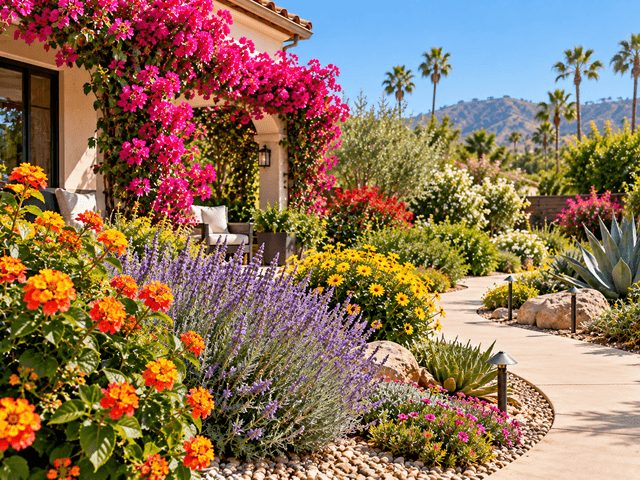
Here is the pattern almost every SoCal garden falls into: a glorious burst of flowers in spring, and then… not much. By late summer the yard looks tired, and by winter it reads as dead — even though our mild climate can carry color in every month of the year. The secret to year-round blooming plants in Southern California is not finding one magical plant that flowers nonstop — it is design. A yard that never looks bare is built on two ideas: evergreen "bones" that hold structure and green through the off-season, and bloom succession, where different plants take turns flowering so something is always in color. Done right, it is also low-water, because many of the best SoCal performers are drought-tolerant natives and Mediterranean plants. This guide walks through the evergreen framework, season-by-season bloomers for winter, spring, summer, and fall, how to layer for continuous color, and a simple calendar to plan it all.
Start With Evergreen Bones That Never Go Bare
Before you choose a single flower, choose the structure. An evergreen structure garden has permanent "bones" — plants that stay green and shaped year-round — so that even when nothing is blooming, the yard still looks intentional rather than empty. Flowers come and go; the framework is what carries the off-season.
- Use evergreen shrubs and small trees as the permanent backbone — many low-maintenance evergreen plants hold green all year.
- Add structural succulents like agave for bold, year-round form.
- Include evergreen ornamental grasses and groundcovers for texture that persists.
- Plant evergreen or structural trees for height, shade, and a canopy that anchors the design through every season.
- Place the bones first; then the seasonal color plays against a green backdrop instead of bare dirt.
Plant Season-by-Season Bloomers for Continuous Color
With the framework set, the goal of continuous bloom planting is to stagger flowering so that as one group fades, another is coming on. SoCal's mild climate makes true four-season color possible when you deliberately choose plants for each window.
| Season | What carries the color | Example types |
|---|---|---|
| Winter | Cool-season and early native bloomers keep the yard alive when most think it's "off" | Aloes, manzanita, camellias, early-flowering natives |
| Spring | The big flush — the easy season to fill | California lilac, native wildflowers, salvias, many perennials |
| Summer | Heat- and drought-tough bloomers that keep going | Salvias, lantana, agapanthus, gaura, many succulents |
| Fall | Late bloomers that extend color past summer | California fuchsia, asters, late salvias, ornamental grass plumes |
These are categories, not a prescription — confirm the exact species for your microclimate, sun, and soil. For a strong starting palette of flowering, low-water choices, our list of drought-tolerant plants for Glendale covers several reliable SoCal bloomers.
Layer Plants for Color With Low Water
The reason a well-designed yard looks full in every season — and the reason it can still be water-wise — comes down to layering and grouping. Low water year round color is not a contradiction; it is the natural result of choosing drought-tolerant plants and arranging them well.
- Layer heights — groundcovers, perennials, shrubs, and trees — so color appears at multiple levels, not just one flat plane.
- Plant in drifts of the same species for impact and an easier, more cohesive look.
- Group plants by water need so irrigation stays efficient and the low-water goal holds, the same logic behind a well-designed plan that groups plants by water need.
- Repeat key plants and colors through the yard to tie the seasons together visually.
Use Foliage Texture and Bark for Interest
Flowers are only part of the picture. The gardens that look good all year lean heavily on foliage, texture, form, and even bark — features that do not depend on anything being in bloom at that moment.
- Combine leaf colors, shapes, and textures — silvery, variegated, fine, and bold foliage — for contrast year-round.
- Use the sculptural form of succulents, grasses, and architectural plants as standing interest.
- Feature bark and branching, such as the smooth red bark of manzanita, that reads even in winter.
- Treat structural trees as year-round framework, for canopy, foliage, and seasonal change.
Build a Simple Bloom Calendar for the Yard
The easiest way to avoid the "everything in spring, nothing after" trap is to plan on paper. A simple bloom calendar maps what will be flowering in each month so you can see — and fill — the gaps before you plant.
- List your chosen plants and mark their bloom windows across the year.
- Find the gaps — the months with little or no color — and add plants that bloom then.
- Make sure evergreen structure covers the off-season so even bloom gaps still look green.
- Leave some seed heads and plumes standing for off-season texture rather than cutting everything back at once.
- Adjust over the first year as you see how plants actually perform in your yard.
Frequently Asked Year-Round SoCal Garden Questions
What Blooms in SoCal Winter?
More than people expect. Southern California's mild winters support aloes, camellias, manzanita, and a number of early-flowering natives and cool-season plants, so the yard does not have to go colorless. The key is deliberately choosing winter bloomers and backing them with evergreen structure, so even between flowers the garden stays green and intentional rather than looking dead in the off-season.
How Do I Get Year-Round Color in My Garden?
Through design, not a single plant. Start with evergreen "bones" that hold structure all year, then use bloom succession — plants chosen for winter, spring, summer, and fall so something is always flowering. Layer heights, plant in drifts, and map a bloom calendar to find and fill the gaps. In SoCal, choosing drought-tolerant natives and Mediterranean plants means this continuous color can also be low-water.
Can a Year-Round Garden Be Low-Water?
Yes — and in SoCal it usually should be. Many of the best four-season performers are drought-tolerant natives and Mediterranean plants, so a yard with color every month can also be water-wise. Grouping plants by water need, layering, and using efficient drip irrigation keeps the garden both colorful and low-water. The two goals reinforce each other rather than conflict.
What Plants Stay Green All Year in SoCal?
Evergreen shrubs and small trees, structural succulents like agave, many ornamental grasses, and evergreen groundcovers hold green and form year-round, carrying the garden through the off-season. These are the "bones" of the design. Choosing the right evergreen framework for your sun, soil, and space, and confirming species for your specific microclimate, ensures the yard looks full even when flowering plants are between blooms.
Design a Year-Round Garden Today
If you want year-round blooming plants in Southern California arranged so your yard has color in every season — and stays low-water — the answer is a planting design built on evergreen structure and bloom succession. Contact BuildCal Landscape for a planting-design consultation or call +1 (818) 303-1570. Our landscape design and installation services can plan the evergreen framework, season-by-season palette, layering, and irrigation so your Glendale or Los Angeles garden never looks dead again.
Thinking about a new outdoor space?
We’d love to hear your ideas. Let’s explore what’s possible—no pressure, just a friendly conversation.
Give us a call:
+1 (818) 303-1570
Frequently Asked Question
DO YOU USE A LOT OF HARSH CHEMICALS AND PESTICIDES IN YOUR LANDSCAPE MAINTENANCE SERVICE?
No – We prefer a more naturalistic approach to practices of fertilization, pest problems, and weed control. While uses of chemicals are at times necessary, they should always be used minimally and in the recommended application