
OUR MISSION IS TO TAILOR FOR EACH CLIENT A BEAUTIFUL, FUNCTIONAL AND ENDURING OUTDOOR ENVIRONMENT THAT WILL PROVIDE A PLACE OF SERENITY FOR FRIENDS AND FAMILY TO APPRECIATE FOR YEARS TO COME.

BuildCal Landscape Privacy & Landscape Design Article
Neighbor's Second-Story Window Overlooks Your Yard? Privacy Fixes That Don't Start a Feud
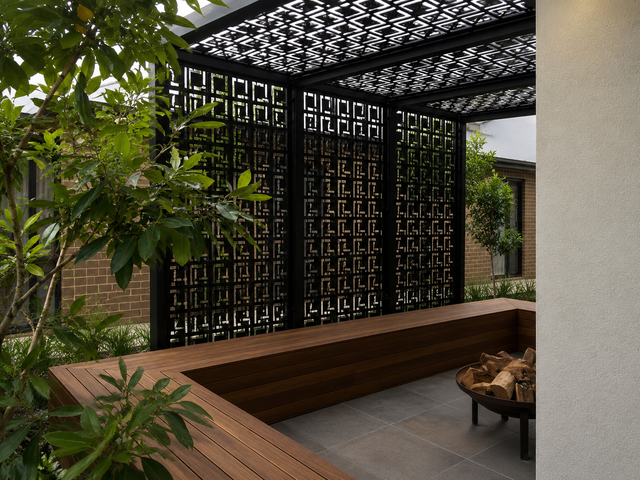
A second-story window, deck, or new ADU can change how private your backyard feels almost overnight. Suddenly you stop hosting, stop reading outside, and start rearranging furniture to escape a sightline you cannot unsee. The instinct is to build the tallest fence allowed, but that rarely fixes the problem, because fences mainly solve horizontal views. If you want to block a neighbor's second-story view, start by mapping the actual sightline from the places you use, then match the fix to the angle. Privacy from above usually needs a layered plan that combines planting, an overhead structure or screen, and small layout changes rather than one tall barrier. This guide compares those options so you can get your backyard back without creating glare, a hostile-looking yard, a fight with the neighbor, or a design that misses the real angle entirely.
A Quick Note Before the Privacy Fixes
The emotional weight of being overlooked is real. It changes how you use your own space — you stop hosting, you stop reading outside, you start rearranging furniture to escape sightlines. That feeling is legitimate, and there are honest solutions.
A note on tone, though: privacy problems between neighbors are one of the fastest ways to turn a good street into a bad one. The design approach that works best, and lasts best, is neighbor-conscious. That doesn't mean asking permission for what you build on your own property. It means fixing the sightlines rather than picking a fight about them, and where possible, letting the neighbor know you're planning some planting or a structure before they hear it from the crew showing up. Two minutes of "just a heads-up we're adding some trees along the fence line for privacy" is often the difference between a fine relationship and a decade of tension. The rest of this piece is about the fix, because "talk it out" doesn't actually solve a sightline, and you're entitled to a private backyard.
First Map the Actual Sightline From Your Seat
Second-story privacy is a geometry problem before it's a planting problem. Two upstairs windows on the same wall can produce very different problems for you depending on angle, height, and distance. Before you spend money, map what you're actually blocking.
- Stand where you sit most often — your patio dining chair, the lounger, the outdoor kitchen island — and look up. Where exactly is the sightline coming from? Which windows, decks, or balconies?
- Take a photo from that spot. Include the offending windows. That photo is your design brief; anything you plant or build has to break the line between the photo's camera position and those windows.
- Note the vertical angle. Is the view coming down steeply from directly above, or coming across from a similar height? Steep views need overhead solutions; horizontal views can be blocked by taller vertical elements.
- Check for multiple sightlines. Often it's not one window; it's two or three, and a solution for one leaves the others open. Map them all.
- Consider seasonal variation. Is the offending view worse when the neighbor's trees drop their leaves in winter? Some privacy-from-above problems only exist half the year, and that changes the right fix.
This five-minute exercise saves a shocking amount of money. Homeowners often plant a hedge to block a sightline that goes right over it, or install a screen at the wrong angle. Map first, design second.
How to Block a Neighbor's Second-Story View With Layered Planting
For most SoCal yards, well-designed planting does more of the privacy-from-above job than any single structure. The trick is layers — not one row of tall skinny trees, but a designed combination of heights that fills the sightline vertically the way a curtain fills a window.
Tall Trees for the Upper Layer
Evergreen trees that reach genuinely above the offending window height are the anchor. Options that work well in SoCal include Italian cypress (fast, narrow, iconic — see how Italian cypress privacy walls perform), Podocarpus (dense, evergreen, works in narrow spots), certain oaks and shade trees for broader coverage, and fruitless olive for a more Mediterranean look. Two rules that matter: pick evergreen species, because deciduous trees give you privacy only half the year, and choose species whose mature canopy sits at the right height for your specific sightline, not just "tall."
Mid-Height Screening Shrubs for the Middle Layer
Between the ground and the tree canopy, a mid-layer of dense evergreen shrubs — Ficus, Podocarpus, Pittosporum, viburnum, or a privacy hedge chosen for your conditions — fills the middle of the visual wall and gives you privacy from ground level too, not just from above. This layer is what makes the whole thing read as designed rather than as a row of poles. It also protects the trees while they establish.
Groundcover and Understory to Finish the Look
The lowest layer isn't strictly a privacy element, but it's what makes the whole planting look intentional. Drought-tolerant groundcover, mulch, and understory perennials underneath the trees and shrubs finish the look and lower maintenance. Explore plants that work well in Glendale landscaping for palette ideas suited to the local climate.
Why Layered Planting Beats a Single Row
- A single row of tall trees leaves the ground visible and reads as harsh.
- Trees planted too close together compete for water and light, and often don't fill in the way the brochure promises.
- Layered planting fills the sightline at every height at once, so you get privacy fast, not in year five.
- It looks like garden design rather than a defensive move — important for both your enjoyment and neighbor relations.
- It's more resilient. If one plant fails, the layer still works while the replacement establishes.
The Tree-Sizing Question That Actually Matters
A common frustration: homeowners plant "privacy trees" and are disappointed a year in that they haven't grown enough. The math is important.
- How high is the sightline above your yard? A second-story window is typically 15–20 feet up; you need canopy that sits above that.
- How tall is the tree at purchase, and how fast does it grow? A 6-foot tree with a 1-foot-per-year growth rate is nine years from being a screen. A 10-foot fast-growing evergreen at planting can be a real screen much sooner.
- Can you buy larger, more established stock? For an urgent privacy problem, larger-stock planting is often worth the extra cost. It compresses the years-to-privacy timeline dramatically.
- Plan around growth patterns. Some trees grow up quickly but don't fill in the middle; others fill in beautifully but stay shorter. Match the species to the specific sightline shape.
- Never plant under power lines or too close to structures. A privacy problem you fix in year one that becomes a utility, foundation, or sewer problem in year eight is worse, not better.
Overhead Structures That Provide Privacy From Above
When planting alone can't do the job — because sightlines are too steep, the yard is too small for large trees, or you need relief right now, not in year three — structures come into play. This is where a tall privacy screen or overhead structure can either save the yard or, if done wrong, make everything worse.
Pergolas With Solid or Louvered Roofs
A pergola with a solid roof, a louvered top, or a densely planted vine canopy directly blocks the downward sightline over your patio. It also gives you shade, defines a room, and integrates lighting, so you're solving multiple problems with one structure. Because a larger pergola or patio cover usually needs a permit, review how pergola and patio-cover permits work in Glendale before you design. The key is thinking about privacy in the structure's design from day one. An open-slat pergola with wide gaps offers little privacy from above; a solid or densely louvered roof over the seating area does. Pair it with side privacy elements so the sightlines are broken from every angle.
Overhead Shade Sails and Angled Canopies
A shade sail angled to break the specific sightline from a specific window can be a surprisingly effective privacy fix, and one of the fastest to install. It won't work for every situation — they're less architecturally polished than a pergola, they wear out over time, and they don't cover as much area — but as a rapid or budget-conscious answer, they punch above their weight.
Tall Trellises With Evergreen Climbing Vines
A dedicated tall trellis positioned to break a sightline, planted with a vigorous evergreen climbing vine, gives you a slim, elegant privacy screen without the mass of a shed or wall. It works particularly well in tight side-yard situations where a whole hedge won't fit.
Modify an Existing Deck or Pergola
If you already have a deck, pergola, or overhead structure, sometimes the fix is adding a privacy element to it — a screen along the side facing the neighbor's window, a slatted panel, or a planted trellis integrated into the existing framing. It's less disruptive than a new build, and often just as effective.
Layout Changes That Reduce the Overlook Problem
Sometimes the honest answer isn't to block the sightline; it's to move where you sit. A designer will often suggest layout changes that solve half the problem for zero fight with geography. If the privacy plan changes how the yard is arranged, our landscape design services can coordinate planting, structures, and circulation.
- Move the primary seating area. If your main patio is directly under the offending window, relocating to a spot that's already screened — by your own house, an existing tree, or a corner — can be dramatically simpler than fighting the sightline where it's worst.
- Add a second, private seating zone. Keep the main patio for casual use, and add a smaller private seating area in a naturally screened spot for reading, morning coffee, or quiet meals.
- Reposition the fire pit, dining, or outdoor kitchen. The zones you use most should be the ones best screened. Reversing this in the layout dramatically improves how private the yard feels day to day.
- Use planting to define zones, not just perimeters. A well-placed island planting bed or shade tree in the middle of the yard breaks up long sightlines from any single window.
- Think about lighting. Warm, low, downward-facing landscape lighting in your seating area makes the space feel like an intimate room rather than a stage — the psychological effect is real, even where a sightline still technically exists.
Layout changes often pair with planting and structures rather than replacing them, and the same zoning logic used in how outdoor living zones are arranged in Glendale can protect privacy without feeling defensive.
The Layered Privacy-From-Above Plan That Works
For a two-story neighbor privacy problem, the plan that consistently works to block a neighbor's second-story view combines two or three of the following:
- Layered planting (tall trees plus mid-height shrubs plus groundcover) along the fence line facing the overlook, sized for the sightline height.
- An overhead structure (pergola with solid or dense-louvered roof, or a shade sail) over the seating area to block the downward view.
- Layout tweaks to position primary use zones in naturally more private spots.
- A supplementary tall trellis or screen for any specific problem angle the main planting doesn't cover.
- Lighting and design cues that make the space feel intimate even where sightlines persist.
How to Handle the Neighbor Conversation Well
You don't need permission to make privacy improvements on your own property, and this piece isn't going to tell you to seek approval for planting a tree or building a permitted pergola. But a brief, courteous heads-up can save a lot of downstream friction.
- If crews will be working near the fence line, mention it a week ahead so it's not a surprise.
- If you're planting large trees, a courtesy note prevents a call to code enforcement about "weird landscaping" and keeps things pleasant.
- If a pergola or overhead structure will change the neighbor's view slightly — of the sky, not into your yard — acknowledge it plainly. Most people respond well to being informed rather than surprised.
- You never have to explain why you're adding privacy; a simple "we're adding some planting along the fence" is enough. Overexplaining can look defensive.
Where the neighbor is reasonable, this five-minute conversation can turn a potentially adversarial situation into a non-event. Where the neighbor is unreasonable, you'll have made the effort, which matters if anything ever escalates. For structural work, always check permit requirements first.
Common Second-Story Privacy Mistakes to Avoid
- Building a spite fence or planting spite trees specifically to block the neighbor's view of anything other than your yard. Most California jurisdictions treat this as a nuisance issue, and it starts a fight.
- Blocking your neighbor's light, air, or main window views. Focus on breaking sightlines into your yard, not on cutting them off from the sky.
- Ignoring city rules on tree heights, hedge heights near street frontages, and pergola or structure permits. A privacy solution that gets a code-enforcement complaint isn't a solution.
- Choosing plants that damage foundations, sewer lines, or driveways because they were fast-growing — a common mistake with certain ficus and eucalyptus species.
- Waiting years for a slow-growing tree to fill in when you needed relief a season ago. Right-size the stock to how urgent the problem is.
- Installing tall fences without checking local rules. Most jurisdictions limit fence heights in front and side yards, and going over triggers a permit or a code issue. Fence privacy usually solves horizontal sightlines anyway, not overhead ones.
Get Your Backyard Back From the Overlook
The reliable way to block a neighbor's second-story view is a layered plan, not a single tall barrier: evergreen trees sized to the sightline, a mid-height shrub layer, an overhead structure where the angle is steep, and layout changes that put your most-used zones in the most private spots. For a broader outdoor-structure option, see our decks and outdoor structures services page.
Get Your Backyard Privacy Plan in the Right Order
Map the sightline, size the planting to the window height, add an overhead structure where the view is steep, and confirm any permit requirements before building. For a property-specific plan, visit our landscape design services or book a consultation and call +1 (818) 303-1570.
Frequently Asked Second-Story View Privacy Questions
How Do I Block a Neighbor's Second-Story View?
The right way to block a neighbor's second-story view is a layered approach: tall evergreen trees whose canopy sits above the offending window height, mid-height dense shrubs to fill the middle of the visual wall, and, where sightlines are steep, an overhead structure like a pergola with a solid or louvered roof or an angled shade sail over your main seating area. Sometimes layout changes — moving the primary seating area to a naturally screened spot — solve half the problem for a fraction of the effort. Map the actual sightline first, standing where you sit and looking up to note which windows are the issue, so your fix is targeted.
What Are the Best Plants for Privacy From Above?
For two-story neighbor privacy, the strongest options are evergreen trees whose mature canopy sits above second-story window height: Italian cypress (fast, narrow, iconic), Podocarpus (dense, works in narrow spots), certain oaks and shade trees for broader coverage, and fruitless olive for a Mediterranean look. Choose evergreen, since deciduous trees give privacy only half the year, pick a species whose mature canopy hits your specific sightline height, and combine with a mid-height shrub layer for a designed rather than defensive look.
Can I Use a Pergola for Overhead Privacy?
Yes. A pergola with a solid roof, a densely louvered top, or a well-established planted vine canopy directly blocks the downward sightline over your patio. Open-slat pergolas with wide gaps offer little privacy from above, so specify solid or dense-louvered from the start if privacy from above is the goal. Pair it with side planting or a screen for full privacy from all angles. Larger pergolas typically require a permit, so confirm locally before you design.
How Tall Must a Tree Be to Block Upstairs Windows?
Second-story windows are typically 15 to 20 feet above ground, so the tall privacy screen or tree canopy needs to sit above that height to actually block the sightline. Measure the offending window height from your yard's ground level to be sure. Also match growth rate and mature size to how urgent the privacy is: a small tree with slow growth is nearly a decade from screening, while a larger nursery-stock, faster-growing evergreen can screen much sooner. For a specific overlooked backyard problem, larger stock at planting is often worth the extra cost.
Should I Talk to My Neighbor Before Adding Privacy Landscaping?
You don't need permission to make privacy improvements on your own property, but a brief, courteous heads-up usually prevents friction. If crews will work near the fence line or you're planting large trees, a short note a week ahead keeps it from being a surprise and heads off code-enforcement calls about unfamiliar landscaping. You never have to explain why; a simple "we're adding some planting along the fence" is enough. Where the neighbor is reasonable, the conversation turns a potentially adversarial situation into a non-event, and where they aren't, you'll have made the effort, which matters if anything escalates. For structural work, confirm permit requirements before you build.
Thinking about a new outdoor space?
We’d love to hear your ideas. Let’s explore what’s possible—no pressure, just a friendly conversation.
Give us a call:
+1 (818) 303-1570
Frequently Asked Question
HOW LONG DOES A PROJECT USUALLY TAKE?
Every property and client is different and therefore there is no set standard. The time required to complete a project relies completely on the amount of work which will be necessary. And the size of a property is not always a guide. For instance; a large property requiring minimal landscaping and irrigation installation will most likely be completed in a shorter amount of time than a small property requiring landscaping, a patio, spa, and a custom water fountain. Once a preliminary estimate is prepared, we will have a realistic estimate for project completion