
OUR MISSION IS TO TAILOR FOR EACH CLIENT A BEAUTIFUL, FUNCTIONAL AND ENDURING OUTDOOR ENVIRONMENT THAT WILL PROVIDE A PLACE OF SERENITY FOR FRIENDS AND FAMILY TO APPRECIATE FOR YEARS TO COME.

BuildCal Landscape Hardscaping & Water-Wise Article
Tired of Mowing? Converting Lawn to Patio & Hardscape for a More Usable SoCal Yard
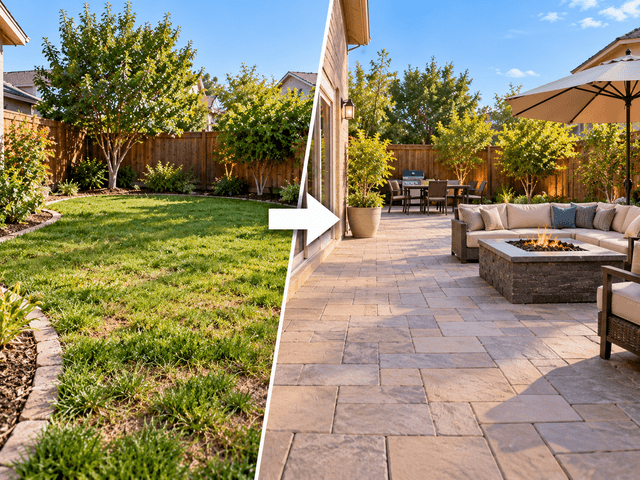
Somewhere around the third summer of mowing a lawn you barely use — while watching the water bill climb and the grass brown anyway — a lot of SoCal homeowners have the same thought: why am I maintaining grass at all? Converting that lawn into a patio or other usable hardscape is one of the most popular yard upgrades in the region, because it trades mowing, watering, and fertilizing for a space you actually use. But there is a right way and a wrong way to do it. Convert lawn to patio without a plan — seal the whole yard in solid concrete — and you can create runoff, flooding, a heat island, and even disqualify yourself from turf rebates. Done well, with the right mix of hardscape, permeable surfaces, drainage, and some kept greenery, it is lower-water, lower-maintenance, and far more usable than the lawn it replaced. This guide covers why people convert, how much to harden versus keep green, the surface choices, the drainage that cannot be skipped, and the rebate and planting considerations.
Why Homeowners Trade Lawn for Usable Hardscape
A lawn looks nice, but it demands water, mowing, feeding, and weekend labor — and in much of SoCal it browns out in summer anyway. Trading some or all of it for hardscape is about getting time, water, and usable space back.
- Water: Lawn is one of the thirstiest things in a yard; replacing it cuts outdoor water use significantly.
- Maintenance: No more weekly mowing, edging, fertilizing, or reseeding bare spots.
- Usability: A patio hosts dining, seating, and gatherings in a way a lawn cannot — a usable backyard with no grass is often more functional.
- Value and curb appeal: Well-designed hardscape can enhance how the yard looks and functions, as covered in our hardscaping ideas to boost curb appeal and value.
Decide How Much to Harden and Keep Green
The single biggest mistake is hardening the entire yard. The goal is not to pave everything — it is to reduce lawn size to the amount you actually use and replace the rest with the right mix. How much you harden versus keep permeable and green matters for drainage, heat, and rebates.
- Harden the zones you will use — dining, seating, paths — not every square foot.
- Keep planted beds and permeable areas so water can still soak in.
- Avoid creating a large, solid, heat-radiating slab with no greenery to cool and soften it.
- Think of it as a designed yard with usable hardscape and low-water planting, not a parking lot.
Compare Pavers Concrete DG and Permeable Surfaces
When you replace grass with pavers or another surface, the material affects cost, drainage, heat, and look. Permeability is the key variable for a responsible lawn to hardscape conversion.
| Surface | Permeable? | Best for |
|---|---|---|
| Permeable pavers | Yes | Usable patio that still lets water infiltrate |
| Standard pavers | Partly, at the joints | Durable patios and paths with some joint drainage |
| Poured concrete | No | Clean continuous surface; needs a drainage plan |
| Decomposed granite / gravel | Yes | Informal, lower-cost permeable areas and paths |
- Compare the trade-offs in our guides to pavers versus concrete and alternatives to a plain concrete patio.
- Every surface needs a proper base; a patio is only as good as what is under it.
- Consider surface heat — large expanses of hardscape get hot, so mix in shade and planting.
Plan Drainage So You Don't Seal the Yard
This is the step DIY conversions skip and regret. A lawn is a giant permeable sponge; replace it with solid, impermeable hardscape and all that rainwater has to go somewhere. Without a drainage plan, a low water patio conversion can send runoff toward the house, the street, or a neighbor.
- Use permeable surfaces where you can so water soaks in rather than running off.
- Grade the hardscape so water sheds to a safe, planned outlet — never toward the foundation.
- Capture and reuse runoff where possible, directing it to planting or an infiltration area.
- Keep planted beds and permeable zones in the design to absorb rainfall.
- Do not simply seal the yard and assume the water will take care of itself — it will not.
Keep Some Planting and Check Rebate Rules
Keeping greenery is not just about looks — it is often what makes the project eligible for a rebate and keeps the yard cool. This is where many all-hardscape conversions go wrong on the money.
- Keep drought-tolerant planting in beds and borders for cooling, infiltration, and beauty.
- Turf-replacement rebates, where available, typically require living plants and permeable surfaces — a yard sealed entirely in solid concrete often does not qualify.
- Confirm current rebate program rules, plant-coverage and permeability requirements, and any pre-approval steps with your local water agency before you start, since programs change.
- Combining permeable hardscape with low-water planting usually gives you a usable yard, lower water use, and the best shot at a rebate.
Frequently Asked SoCal Lawn Conversion Questions
Can I Replace My Lawn With a Patio?
Yes, and it is one of the most popular SoCal yard upgrades — it trades mowing, watering, and fertilizing for usable space. The key is not to harden the entire yard. Replace the lawn you actually use with a patio and paths, keep some planted and permeable areas, and plan drainage. A well-designed conversion with the right mix of hardscape, permeable surfaces, and low-water planting is lower-maintenance and far more usable than the grass it replaces.
Will Hardscaping My Lawn Cause Flooding?
It can if you seal the yard without a drainage plan. A lawn absorbs rainfall; solid, impermeable hardscape does not, so that water has to be managed or it runs toward the house, street, or a neighbor. The fixes are to use permeable surfaces where possible, grade hardscape to a safe outlet, keep planted areas that absorb water, and capture runoff. Done correctly, a conversion improves drainage; done carelessly, it creates a runoff problem.
What Are Permeable Options for a Lawn Conversion?
Permeable pavers, decomposed granite, gravel, and spaced pavers with planted or gravel joints all let water infiltrate while still giving you a usable surface. Standard pavers drain partly at the joints, while poured concrete is impermeable and needs a dedicated drainage plan. Mixing permeable hardscape with planted beds keeps the yard functional and water-wise, and it helps with both flooding and rebate eligibility.
Do I Lose Rebate Eligibility If I Pave My Lawn?
You can. Turf-replacement rebates, where they are offered, generally require living plants and permeable surfaces — so a lawn replaced entirely with solid, impermeable concrete often does not qualify. Keeping drought-tolerant planting and using permeable hardscape is both the better design and more likely to be eligible. Rebate programs and their requirements change, so verify the current rules and any pre-approval steps with your local water agency before you start.
Get a Yard Conversion Consult Today
If you are ready to convert lawn to patio and stop mowing grass you never use, the difference between a great result and a runoff problem is the plan. Contact BuildCal Landscape for a yard conversion consultation or call +1 (818) 303-1570. Our hardscaping services can design the right mix of patio, permeable surfaces, drainage, and kept planting so your Glendale or Los Angeles yard becomes lower-water, lower-maintenance, and genuinely usable.
Thinking about a new outdoor space?
We’d love to hear your ideas. Let’s explore what’s possible—no pressure, just a friendly conversation.
Give us a call:
+1 (818) 303-1570
Frequently Asked Question
WHY DO I NEED TO HIRE A LICENSED CONTRACTOR WHEN AN UNLICENSED ONE MAY BE CHEAPER?
There is always a price. Working with a licensed contractor is highly recommended for many reasons: A licensed and insured contractor offers many protections to the property owner, especially regarding residential properties. A contractor cannot obtain a State Contractors License without first possessing a minimum amount of experience. In addition, the contractor must pass a business management test. The applicant also may be subject to a criminal history background check, and must not have any unresolved contracting complaints outstanding. Here in California, if a contractor has employees, they're required to carry workers compensation insurance. The importance of this alone cannot be overstated. If a worker is injured on your property and the contractor doesn't have insurance, you could be legally liable to pay for injuries and rehabilitation. Your homeowner's insurance may not cover those costs