
OUR MISSION IS TO TAILOR FOR EACH CLIENT A BEAUTIFUL, FUNCTIONAL AND ENDURING OUTDOOR ENVIRONMENT THAT WILL PROVIDE A PLACE OF SERENITY FOR FRIENDS AND FAMILY TO APPRECIATE FOR YEARS TO COME.

BuildCal Landscape Fences & Repair Article
Leaning or Rotting Fence in California? Repair Options — and Who Pays With a Neighbor
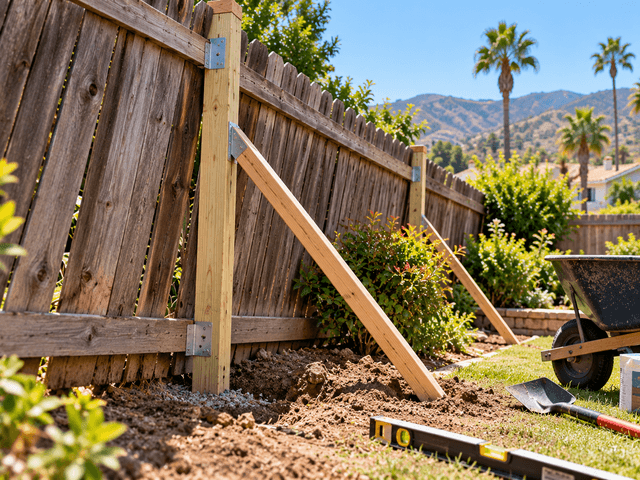
A fence that leans a little more every year, or shows soft, rotting posts at the base, raises two very different questions at once: how do I fix it, and if it is a shared fence, does my neighbor have to split the cost? The repair side is usually straightforward once you know whether the posts, the panels, or the whole structure have failed. The cost side is where SoCal homeowners get stuck — and where California actually has a specific law. The short version of leaning fence repair in California is that most leaning fences come down to rotted or failing posts, which can often be fixed without replacing the entire fence, and that for a boundary fence, California's "good neighbor" law presumes neighbors share the reasonable cost equally — if you follow the required notice process. This guide covers why fences fail here, your repair options, how the cost-sharing law works, how to handle the neighbor conversation, and the materials that last longer the next time around.
Why Fences Lean and Rot in SoCal
A leaning fence is almost always a foundation problem — the part you cannot see. Understanding the cause tells you whether you are facing a simple post fix or a full replacement.
- Post rot: Wood posts rot at and just below grade where moisture and soil meet the wood — fence post rot is the number-one reason fences lean.
- Failed footings: Posts set in poor or shallow concrete work loose and tilt over time.
- Soil movement: Expansive clay, slopes, and saturated soil shift posts out of plumb.
- Wind: Santa Ana and storm winds push on large fence panels, loosening weak posts and connections.
- Age and sun: SoCal sun dries and weakens wood, and old fasteners corrode and let go.
Repair Options From Resetting Posts to Full Replacement
The right fix depends on what failed. If the panels are sound and only the posts are bad, you can often fix a leaning fence without replacing the whole thing — which is a very different cost from a full rebuild.
| Condition | Typical repair |
|---|---|
| One or a few leaning posts, sound panels | Reset or replace the failed posts and footings |
| A rotted section with sound structure elsewhere | Replace the damaged section or panels |
| Widespread rot, failing posts across the run | Full fence replacement |
| Loose or damaged rails and pickets, posts sound | Re-secure or replace the components |
- Address the cause — drainage, footing depth, and post protection — so the repair lasts.
- Match new materials and heights to the existing fence and to the design you want — see our fence installation and materials guide.
- Check whether a replacement needs a permit, since height and location rules apply — review the hardscape and fence permit rules in Glendale and confirm locally.
California's Good Neighbor Fence Cost-Sharing Rules
Here is the question that fills legal forums: does my neighbor have to pay half? For a fence on the shared property line, California's Good Neighbor Fence Act (Civil Code § 841) is the starting point — and it generally says yes, with a process.
HOW CIVIL CODE § 841 WORKS (GENERAL OVERVIEW)
- Equal-share presumption: Adjoining owners of a boundary fence are presumed to benefit equally and share the reasonable costs of construction, maintenance, or necessary replacement equally — unless a written agreement says otherwise.
- 30-day written notice: Before incurring costs you want shared, you must give each affected neighbor at least 30 days' prior written notice. It should describe the problem, the proposed solution, the estimated cost, the proposed cost split, a timeline, and the presumption of equal responsibility.
- The presumption is rebuttable: A neighbor can overcome it by showing equal cost would be unjust — for example, the cost is substantially disproportionate to the benefit, it exceeds the difference in property value, it is an undue hardship, or one party caused the damage. A court can then order a smaller share or none.
- If there's a dispute: There is no automatic enforcement; if a neighbor refuses or does not respond, you can proceed and seek reimbursement for their reasonable share in small claims court.
Two important limits: a fence entirely on your side of the line is your fence, and the rule does not apply to it; and you generally cannot force a neighbor to share the cost of luxury or purely aesthetic upgrades beyond what is reasonable. This is a general overview of the law, not legal advice — for a real dispute, confirm the current statute and consult an attorney about your specific situation.
Handle the Neighbor Conversation and Written Notice
The law works best when the conversation does. A good neighbor fence law process is smoother when you lead with communication and a concrete, reasonable proposal rather than a demand.
- Talk to your neighbor first, informally, before any formal notice — most people respond well to being included early.
- Put the required details in a written notice: the problem, proposed fix, estimated cost, proposed split, and timeline.
- Keep the proposal reasonable in scope and materials, since the shared obligation is for reasonable costs.
- Document everything — the notice, agreement, and who agreed to pay what.
- Get more than one estimate so the cost you are proposing to share is clearly reasonable.
Choose Fence Materials That Last Longer Next Time
If you are repairing or replacing anyway, it is the moment to reduce the odds of doing it all again. The right material and detailing make a fence last far longer in SoCal's sun, wind, and soil.
- Compare durable options — our guide to the best fence material for a hot, dry climate weighs wood, vinyl, and block.
- Protect posts with proper footings, depth, and detailing so post rot does not return.
- Consider rot- and weather-resistant materials or metal post systems for longevity.
- Address drainage and soil so the new fence is not fighting the same conditions that toppled the old one.
Frequently Asked California Fence Repair Questions
How Do I Fix a Leaning Fence?
Start by finding out why it leans — it is almost always failed posts or footings, often from rot at grade, soil movement, or wind. If the panels are sound and only the posts are bad, you can often reset or replace just the posts and footings rather than the whole fence. Widespread rot or failing posts across the run usually means replacement. Fixing the underlying cause — drainage, footing depth, post protection — is what makes the repair hold.
Does My Neighbor Have to Split the Cost in California?
For a fence on the shared property line, California's Good Neighbor Fence Act (Civil Code § 841) presumes neighbors share the reasonable cost equally — but it is a rebuttable presumption, and you must give at least 30 days' prior written notice stating the problem, solution, estimated cost, proposed split, and timeline. A neighbor can challenge equal sharing if it would be unjust. A fence entirely on your side is yours alone. This is general information, not legal advice — consult an attorney for your specific situation.
Can I Repair Just the Fence Posts?
Often, yes. If the rails, pickets, or panels are still sound and the problem is leaning or rotted posts, replacing or resetting the posts and footings can restore the fence without a full rebuild — at a fraction of the cost. The key is correcting the cause so the new posts do not rot or loosen the same way: proper footing depth, drainage, and rot-resistant materials or post protection all extend how long the repair lasts.
Who Owns a Fence Between Two Properties?
A fence sitting on the shared property line is generally considered jointly owned by both adjoining owners, which is what brings California's Good Neighbor Fence Act into play for cost-sharing. A fence built entirely on one owner's side of the line is that owner's fence, and the shared-cost rule does not apply. If ownership or the exact property line is unclear, a survey can establish it — and splitting the survey cost is a reasonable thing to propose alongside the fence work.
Get a Fence Assessment Today
If you are facing leaning fence repair in California and are not sure whether you need new posts or a new fence, a professional assessment answers the repair question — and gives you a clear, reasonable cost to bring to your neighbor. Contact BuildCal Landscape for a fence assessment or call +1 (818) 303-1570. Our fence services can reset posts, replace sections, or rebuild the fence with longer-lasting materials for your Glendale or Los Angeles property — while the cost-sharing with a neighbor is handled between you under California's fence law.
Thinking about a new outdoor space?
We’d love to hear your ideas. Let’s explore what’s possible—no pressure, just a friendly conversation.
Give us a call:
+1 (818) 303-1570
Frequently Asked Question
HOW DOES THE DESIGN PROCESS WORK?
While the process may vary depending on the designer, the client’s needs, and the complexity of the project, most residential design projects include the following:
Initial Consultation, This is a chance to meet the designer and review the requirements and objectives of the project. Many designers charge for this visit, so to get the most out of the experience, ask the designer the best way to prepare and be sure you understand exactly what will be covered at this meeting.
Concept Plan. After listening to your ideas and priorities, the designer analyzes the site’s character, strengths and problems, and then develops one or more alternative concept plans for review.
Master Plan. The final master plan represents the culmination of your choices with the designer, and typically includes a complete spatial layout for your outdoor living spaces and other hardscape or architectural concepts.
Planting Plan. This is a working drawing from which the garden will actually be planted, and includes botanical names, container sizes, specific plant locations, and planting instructions to the contractor.
Additional Plan Documents. Depending on the scoop of your project, your designer may also provide a lighting plan, specialized guidelines on planting or irrigation, or notes and sketches on design elements such as water features or furniture and accessories placement.
Installation Assistance Many landscape designers will assist you in soliciting and reviewing construction bids, including referring contractors appropriate for your project. Others may choose to provide drawings only. Designers often stay involved throughout the installation phase to advise on design modifications, material selections and purchase and placement of garden art and accessories.