
OUR MISSION IS TO TAILOR FOR EACH CLIENT A BEAUTIFUL, FUNCTIONAL AND ENDURING OUTDOOR ENVIRONMENT THAT WILL PROVIDE A PLACE OF SERENITY FOR FRIENDS AND FAMILY TO APPRECIATE FOR YEARS TO COME.

BuildCal Landscape Hardscaping & Maintenance Article
White Haze, Oil Stains & Moss on Your Pavers or Concrete? How to Clean and Reseal
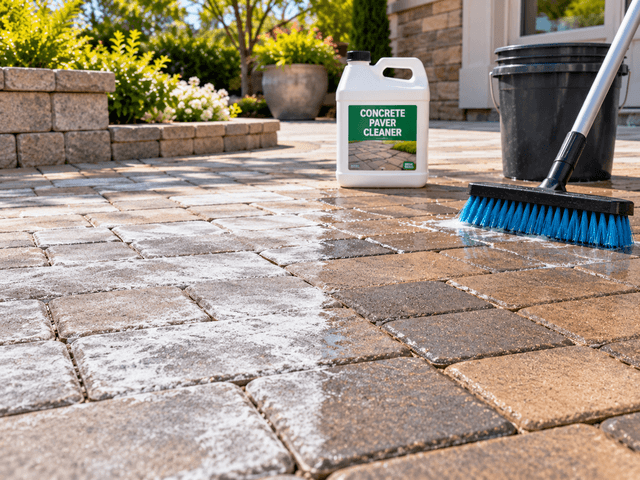
Before you assume your patio or driveway is ruined and needs to be torn out, look closer — most hardscape "damage" is really surface staining you can clean and seal, not structural failure. That white chalky haze is not permanent, the oil spot is not forever, and the mossy green film is a moisture problem, not the end of your pavers. The trick is treating the right cause with the right method, because the wrong one — blasting everything with a pressure washer, or sealing over a stain — often makes it worse. Knowing how to clean pavers of efflorescence and stains, then resealing correctly, can make a tired patio look nearly new. This guide walks through what the white haze actually is and how to remove it, how to lift oil, rust, and organic stains, how to clear moss and algae, how to pressure-wash without wrecking the surface, when and how to reseal and re-sand joints — and the one situation where the problem is not cleaning at all.
Remove Efflorescence the White Haze on Hardscape
That cloudy white film is the most misunderstood hardscape problem. Efflorescence removal starts with knowing what it is: natural mineral salts carried to the surface as moisture moves through the paver or concrete and evaporates. It is extremely common on new hardscape and usually not permanent.
- Often it fades on its own over months as rain and weathering carry the salts away.
- For persistent haze, use a cleaner made specifically for efflorescence, following the label and testing a small, hidden area first.
- Do not seal over active efflorescence — sealing traps the salts and the moisture driving them, which can cloud the sealer and lock the problem in.
- Let the surface fully resolve and dry before any sealing.
Because efflorescence behaves a little differently on pavers versus poured surfaces, our guide to pavers versus concrete is useful context when deciding how to treat and seal each one.
Lift Oil Rust and Organic Stains
Different stains need different treatments — and pressure washing alone rarely removes them. Match the method to the stain.
| Stain | What it is | How to treat it |
|---|---|---|
| Oil / grease | Automotive or cooking oil soaked into the surface | Blot fresh spills, apply an absorbent, then a degreaser or poultice; repeat for old stains |
| Rust | From metal furniture, tools, or irrigation | Use a rust remover made for masonry, per the label; avoid harsh acids that etch |
| Organic / tannin | Leaves, berries, mulch, and plant debris | A suitable hardscape cleaner; remove debris before it stains |
- Always test any cleaner on an inconspicuous spot first and follow the product directions.
- For an oil stain concrete problem that has soaked in deep, expect to repeat the treatment.
- Protect nearby plants, soil, and drains from cleaning runoff.
Clear Moss and Algae From Shaded Pavers
Moss on pavers and green algae are a signal, not just a stain: they grow where it stays damp and shaded. You can clean them off, but if you do not address the moisture, they come right back.
- Clean the growth with a product suited to moss and algae, following the label, and rinse.
- Use caution with bleach-based solutions near planting and soil, since runoff can harm plants.
- Fix the cause — improve drainage, reduce standing moisture, and open up shade where practical so the surface dries.
- Keep debris cleared, since trapped leaves and dirt hold moisture and feed regrowth.
Pressure Wash the Patio Without Damage
A pressure washer is a great tool and a common way to ruin hardscape. Done wrong, a pressure wash patio session blasts the sand out of paver joints, etches concrete, and damages softer surfaces.
- Use an appropriate pressure, nozzle, and distance — too close or too high strips joints and etches the surface.
- Keep the wand moving and test in a low-visibility area first.
- Expect to re-sand paver joints afterward, since washing removes joint sand.
- For stubborn stains, treat the stain with the right cleaner rather than cranking up the pressure.
Reseal and Re-Sand Joints the Right Way
Sealing protects clean hardscape and makes it easier to maintain — but only when it is done on a clean, dry, stable surface. To reseal pavers properly, the sequence matters as much as the sealer.
- Clean the surface fully and let it dry completely, and make sure any efflorescence has resolved first.
- Re-sand paver joints — typically with polymeric joint sand — before sealing, since the joints are part of the system, a detail covered in our paver installation guide.
- Choose a sealer appropriate to the surface and the look you want, and follow the application directions.
- Reseal periodically as the sealer wears, with the interval depending on the product, traffic, and sun exposure — follow the manufacturer's guidance rather than a fixed schedule.
- Never seal a damp, dirty, or still-efflorescing surface.
Clean and Restore or Re-Lay the Hardscape
Here is the one case where cleaning is not the answer: when the problem is structural, not surface. Staining is cosmetic, but sinking, rocking, heaving, or widening joints point to a base or drainage issue underneath — and no amount of cleaning fixes that.
- Clean and reseal when the surface is sound but stained, hazy, mossy, or weathered.
- Re-lay or repair when pavers are settling, rocking, sunken, or the joints are failing structurally.
- Have the base and drainage evaluated if movement is involved — the same diligence as choosing a hardscape contractor applies to deciding between restoration and rebuild.
- Address the cause — often drainage or base — so the repair lasts.
Frequently Asked Paver Cleaning and Sealing Questions
What Is the White Haze on My Pavers?
It is almost always efflorescence — natural mineral salts carried to the surface as moisture evaporates, extremely common on new pavers and concrete. It is usually not permanent and often weathers away over months. For persistent haze, use a cleaner made specifically for efflorescence, test a hidden spot first, and follow the label. Importantly, do not seal over active efflorescence, because sealing traps the salts and moisture and can cloud the sealer.
How Do I Remove Oil Stains From Pavers or Concrete?
Match the method to the stain. Blot fresh oil spills and apply an absorbent, then treat with a degreaser or poultice made for masonry, repeating for older, deeply soaked stains. Pressure washing alone usually will not lift oil. Always test a cleaner on an inconspicuous area first, follow the directions, and protect nearby plants, soil, and drains from the runoff. Deep, old oil stains may take several treatments.
Should I Seal My Pavers?
Sealing can protect clean hardscape, enhance color, and make it easier to maintain — but only on a clean, dry, stable surface with any efflorescence resolved and the joints re-sanded first. Sealing a damp, dirty, or efflorescing surface locks in problems. If you seal, choose a product suited to your surface and the look you want, and follow the application directions. Whether to seal is partly a preference, but the prep is non-negotiable.
How Often Should I Reseal Hardscape?
There is no single schedule — it depends on the sealer, traffic, and sun and weather exposure. Rather than a fixed number of years, follow the sealer manufacturer's guidance and reseal when the surface starts to look worn, dull, or less water-repellent. Always clean and dry the surface and re-sand paver joints before resealing. If the hardscape is moving or sinking rather than just looking tired, that is a repair question, not a resealing one.
Get a Hardscape Restoration Consult Today
If you have figured out how to clean pavers and efflorescence stains but want it done right — or you are not sure whether your hardscape needs cleaning or re-laying — an expert eye saves time and money. Contact BuildCal Landscape for a hardscape restoration consultation or call +1 (818) 303-1570. Our hardscaping services can clean, re-sand, and reseal stained pavers and concrete — or, if the real issue is a settling base, rebuild it through our paver installation work so your Glendale or Los Angeles patio or driveway looks and lasts like new.
Thinking about a new outdoor space?
We’d love to hear your ideas. Let’s explore what’s possible—no pressure, just a friendly conversation.
Give us a call:
+1 (818) 303-1570
Frequently Asked Question
WILL YOU WORK WITH MY HOA?
Yes - While individual requirements of HOAs can be as diverse of the properties they represent, a set of established and agreed upon standards must be maintained. We will work closely with your HOA to conform to all specifications and approval processes while bringing out your property's absolute best.