
OUR MISSION IS TO TAILOR FOR EACH CLIENT A BEAUTIFUL, FUNCTIONAL AND ENDURING OUTDOOR ENVIRONMENT THAT WILL PROVIDE A PLACE OF SERENITY FOR FRIENDS AND FAMILY TO APPRECIATE FOR YEARS TO COME.

BuildCal Landscape Landscape Maintenance & Lawn Care Article
Patchy, Thin, or Half Dead Lawn in SoCal Reviving It vs. Starting Over
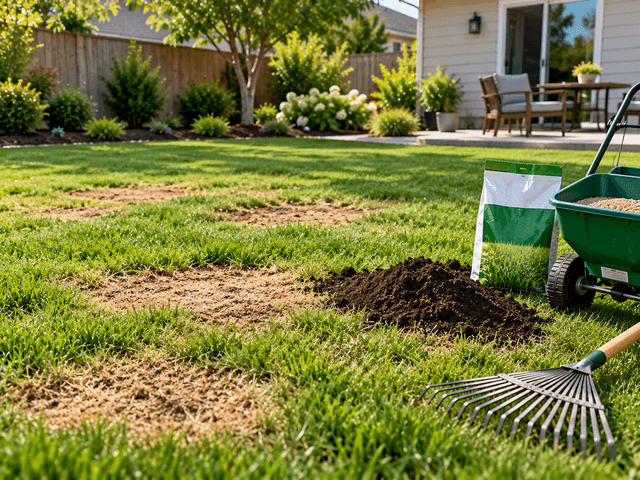
A patchy, thinning, half-dead lawn is one of the most frustrating things in a yard — you water it, you feed it, and it still looks worse every summer. Before you rip it out in frustration, or pour more money into it, the real question is whether it can be revived and whether reviving it is worth it in SoCal's heat and water reality. The honest answer is: sometimes yes, sometimes no. Knowing how to fix a patchy lawn starts with diagnosing why it went bad — because aeration and overseeding can resurrect a lawn with compacted soil and thin spots, but they will not save grass that is fighting deep shade, chronic drainage problems, or the wrong species for the site. This guide walks through why SoCal lawns thin out, the revival toolkit that genuinely works, the signs it is time to start over, the low-water alternative worth considering, and how to keep a revived lawn alive through a brutal summer.
Why SoCal Lawns Go Patchy and Thin
You cannot fix a lawn until you know why it is failing, and bare spots lawn problems usually trace to a handful of causes — often more than one at the same time.
- Watering problems: Overwatering, underwatering, or uneven sprinkler coverage all create thin, patchy, or soggy areas.
- Compacted soil: Hard, compacted ground chokes roots and sheds water instead of absorbing it.
- Thatch buildup: A thick thatch layer blocks water, air, and nutrients from reaching the roots.
- Grubs and pests: Grubs feeding on roots cause dead patches, which animals then dig up.
- Shade: Most lawn grasses need real sun; a lawn under trees or on the shady side struggles no matter what.
- Heat and the wrong grass: A species mismatched to SoCal heat and water limits will always fight you.
Many of these overlap with the issues in our guide to common SoCal lawn problems, and because watering is the most frequent culprit, fixing irrigation coverage and overwatering is often the first thing that needs to change.
The Lawn Revival Toolkit That Actually Works
If the lawn is thin and compacted but mostly alive, a real renovation can bring it back. The core aerate dethatch overseed sequence, done in the right order and at the right time, rebuilds the soil and fills in the thin spots.
- Aerate: Core aeration relieves compaction so water, air, and roots can move through the soil again.
- Dethatch: Removing excess thatch lets water and nutrients reach the soil.
- Overseed: Spreading new seed thickens thin areas and fills bare patches — timing depends on your grass type.
- Topdress: A thin layer of compost over the surface improves the soil and helps new seed establish.
- Correct the cause: Fix the irrigation, sun, or pest issue that thinned the lawn, or it will thin again.
Overseeding timing matters: cool-season grasses like fescue generally do best overseeded in fall, while warm-season grasses are usually handled in late spring or early summer. Confirm the right window for your specific grass, since seeding at the wrong time wastes the effort.
Signs It's Time to Start Over
Sometimes thin lawn repair is throwing good money after bad. These are the signals that revival will not hold and a reset — or a different solution — makes more sense.
| Lean toward reviving | Lean toward starting over |
|---|---|
| Thin or patchy but mostly alive | More than roughly half dead or taken over by weeds |
| Compaction or thatch is the main issue | Severe grading, drainage, or soil problems underneath |
| The lawn gets adequate sun | Chronic deep shade where grass will never thrive |
| Right grass for the site | Wrong species, or the lawn fails again every year |
Consider a Low-Water Lawn Alternative Instead
Here is the question SoCal homeowners increasingly ask: if the lawn keeps failing in a hot, dry, or shady spot, is a lawn even the right answer there? A lawn renovation SoCal yards may not need could instead become a lower-water, lower-maintenance solution that actually suits the site.
- Reduce the lawn to the area you genuinely use, and plant the rest.
- Explore lawn alternatives that are not artificial turf or gravel — groundcovers, native plantings, and low-water designs.
- Design the whole yard to be water-wise, following the ideas in our water-wise landscaping guide.
- Check whether turf-replacement rebates are currently available through your local water agency before you start, and verify any requirements, since programs change.
Keep a Revived Lawn Alive Through Summer
Reviving a lawn is only half the job; keeping it alive through a SoCal summer is the other half. A few watering and mowing habits make the difference between a lawn that holds and one that thins right back out.
- Water deeply and less often to encourage deep roots, rather than short daily sprinkles.
- Mow at the taller end of the range in heat, and never scalp the lawn.
- Keep mower blades sharp so you cut rather than tear the grass.
- Feed appropriately for the season and grass type, and stay ahead of grubs and pests.
- Adjust irrigation as the weather changes and fix leaks or dry spots promptly.
Frequently Asked SoCal Patchy Lawn Questions
Can I Fix a Patchy Lawn or Do I Need to Replace It?
It depends on the condition and the cause. If the lawn is thin and compacted but mostly alive, aeration, dethatching, overseeding, topdressing, and correcting the irrigation can revive it. If it is more than roughly half dead or weeds, sits in chronic deep shade, has underlying grading or drainage problems, or fails every year, replacing it — or switching to a lower-water alternative — usually makes more sense than repeated repairs.
Does Aeration Actually Help a Thin Lawn?
Yes, when compaction is part of the problem — which it often is. Core aeration relieves compacted soil so water, air, and roots can move freely again, and it is most effective paired with dethatching, overseeding, and topdressing. Aeration alone will not fix a lawn that is failing from deep shade, the wrong grass, or a drainage issue, so it works best as one step in a full revival that also corrects the underlying cause.
When Is the Best Time to Overseed in SoCal?
It depends on your grass type. Cool-season grasses such as fescue are generally best overseeded in fall, while warm-season grasses are usually overseeded in late spring or early summer. Seeding at the wrong time for your grass wastes seed and effort, so identify whether your lawn is cool- or warm-season first and confirm the right window for your area before you overseed.
Why Does My Lawn Keep Thinning Every Year?
A lawn that thins repeatedly is telling you the underlying cause was never fixed. Common culprits are uneven or incorrect watering, compacted soil, thatch, grubs, too much shade, or a grass species that simply is not suited to the spot's sun, heat, and water. If you keep reviving the same lawn and it keeps failing, that is a strong sign to either correct the root cause for good or pivot to a solution that fits the site.
Get a Lawn Revive-or-Replace Assessment Today
If you are wrestling with how to fix a patchy lawn and whether it is even worth saving, the smartest first step is an honest assessment of the cause. Contact BuildCal Landscape for a lawn assessment or call +1 (818) 303-1570. Our landscape services can diagnose why your lawn is failing, renovate it with aeration, dethatching, overseeding, and irrigation fixes where that makes sense — or help you pivot to a lower-water solution that actually suits your Glendale or Los Angeles yard.
Thinking about a new outdoor space?
We’d love to hear your ideas. Let’s explore what’s possible—no pressure, just a friendly conversation.
Give us a call:
+1 (818) 303-1570
Frequently Asked Question
CAN YOU PROVIDE A LANDSCAPE PLAN?
Yes – we have our own Design group who can draw anything from basic hand-drawn layouts and sketches, highly detailed concept plans, or a complete set of working construction drawings. Clients will often call upon us to provide this service as a first step to their overall project.