
OUR MISSION IS TO TAILOR FOR EACH CLIENT A BEAUTIFUL, FUNCTIONAL AND ENDURING OUTDOOR ENVIRONMENT THAT WILL PROVIDE A PLACE OF SERENITY FOR FRIENDS AND FAMILY TO APPRECIATE FOR YEARS TO COME.

BuildCal Landscape Landscape Maintenance & Tree Care Article
Pruning Trees the Right Way in SoCal - Timing, and Why 'Topping' Ruins a Tree
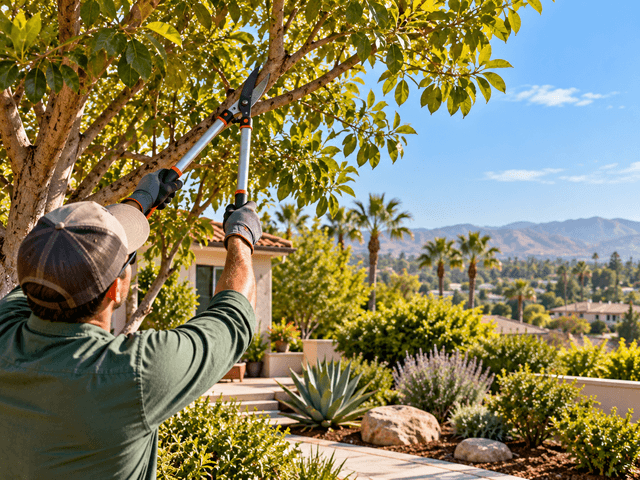
Few things make a tree lover wince like a freshly "topped" tree — a once-graceful canopy hacked down to ugly stubs, or a crape myrtle amputated to knuckled fists every winter ("crape murder," as arborists call it). Bad pruning is not just unsightly; it does real, lasting damage, and it is one of the most common mistakes homeowners and cheap crews make. The good news is that pruning a tree correctly is not complicated once you understand two things: when to prune, and how much — and where — to cut. Knowing when to prune trees in Southern California depends on the tree type, and knowing how depends on respecting the tree's natural structure instead of forcing a shape on it. This guide covers why topping ruins trees, the right timing by species, how to make proper cuts without over-pruning, how to build good structure in young trees, and when a job belongs to a certified arborist rather than a weekend saw.
Why Topping and Crape Murder Harm Trees
Topping — cutting a tree's main limbs back to stubs to reduce its size — is condemned by arborists for good reason. It is one of the clearest examples of why tree topping is bad, and the damage goes far beyond looks.
- Weak regrowth: Topping triggers a rush of fast, weakly attached shoots that are more likely to break later.
- Decay: Large stub cuts do not heal well and become entry points for rot and disease.
- Stress and sunburn: Removing too much canopy starves and stresses the tree and exposes bark to sunburn.
- Structural failure: The tree becomes weaker and more hazardous over time, not safer.
- Shortened life and higher cost: A topped tree often declines, needs repeated work, and may have to be removed years early.
"Crape murder" — the severe annual stubbing of crape myrtles — is the same mistake on a smaller plant. Crape myrtles bloom on new growth and will flower without being butchered; proper crape myrtle pruning is light, removing crossing branches, suckers, and old seed heads and shaping the plant, rather than hacking it back to fists. The same respect applies to any flowering tree: work with its form, not against it.
When to Prune by Tree Type in SoCal
Tree trimming timing matters as much as technique, and it varies by species. Pruning at the wrong time can remove the coming season's flowers, stress a tree in heat, or invite disease.
| Tree type | General timing | Note |
|---|---|---|
| Deciduous shade trees | Dormant season (late winter) | Easier to see structure; less stress on the tree |
| Spring-flowering trees | Right after they bloom | Pruning in winter removes that year's flower buds |
| Fruit trees | Varies by species | Many are pruned dormant; some are pruned in dry summer to limit disease |
| Evergreens | Light pruning as needed | Avoid heavy cuts; remove dead or crossing growth |
| Crape myrtle | Late winter, lightly | Shape and thin — never top or stub |
Fruit trees in particular reward correct timing and structure — our guide to fruit trees for SoCal yards covers how placement and care set them up. For oaks and some natives, prune in the dry dormant period and check with an arborist about disease-sensitive timing before cutting. Avoid heavy pruning in fall or during extreme heat.
Make Proper Cuts and Don't Over-Prune
Good pruning is as much about restraint as skill. An over-pruned tree — stripped of too much canopy at once — is stressed and weakened even if every cut looks clean. Where and how much you cut is what separates pruning from damage.
- Cut back to a branch, bud, or the branch collar — never leave stubs and never cut flush into the trunk.
- Use the proper technique on larger limbs so the bark does not tear.
- As a general rule, do not remove more than about a quarter of the live canopy in a single season.
- Remove dead, diseased, crossing, and structurally problematic branches first.
- Prune to the tree's natural shape rather than forcing an unnatural form.
Prune Young Trees for Good Structure Early
The best way to avoid ever needing drastic pruning is to shape a tree well while it is young. Early structural pruning guides a strong framework so the mature tree is sound, safe, and attractive — and rarely needs major cuts.
- Encourage a single dominant leader and remove competing or co-dominant stems while they are small.
- Remove crossing, rubbing, and weakly attached branches early.
- Make small corrective cuts over the first years rather than one big cut later.
- Choose the right tree for the space from the start, since a well-placed shade tree suited to the site needs far less corrective pruning — as does a tree matched to your conditions using native or non-native plant selection.
When to Call a Certified Arborist
Some pruning is a reasonable homeowner task; much of it is not. Large trees, anything near power lines, structural or health concerns, and work that requires climbing or heavy equipment belong to a professional — ideally an ISA Certified Arborist.
- Call a certified arborist for large trees, hazardous limbs, or anything that needs climbing or a lift.
- Never prune near power lines yourself — contact the utility or a qualified professional.
- Get an expert assessment if a tree shows decline, decay, cracks, or lean.
- Check local rules before pruning protected native trees (such as certain oaks) or street and parkway trees, which may require a permit even to trim.
Frequently Asked SoCal Tree Pruning Questions
When Should I Prune My Trees in SoCal?
It depends on the tree. Most deciduous shade trees are best pruned in the dormant late-winter season, spring-flowering trees right after they bloom, and evergreens with light pruning as needed. Fruit trees vary by species, and crape myrtles are pruned lightly in late winter. Avoid heavy pruning in fall or extreme heat, and for oaks and some natives, prune in the dry dormant period and check disease-sensitive timing with an arborist first.
Is Topping a Tree Ever Okay?
No — topping is condemned by arborists because it causes weak regrowth, decay at the large stub wounds, stress, structural weakness, and a shortened lifespan, and it does not actually make a tree safer. If a tree is too big for its space, the answer is proper reduction pruning by a professional, or choosing a better-sized tree — not topping. A tree that genuinely must be smaller than its species allows is usually in the wrong spot.
How Do I Prune a Crape Myrtle Correctly?
Lightly. Proper crape myrtle pruning in late winter means removing crossing branches, suckers, and old seed heads and gently shaping the plant — not cutting it back to knuckled stubs ("crape murder"). Crape myrtles bloom on new growth and will flower without severe pruning, so the hacking is both unnecessary and harmful, creating weak growth and ugly knuckles over time. Thin and shape; never top.
Can I Over-Prune a Tree?
Yes, and it is a common mistake. Removing too much canopy at once stresses and weakens a tree even if the cuts are clean, because the tree loses the foliage it needs to produce energy. A general guideline is to remove no more than about a quarter of the live canopy in a season, prioritizing dead, diseased, and crossing branches. If a lot needs to come off, spread it over multiple seasons or have a professional plan it.
Get a Tree & Pruning Consult Today
If you are unsure when to prune trees in Southern California, or you are looking at a tree that was topped and wondering what to do next, the right first step is an expert eye. Contact BuildCal Landscape for a tree and pruning consultation or call +1 (818) 303-1570. Our landscape services can advise on timing, proper cuts, and young-tree structure for your Glendale or Los Angeles yard — and recommend a certified arborist for large, hazardous, or protected trees that need specialized care.
Thinking about a new outdoor space?
We’d love to hear your ideas. Let’s explore what’s possible—no pressure, just a friendly conversation.
Give us a call:
+1 (818) 303-1570
Frequently Asked Question
HOW CAN WE PLAN A LOW-MAINTENANCE LANDSCAPE?
There are several ways to create a lush and lasting low maintenance landscape. Such as: installing smaller planting beds, filling the property with hardy plants and border color (such as perennials), applying a 3” layer of mulch to retain moisture, picking correct plants for the existing sun exposure, soil conditions, and water availability.