
OUR MISSION IS TO TAILOR FOR EACH CLIENT A BEAUTIFUL, FUNCTIONAL AND ENDURING OUTDOOR ENVIRONMENT THAT WILL PROVIDE A PLACE OF SERENITY FOR FRIENDS AND FAMILY TO APPRECIATE FOR YEARS TO COME.

BuildCal Landscape Landscape Design & Planting Article
Fruit Trees for SoCal Yards - Citrus, Avocado & Stone Fruit — Spacing, Roots & Harvest
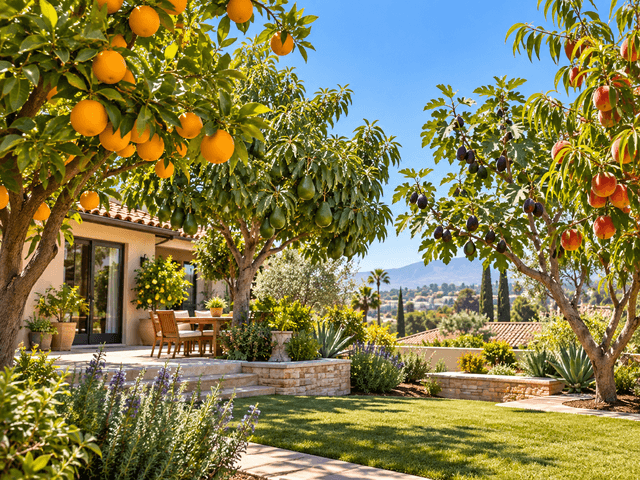
A fruit tree is one of the most satisfying things you can add to a yard — and one of the easiest to put in the wrong place. Plant an avocado too close to the patio and its surface roots can lift the pavers within a few years; crowd a citrus against the foundation and you inherit years of pruning, pest, and access headaches. The best fruit trees for Southern California yards are not just the ones that grow well here; they are the ones matched to your space, spacing, sun, and soil so the harvest never comes at the cost of your hardscape or pipes. This guide is placement-first: which citrus, avocado, and stone fruit actually thrive in SoCal, how far to keep them from the house and paving, which roots to respect, and how to fit real fruit into a small lot without a decade of regret.
Choose the Best Fruit Trees for SoCal Yards
Southern California's mild winters and long, warm season suit many fruit trees, but the best fruit trees for Southern California yards depend on your microclimate, chill hours, space, and how much mess and maintenance you will accept. The three families most homeowners plant break down like this.
| Type | Why it fits SoCal | Placement watch-outs |
|---|---|---|
| Citrus (orange, lemon, lime, mandarin) | Thrives in mild winters; evergreen; dwarf options suit small lots and containers | Wants sun and good drainage; keep clear of the foundation and irrigation overspray on the trunk |
| Avocado | Well adapted to frost-free SoCal areas; a backyard favorite | Shallow, wide surface roots can damage nearby hardscape; needs generous space away from paving and pipes |
| Stone fruit (peach, plum, apricot, nectarine) | Deciduous; many low-chill varieties are bred for SoCal's warm winters | Verify chill-hour needs for your area; seasonal fruit drop and pruning are part of the deal |
| Figs and other adaptable trees | Tolerate heat and poorer soil; low chill requirement | Can grow large; some have vigorous roots, so give them room |
Choose varieties by chill hours, mature size, and rootstock (dwarf, semi-dwarf, or standard) for your specific site rather than by the label photo alone.
Space Fruit Trees Away From Foundations and Pipes
This is where most regret starts. Citrus tree spacing, and spacing for any fruit tree, is not only about giving the canopy room — it is about keeping roots, branches, fruit drop, and future maintenance access away from things they can damage. A fruit tree near foundation walls, sewer laterals, driveways, or a patio is a slow-motion problem when the mature size is not respected.
- Plan by mature canopy and root spread, not the size in the nursery pot.
- Keep trees back from the foundation, sewer and water lines, retaining walls, and paving.
- Leave room for pruning access, harvesting, and equipment on all sides.
- Account for branches over a roof, gutter, pool, or neighbor's property.
- Confirm exact clearances for the specific variety and your site conditions before planting.
Because roots and fruit drop interact with patios, walkways, and driveways, it is worth planning the tree and the hardscape together rather than adding one after the other and hoping they coexist.
Respect Avocado and Surface-Rooting Tree Roots
Some fruit and shade trees are far more likely to conflict with hardscape than others. Avocado tree roots are a classic example: they tend to be shallow and spreading, which is exactly the pattern that lifts pavers, cracks slabs, and finds openings in older pipes. Southern California landscape guidance regularly notes that aggressive surface roots can damage hardscaping and foundations, and the same caution applies to certain fruit trees.
- Give surface-rooting trees generous distance from anything you do not want lifted.
- Consider root barriers where a tree must sit closer to hardscape, installed as part of the design.
- Do not rely on cutting major roots later; that can destabilize the tree and rarely ends the conflict.
- Keep in mind that roots follow moisture, so an irrigation leak or a damaged pipe can draw them toward it.
Give Fruit Trees Sun Drainage and Deep Water
Most fruit trees want full sun and soil that drains. In SoCal's heavy clay, poor drainage is a common killer — roots sitting in waterlogged soil rot, while inconsistent watering during establishment is one of the leading causes of young-tree failure. Getting the site right early matters more than any single variety choice.
- Site trees in strong sun; most fruiting crops need it to produce well.
- Improve or work with heavy clay so water drains instead of pooling around roots — the same drainage problems that stress a yard also stress tree roots.
- Water deeply and less often to encourage deep roots, adjusting for weather, season, and the tree's stage.
- Keep water and mulch off the trunk itself; mulch the root zone to hold moisture and moderate soil temperature.
- Give new trees consistent watering during establishment, since the first seasons set up long-term health.
Plan for Harvest Mess and Maintenance
Fruit is the reward, but fruit also drops. A tree over a patio, pool, walkway, or lawn means fallen fruit, stains, pests drawn to rotting fruit, and slip hazards if you do not stay ahead of it. Deciduous stone fruit also drops leaves seasonally, and every fruit tree needs pruning to stay productive and manageable.
- Keep heavy fruit-drop away from seating, pools, entries, and high-traffic paths.
- Plan for seasonal pruning to control size, shape, and fruiting.
- Expect to manage pests, cleanup, and the occasional off year.
- Match the number of trees to the harvest your household will actually use and maintain.
Fit Fruit Trees Into a Small Lot
A small yard does not rule out a backyard orchard SoCal homeowners can enjoy — it just changes the strategy. Instead of a few standard trees, small-lot gardeners lean on techniques that pack fruit into tight space while keeping roots and canopies controllable.
- Dwarf fruit trees: Dwarf and semi-dwarf rootstocks stay smaller and are easier to harvest and prune.
- Espalier: Trained flat against a wall or fence, an espaliered tree uses vertical space and almost no footprint.
- Containers: Citrus and some other fruit grow in large pots, which also keeps roots away from hardscape.
- Multi-graft trees: A single tree bearing several varieties gives variety without several trunks.
- High-density planting: Close-planted, size-controlled trees can extend the harvest season in a small area with committed pruning.
These strategies keep fruit within reach of a small yard while respecting the same spacing, root, sun, and drainage rules that protect your hardscape and home.
Frequently Asked SoCal Fruit Tree Questions
How Far From the House Should a Fruit Tree Be?
Plan the distance around the tree's mature canopy and root spread, not its nursery size, and keep it clear of the foundation, sewer and water lines, paving, and the roof. Surface-rooting trees like avocado need more distance from hardscape than a compact dwarf citrus. Because the right clearance depends on the species, rootstock, and your specific site, confirm it for the exact tree before planting rather than using one universal number.
Which Fruit Trees Are Best for a Small Yard?
Dwarf and semi-dwarf citrus and stone fruit, espaliered trees trained against a wall or fence, container-grown citrus, and multi-graft trees all fit small lots well. They keep mature size, roots, and pruning manageable while still producing a real harvest. The best choice depends on your sun, space, and how much maintenance you want, so match the technique and variety to the site.
Will Fruit Tree Roots Crack My Patio or Pipes?
They can if the tree is placed too close, especially shallow, spreading types like avocado. Roots lift pavers and slabs when there is not enough room, and they can exploit cracks or leaking joints in older pipes. The fix is placement and, where needed, root barriers designed in from the start. Cutting major roots later is risky for the tree and rarely solves the conflict permanently.
How Much Water Do Fruit Trees Need in SoCal?
Most fruit trees prefer deep, less-frequent watering that reaches the root zone, with the amount adjusted for the species, soil, weather, and the tree's stage — young trees need consistent moisture to establish, while established trees generally tolerate longer intervals. Avoid keeping the soil constantly saturated, keep water off the trunk, and use mulch to hold moisture. Drip irrigation on a schedule is usually more reliable than hand-watering.
Get a Fruit-Tree Placement Plan Today
If you want the best fruit trees for Southern California yards placed so the harvest never costs you your hardscape or pipes, contact BuildCal Landscape for a planting-plan consultation or call +1 (818) 303-1570. Our landscape design and installation services can select varieties, plan spacing and root protection, and integrate the trees with your irrigation and hardscape across your Glendale or Los Angeles yard.
Thinking about a new outdoor space?
We’d love to hear your ideas. Let’s explore what’s possible—no pressure, just a friendly conversation.
Give us a call:
+1 (818) 303-1570
Frequently Asked Question
CAN YOU GIVE ME AN ESTIMATE FOR MY PROJECT DURING THE INITIAL CONSULTATION?
No, Too often a landscape contractor will come to a site and immediately give a potential client a price without first knowing all the details of that project. Our first question is always, “What is this estimate based on?” Before making out a bid of any sort, we must first discuss all the work to be done, the planting and construction materials necessary, and the labor involved. After which we do a breakdown and present to you a complete and itemized preliminary estimate. As our client you will be able to see, not only how much your project will cost, but also where every dollar will go.