
OUR MISSION IS TO TAILOR FOR EACH CLIENT A BEAUTIFUL, FUNCTIONAL AND ENDURING OUTDOOR ENVIRONMENT THAT WILL PROVIDE A PLACE OF SERENITY FOR FRIENDS AND FAMILY TO APPRECIATE FOR YEARS TO COME.

BuildCal Landscape Landscape Design & Privacy Article
Feeling Exposed Out Front? Privacy for a Street-Facing Yard or Porch in SoCal (Without a Fortress Wall)
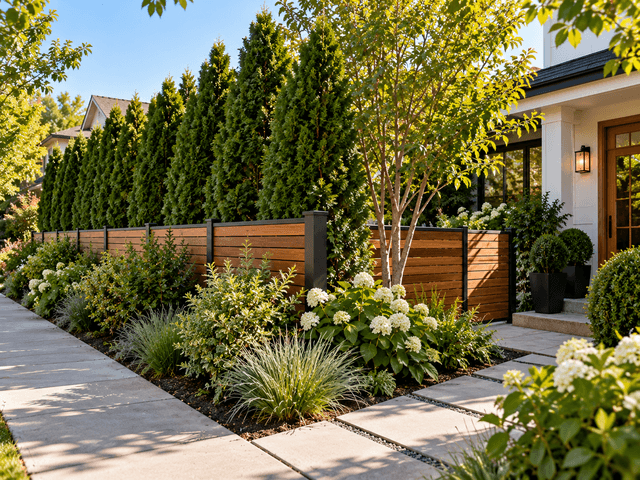
The best front yard privacy ideas don't wall off your whole frontage — they screen the exact spot where you feel exposed. If people on the sidewalk can see straight onto your porch or into your front window, you usually don't need a tall barrier along the property line; you need a well-placed screen, a layered planting, or a low structure that blocks that one sightline. That's smarter and, in Southern California, far more likely to stay within the rules — front-yard fences and hedges are height-limited in most cities. Here's how to get real privacy without building a fortress, and keep it legal.
How do you get front yard privacy without a tall wall?
Start by identifying the specific line of sight that bothers you — from the sidewalk to the porch, or from the street into a window. Then block just that, using a layered planting, a freestanding screen or trellis near the seating or window, a raised planter, or strategic placement of a small tree or tall shrub. Because front-yard fences and hedges are capped in height in most SoCal cities, screening the sightline rather than the whole frontage usually gives you the privacy you want while staying compliant. Design smarter, not taller.
What does front-yard privacy landscaping involve?
Front-yard privacy work is about controlling specific views, not sealing off the property. It combines planting (layered shrubs, ornamental grasses, a well-placed tree), light structures (a screen, trellis, pergola post, or planter), and smart positioning so the barrier sits close to what you're protecting — the porch, a window, a patio — where even a modest height does the job. Because it blends softscape and structure, this is design-and-build landscaping; BuildCal approaches it through landscape design and planting tailored to how your frontage is actually used. Our overview of privacy landscaping in California digs further into the planting side.
Screen the sightline, not the whole yard
The key insight is geometry. A screen placed near where you sit blocks far more view, at far less height, than a barrier out at the curb — the closer the screen is to you, the smaller it can be and still cover the angle. A six-foot wall at the property line might be both unnecessary and against code, while a shoulder-height planting beside the porch gives you the privacy you actually wanted.
What are the front-yard height rules in SoCal?
This matters because most cities limit how tall a fence, wall, or hedge can be in the required front yard — and that's exactly the zone you're working in. The following is general guidance, not legal advice; rules vary by city and lot, so confirm current requirements before building. This information is current as of October 2026.
- In the City of Los Angeles, the front-yard height limit for fences and walls is generally about 42 inches (3.5 feet), and critically, the code treats hedges and thick growths of shrubs or trees the same as a fence or wall — so a tall hedge across the frontage is regulated just like a fence (LAMC 12.22 C.20(f)). Going taller in a required yard requires a Zoning Administrator approval process.
- Corner lots and areas near driveways often have stricter visibility rules to protect sightlines for drivers and pedestrians.
- Masonry walls and retaining walls above certain heights typically need permits, and structural work has its own requirements.
- A hedge grown unusually tall out of malice toward a neighbor can run into California's "spite fence" law (Civil Code 841.4). Other cities, including Glendale, set their own limits — always verify locally.
Because the hedge-equals-fence rule surprises many homeowners, choosing the right plants and heights is part of the design. Our guide to fast-growing shrubs for California privacy screens helps you pick species that screen effectively without overstepping.
Front-yard privacy approaches
| Approach | When you'd use it | Key considerations | Notes before starting |
|---|---|---|---|
| Layered planting | Softening and screening the frontage | Hedges count toward height limits in LA | Choose species sized to the rules |
| Porch/window screen or trellis | Blocking one specific sightline | Placed close to you, so it can stay low | May be structural; check permit needs |
| Raised planter | Adding height at seating level | Combines structure and planting | Keep within front-yard rules |
| Low fence or wall | Defining the boundary | Front-yard height capped (~42 in in LA) | Masonry/retaining may need permits |
Who typically needs front-yard privacy?
Homeowners on busy streets, corner lots, or raised lots where passersby look straight onto the porch or into the house are the most common. It also suits anyone creating a usable front sitting area, families wanting a buffer from the sidewalk, and owners of homes close to the street — frequent across Glendale, La Crescenta, La Cañada, and the valleys. HOAs and multi-unit properties use compliant screening to give ground-floor units privacy without heavy walls.
What to check before starting your privacy project
- Exactly which view bothers you — porch, front window, patio, or the whole yard?
- Where does that sightline start and end (sidewalk, street, a specific angle)?
- What are your city's front-yard height limits for fences, walls, and hedges?
- Are you on a corner or near a driveway, where visibility rules are stricter?
- Would a structure (screen, trellis, wall) need a permit?
- Do your plant choices screen at the right height without breaking the rules?
What mistakes lead to a failed or non-compliant privacy project?
- Trying to wall off the entire frontage instead of screening the one view that matters.
- Planting a tall hedge across the front yard without realizing it's regulated like a fence.
- Blocking driver or pedestrian sightlines on a corner or near a driveway.
- Building a masonry or retaining wall over the height that needs a permit without one.
- Choosing fast but aggressive plants that outgrow the space and the rules.
- Ignoring how the screen looks from the street, hurting curb appeal.
How do you choose the right landscaping company in Glendale?
For front-yard privacy, look for a licensed landscape contractor (CSLB) who knows local front-yard height and visibility rules, can design the screen to the exact sightline rather than defaulting to a tall barrier, and handles both planting and any light structures. A clear written estimate and scope, realistic plant choices, and attention to how the result looks from the street all matter. Tying the privacy screen into the broader frontage design — as in our front yard layout ideas for California homes — keeps it looking intentional, not bolted on.
How does BuildCal help you?
BuildCal is a licensed landscape contractor (California State License Board / CSLB) in Glendale, and we design front-yard privacy around the specific view you want to block, not a one-size wall. We start with an on-site assessment of your frontage, sightlines, sun, and how you use the space, then combine layered planting, screens, trellises, or low structures sized to your city's front-yard rules — keeping corner and driveway visibility clear. If fencing is part of the plan, our fence installation in Glendale guidance covers the height and permit side. You get a written estimate and scope before work begins, and a result that gives you privacy while keeping the home's curb appeal.
Steps to request your project from BuildCal
- Share photos of your front yard and porch, and describe the view you want to block.
- Schedule an on-site assessment of the sightlines, sun exposure, and existing planting.
- Receive a written estimate with scope, plants, any structures, and timeline, including permit steps.
- Approve the plan and schedule the work.
- Installation and a final walkthrough, with planting and care notes.
Frequently asked questions about front-yard privacy
How can I get privacy in my front yard without a tall wall?
Focus on the specific sightline instead of the whole frontage. A screen, trellis, raised planter, or layered planting placed near your porch or window blocks the view at a far lower height than a barrier at the property line, because the closer the screen is to you, the more angle it covers. This "design smarter, not taller" approach usually gives you the privacy you want while staying within front-yard height limits.
Does a hedge count toward the front-yard height limit?
In the City of Los Angeles, yes — the code treats hedges and thick growths of shrubs or trees the same as a fence or wall, so a tall front hedge is regulated just like a fence (generally about 42 inches in the required front yard before additional approval). Many homeowners don't realize this and plant a hedge that later becomes a compliance problem. Other cities set their own rules, so always verify locally before planting.
How tall can a front-yard fence or hedge be in Los Angeles?
Generally about 42 inches (3.5 feet) in the required front yard, with hedges counted the same as fences. Going taller in a required yard involves a Zoning Administrator approval process, and corner lots and driveway areas face stricter visibility rules. This is general guidance as of October 2026, and specifics vary by lot and city — including Glendale — so confirm the current requirements with your local planning department before building or planting.
What are the best plants for front-yard privacy screens?
The best choices screen effectively at a controlled height, suit our climate, and won't outgrow the rules or the space. Drought-tolerant, well-behaved shrubs and ornamental grasses often work better than aggressive fast growers that need constant cutting. Placement matters as much as species — a plant beside the porch does more than a row at the curb. Our guide to fast-growing shrubs for California privacy screens covers suitable options to consider.
Do I need a permit for a front-yard privacy screen?
It depends on what you build. Planting generally doesn't require a permit, but it must respect height limits (remember hedges are often counted as fences). Structures like masonry walls or retaining walls above certain heights typically do need permits, and taller fences in a required yard may need special approval. Because it varies by city and structure, we identify any permit needs during the on-site assessment and include them in the scope.
Can front-yard privacy still look welcoming from the street?
Yes — that's the point of screening the sightline rather than walling the frontage. A well-designed privacy planting or screen blends into the overall front-yard layout, keeps curb appeal, and avoids the closed-off look of a tall perimeter wall. Thoughtful placement, layered planting, and materials that match the home all help. Done right, you get privacy where you sit without the house looking like it's hiding behind a barrier.
Request your estimate today
If you're looking for front yard privacy ideas that actually fit the rules in Glendale or the greater Los Angeles area, BuildCal can design a screen or planting around the exact view you want to block — no fortress wall required. Send us a few photos of your front yard to schedule an on-site assessment and get a written estimate before any work begins. Call (818) 303-1570 or request your free estimate online.
Thinking about a new outdoor space?
We’d love to hear your ideas. Let’s explore what’s possible—no pressure, just a friendly conversation.
Give us a call:
+1 (818) 303-1570
Frequently Asked Question
HOW LONG DOES A PROJECT USUALLY TAKE?
Every property and client is different and therefore there is no set standard. The time required to complete a project relies completely on the amount of work which will be necessary. And the size of a property is not always a guide. For instance; a large property requiring minimal landscaping and irrigation installation will most likely be completed in a shorter amount of time than a small property requiring landscaping, a patio, spa, and a custom water fountain. Once a preliminary estimate is prepared, we will have a realistic estimate for project completion