
OUR MISSION IS TO TAILOR FOR EACH CLIENT A BEAUTIFUL, FUNCTIONAL AND ENDURING OUTDOOR ENVIRONMENT THAT WILL PROVIDE A PLACE OF SERENITY FOR FRIENDS AND FAMILY TO APPRECIATE FOR YEARS TO COME.

BuildCal Landscape Landscaping Article
Privacy Landscaping in California: Trees, Hedges & Screens
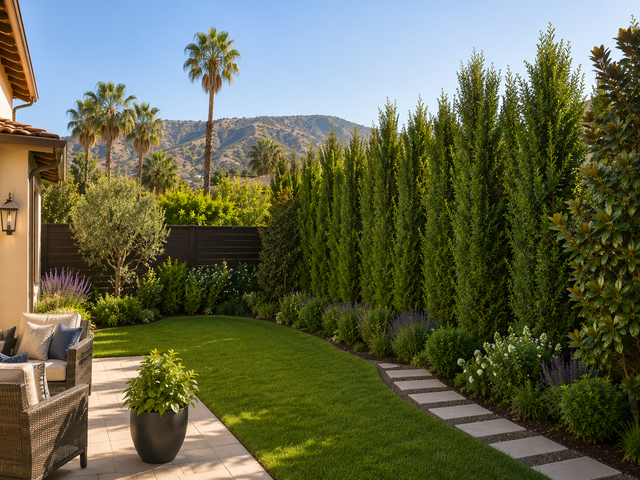
Privacy is one of the most common reasons California homeowners invest in their yards — to block a neighbor's second-story window, soften street noise, or simply create a sense of enclosure that makes outdoor space feel like your own. Done well, privacy landscaping California homeowners rely on does more than screen a view: it cools the yard, supports wildlife, and adds lasting curb appeal. Done poorly, it leads to overgrown, struggling plants or a fence that fights the design.
This is the complete guide. We'll start with defining your privacy goals, then cover the best privacy trees (including Italian Cypress), the top hedge options, how fences compare to living screens, and the spacing and care that make any solution succeed. For tailored help, explore our landscaping services — and read on to plan the right approach for your property.
Privacy Goals
Before choosing a single plant, define what you're actually trying to achieve. The right solution depends entirely on the goal, and skipping this step is the most common reason privacy plantings disappoint.
Ask yourself:
- What am I screening? A ground-level fence line, a two-story window, a street view, or a poolside sightline each call for a different height and density.
- How tall, and how fast? Decide the screening height you need and how quickly you need it — fast growers reach height sooner but often need more pruning.
- Evergreen or seasonal? For year-round privacy in California, evergreen species hold their screen through winter; deciduous plants open up when leaves drop.
- How much space and care? Narrow side yards need columnar plants; wider beds allow layered screens. Match the choice to the maintenance you'll realistically do.
- Any rules? Check HOA guidelines, setbacks, and local height limits before committing to a plan.
With the goal clear, the rest of the decisions fall into place. Many homeowners fold privacy into a broader plan — our landscape design ideas for California homes show how screening integrates with the wider yard, and our overview of the design process explains how it all comes together.
Best Trees (Including Italian Cypress)
Trees are the backbone of tall privacy. The best privacy trees California yards can support are evergreen, climate-adapted, and sized to the space — not just the tallest option available.
Italian Cypress
Italian Cypress is the classic California privacy tree for tight spaces. Its tall, narrow, columnar form creates a formal vertical screen without spreading wide, making it ideal along property lines and narrow side yards. It's drought-tolerant once established and evergreen year-round. The key is spacing and expectations: planted too close it can crowd and invite disease, and it screens as a row of columns rather than a solid wall, so it pairs well with a lower hedge to fill the gaps at the base.
Other strong privacy trees
- Podocarpus — dense, fine-textured, and adaptable as a tall screen or large hedge.
- Carolina Cherry and Bay Laurel — evergreen, dense, and well-suited to California conditions.
- Olive (fruitless varieties) — drought-tolerant, silvery, and elegant for a softer screen.
- Ficus — fast and dense, but use with caution: aggressive roots make it a poor choice near foundations, hardscape, or pipes.
For broader tree selection — including shade as well as screening — see our guide to the best shade trees for Southern California. Choosing drought-tolerant plants suited to the local climate keeps a tall screen healthy with less water.
Hedges
Where trees give height, privacy hedges give a continuous, wall-like screen from the ground up. They're the most versatile privacy tool because you can shape them formal or informal and tune them to almost any height.
Popular evergreen hedge choices in California include:
- Pittosporum and Podocarpus — dense, reliable, and easy to maintain as formal hedges.
- Carolina Cherry and Privet — fast-establishing screens for quicker coverage.
- Ficus — a very dense hedge, with the same root caution noted above.
- Boxwood — best for lower borders rather than tall privacy.
Hedge selection deserves its own deep dive, so we've covered it in detail: see The roundup of privacy hedges for Southern California, and a focused look at growing a ficus hedge. For a city-specific example, our guide to privacy planting in Pasadena shows how these choices play out on real lots.
Fences vs Plants
One of the biggest privacy decisions is whether to build a fence, plant a living screen, or combine the two. Each has clear trade-offs.
A fence delivers instant, defined privacy the day it's installed, with a predictable footprint and no waiting for growth — but it requires a permit in many California cities, is subject to height limits, and offers no cooling or habitat benefit. A living screen of privacy trees or hedges takes time to fill in, but it softens the space, lowers heat, supports wildlife, and grows more valuable over the years. In practice, the strongest result often combines both: a fence for immediate, reliable privacy with plantings layered in front to soften it and add greenery.
If a fence is part of your plan, factor in permits and height rules early, and design it alongside the planting rather than as an afterthought. Explore how structures and fences fit into an outdoor design, and see finished screens in our project portfolio.
Spacing & Care
The difference between a lush privacy screen and a patchy, struggling one usually comes down to spacing and care — not the plant choice itself.
- Don't overcrowd. Planting too close to force faster coverage backfires: crowded roots and poor airflow invite disease and dieback. Space according to each species' mature width.
- Plan for mature size. Choose plants whose grown height and spread match the spot, so you're shaping, not constantly cutting back.
- Mind roots and structures. Keep aggressive-rooted species like Ficus well away from foundations, hardscape, and utility lines.
- Water for establishment. New screens need consistent water to root in; efficient irrigation — ideally drip — gets them established without waste.
- Prune on a schedule. Regular, light pruning keeps hedges dense and trees shapely; neglect leads to thin, leggy screens.
For a lower-effort screen overall, lean on drought-tolerant landscaping and a low-maintenance approach so privacy doesn't become a weekly chore.
Plan Your Privacy Landscaping
The best privacy solution balances your goals, your space, your climate, and the upkeep you want — and that's easiest to get right with a plan tailored to your property. Request a Landscaping Estimate and we'll assess your site, recommend the right trees, hedges, or fence-and-planting combination, and design it as one cohesive screen. Call +1 (818) 303-1570 or contact us to get started.
Frequently Asked Questions
What is the best privacy landscaping for a California yard?
There's no single best option - it depends on your goal, space, and climate. Tall, narrow trees like Italian Cypress suit tight side yards; dense hedges create a continuous ground-up screen; and fences give instant privacy. The strongest privacy landscaping in California often layers a fence or trees with hedges and drought-tolerant plants for a screen that's both effective and low-maintenance.
What are the best privacy trees for California?
Reliable evergreen privacy trees California yards support include Italian Cypress for narrow columnar screening, Podocarpus, Carolina Cherry, Bay Laurel, and fruitless Olive for a softer look. Ficus grows fast and dense but has aggressive roots, so keep it away from foundations and pipes. Choose climate-adapted, drought-tolerant species and size them to the space.
Is Italian Cypress good for privacy?
Yes - Italian Cypress is a top choice for tight spaces because its tall, narrow, columnar form screens vertically without spreading wide. It's evergreen and drought-tolerant once established. The keys are correct spacing (too close invites disease) and pairing it with a lower hedge, since a row of cypress screens as columns rather than a solid wall at the base.
What are the fastest-growing privacy hedges?
Among privacy hedges, Privet, Carolina Cherry, and Ficus establish and fill in relatively quickly, while Pittosporum and Podocarpus offer dense, dependable screens with easy maintenance. Faster growth usually means more frequent pruning, so balance speed against the upkeep you're willing to do and the mature size that fits your space.
Should I choose a fence or plants for privacy?
A fence gives instant, defined privacy but needs a permit in many California cities and offers no cooling or habitat benefit. A living screen takes time to grow but softens the space, lowers heat, and adds value. Often the best result combines both - a fence for immediate privacy with plantings layered in front. Request a Landscaping Estimate at +1 (818) 303-1570 to plan the right mix.
Thinking about a new outdoor space?
We’d love to hear your ideas. Let’s explore what’s possible—no pressure, just a friendly conversation.
Give us a call:
+1 (818) 303-1570
Frequently Asked Question
WE WANT A LOT DONE, BUT CANNOT AFFORD TO DO IT ALL NOW. CAN YOU STILL WORK WITH US?
Yes – it is not uncommon to do a project in phases, especially when there are such constraints as budget and time. Because we draw up our own plans, we can design a project to be installed in phases. Once the complete plan is established, the property owner can easily pick and choose which parts to be completed now and in the future.