
OUR MISSION IS TO TAILOR FOR EACH CLIENT A BEAUTIFUL, FUNCTIONAL AND ENDURING OUTDOOR ENVIRONMENT THAT WILL PROVIDE A PLACE OF SERENITY FOR FRIENDS AND FAMILY TO APPRECIATE FOR YEARS TO COME.

BuildCal Landscape Pavers Article
Best Paver Patterns for Walkways & Driveways
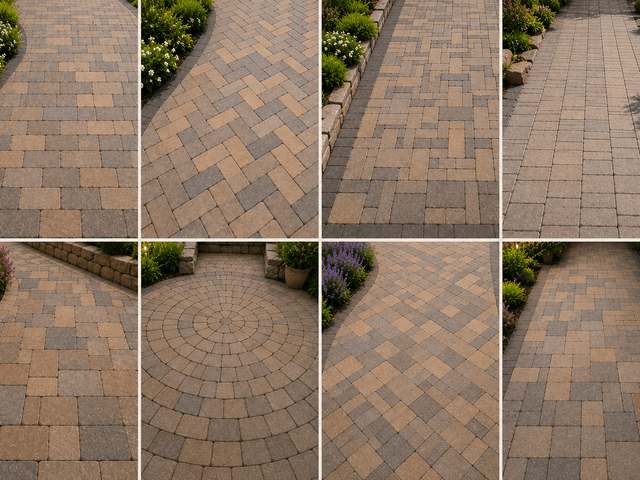
The pattern you lay pavers in does two jobs at once: it sets the look of the surface and it determines how strong that surface is. Choosing the right paver patterns is one of the most satisfying parts of a project — and one of the most important, since the wrong pattern on a driveway can shift and rut, while the right one lasts for decades. This visual guide walks through the common patterns, which suit walkways versus driveways, how borders finish the look, and how pattern affects durability, so you can decide before a consultation.
For the work itself, see our paver installation, and read on.
Common Patterns
Each pattern has its own personality — and its own strengths. The most common ones you'll see in Glendale, CA:
- Running bond. Simple offset rows, like brickwork — classic, economical, quick to lay, and forgiving on straight runs.
- Herringbone. Interlocking 45- or 90-degree zigzag — the strongest pattern, premium-looking, and excellent at resisting movement.
- Basket weave. Pairs of pavers alternating direction — traditional and decorative, great for patios and accents.
- Stack bond (grid). Pavers aligned in a clean grid — modern and minimal, but with the least interlock.
- Pinwheel and random/ashlar. Mixed paver sizes for a charming or naturalistic look with visual movement.
The herringbone vs running bond question comes up most often: running bond is simpler and more economical, while herringbone is stronger and more refined. Both are excellent — the right call depends on where you're using it. For walkway-specific looks, our guide to paver walkway patterns goes deeper.
Best for Driveways vs Walkways
The single biggest factor in choosing a pattern is load. A driveway carries vehicle weight; a walkway carries footsteps — and that changes everything.
For driveway paver patterns, herringbone — especially the 45-degree version — is the gold standard. Its tightly interlocking layout distributes vehicle loads across many pavers, resisting the shifting and rutting that weaker patterns develop under cars. Stack bond, by contrast, should be avoided on driveways because its aligned joints offer little interlock. Our comparisons of pavers versus concrete for driveways, driveway pavers, and paver designs for nearby homes show driveway-grade work in practice.
Walkways give you far more freedom. Because foot traffic is light, running bond, herringbone, basket weave, and random patterns all work beautifully — so the choice becomes about style. Narrow paths often look best with running bond or herringbone running lengthwise. See creative walkway ideas and walkway materials for the climate for more.
Borders
A border is the detail that makes a paver surface look finished rather than unframed. It also serves a structural purpose.
A soldier course (pavers stood end-to-end along the edge) or a contrasting border frames the main field, defines the edges of a walkway or driveway, and adds a polished, intentional look. A border in a different color or paver shape creates definition, and a double border reads as more formal. Beyond looks, the perimeter and a proper edge restraint help contain the field pavers and keep them from spreading over time. Combining a clean field pattern with a crisp border is the easiest way to elevate the whole project.
Durability
Pattern affects durability, but it works alongside the things beneath the surface. Both matter.
- Interlock. Herringbone's interlocking layout distributes loads best, which is why it's preferred for driveways and high-traffic areas.
- The base and edges. A properly compacted base, solid edge restraint, and correct joint sand matter as much as the pattern — see what a hardscape contractor should include.
- Joint stabilization. Polymeric sand locks joints, reduces weeds, and helps the surface resist shifting.
- Material choice. Pairing the right pattern with pavers suited to hot weather and quality paver materials gives the longest life.
Choosing a Pattern
With the trade-offs clear, choosing comes down to matching pattern to purpose and style.
- Match the use. Herringbone for driveways and heavy traffic; any pattern for walkways and patios.
- Match the style. Running bond and herringbone suit most homes; stack bond reads modern; basket weave and random feel traditional.
- Consider scale. Simpler patterns suit small spaces; larger areas can carry bolder layouts and borders.
- Frame it. Add a border to define and polish the design, and view a sample or mock-up before committing.
Coordinating the pattern with the rest of the yard ties everything together — our landscape design ideas show patterns in context, and finished examples live in our portfolio.
Ready to Choose Your Pattern?
From a driveway-strong herringbone to a decorative walkway weave, the right pattern balances looks, durability, and your home's style. Ask About Paver Installation and we'll help you choose the pattern and border that fit your project, then build it on a base engineered to last. Call +1 (818) 303-1570 or contact us to get started.
Frequently Asked Questions
What are the most common paver patterns?
The most common are running bond (simple offset rows), herringbone (an interlocking 45- or 90-degree zigzag), basket weave (alternating pairs of pavers), stack bond (a clean grid), and mixed-size layouts like pinwheel and random or ashlar. Each has a different look and strength, so the best choice depends on whether it's for a walkway, patio, or driveway.
What's the difference between herringbone and running bond?
Running bond is a simple pattern of offset rows, like brickwork - economical, quick to lay, and classic. Herringbone is an interlocking zigzag that's stronger and more refined. In the herringbone vs running bond comparison, running bond suits walkways and patios on a budget, while herringbone's interlock makes it the better choice for driveways and high-traffic areas.
What is the best paver pattern for a driveway?
Herringbone, especially the 45-degree version, is the best driveway paver pattern. Its tight interlock distributes vehicle loads across many pavers, resisting the shifting and rutting that weaker patterns develop under cars. Stack bond should be avoided on driveways because its aligned joints offer little interlock. A proper base and edge restraint matter too.
Which paver pattern is the strongest?
Herringbone is the strongest pattern because its interlocking layout distributes loads in multiple directions, preventing movement under weight. That's why it's preferred for driveways and high-traffic surfaces. Strength also depends on a compacted base, solid edge restraint, and proper joint sand - the pattern works together with what's beneath it.
How do I choose a paver pattern for my home?
Match the pattern to the use (herringbone for driveways, more freedom for walkways and patios), the style of your home (running bond and herringbone are versatile, stack bond is modern, basket weave is traditional), and the scale of the space. Add a border to frame it, and view a sample first. Ask About Paver Installation at +1 (818) 303-1570 for guidance.
Thinking about a new outdoor space?
We’d love to hear your ideas. Let’s explore what’s possible—no pressure, just a friendly conversation.
Give us a call:
+1 (818) 303-1570
Frequently Asked Question
CAN YOU GIVE ME AN ESTIMATE FOR MY PROJECT DURING THE INITIAL CONSULTATION?
No, Too often a landscape contractor will come to a site and immediately give a potential client a price without first knowing all the details of that project. Our first question is always, “What is this estimate based on?” Before making out a bid of any sort, we must first discuss all the work to be done, the planting and construction materials necessary, and the labor involved. After which we do a breakdown and present to you a complete and itemized preliminary estimate. As our client you will be able to see, not only how much your project will cost, but also where every dollar will go.