
OUR MISSION IS TO TAILOR FOR EACH CLIENT A BEAUTIFUL, FUNCTIONAL AND ENDURING OUTDOOR ENVIRONMENT THAT WILL PROVIDE A PLACE OF SERENITY FOR FRIENDS AND FAMILY TO APPRECIATE FOR YEARS TO COME.

BuildCal Landscape Landscaping Article
Weeds Growing Through Your Artificial Turf? Why It Happens and How to Stop It
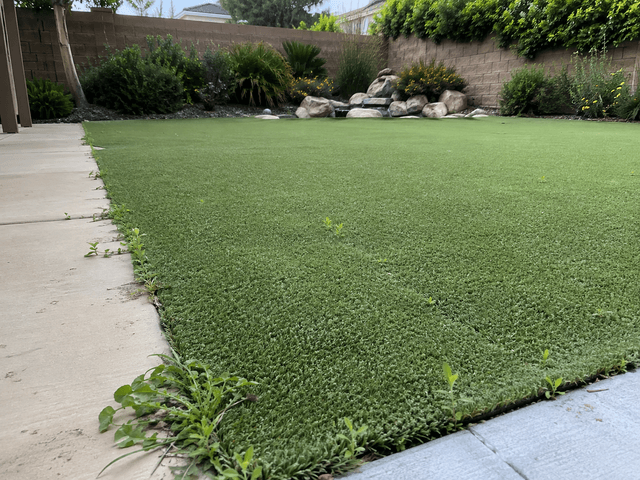
It's one of the most frustrating surprises a turf owner can face: you paid for a low-maintenance, weed-free lawn, and now there are weeds pushing up through it anyway. If you're dealing with weeds growing through artificial turf, you're not alone — and you're right to be annoyed. The turf was supposed to end this problem, not create a new version of it.
Here's the key insight most homeowners miss: weeds in fake grass almost never mean the turf failed. They mean the base and edging failed. Weeds are a symptom of how the lawn was built, not the turf itself — which is good news, because it means the problem is preventable and, in most cases, fixable. This is the root-cause breakdown: why it happens, and how to stop it for good. If you'd rather sidestep the issue with a living design, a landscape design built for the climate is always an option.
Where the Weeds Actually Come From
There's a saying in turf circles: Mother Nature always wins. It's true — but only when you give her an opening. Weeds appear in artificial turf through two routes, and both trace back to installation, not bad luck.
- From below. If the ground wasn't cleared and prepared properly, existing weed roots and seeds sitting under the turf simply grow up through the backing and the seams. This is the biggest culprit and the hardest to fix after the fact.
- From above. Windblown seeds and organic debris settle into the infill and along the edges, then sprout in that thin layer of dust and grit on top of the turf.
Notice what both have in common: they're about what's underneath and around the turf, not the turf itself. That's why proper turf base prep — the same disciplined ground preparation behind quality hardscaping — is the real weed defense.
The Base: Where Weed-Free Lawns Are Won or Lost
A weed-free turf lawn is built from the ground up, literally. The correct process removes the weed problem before a single roll of turf is laid.
- Clear and kill existing growth. Strip out existing grass, weeds, and roots so nothing viable is trapped beneath the lawn.
- Excavate and build a proper base. Lay and compact a base of crushed rock to a consistent depth, creating a firm, free-draining foundation that roots struggle to penetrate.
- Install a weed membrane. A quality geotextile weed barrier goes between the base and the turf, blocking anything below from growing up through it.
- Secure the turf and infill correctly. Proper infill and a well-compacted surface leave little room for seeds to settle and germinate.
Skip or rush any of these — especially the ground clearing and the turf weed barrier — and weeds get their opening. The care involved is the same standard described in what a professional contractor should include, and it's exactly why a rushed, cheap install turns into a weedy callback while a properly built lawn stays clean for years.
Edges, Seams & Drainage
Even with a good base, three finishing details decide whether weeds find a way in. These are the spots to inspect if weeds are already appearing.
- Edges. Unsecured or poorly finished perimeters let weeds creep in from the surrounding soil, beds, and cracks — the most common entry point after base failures.
- Seams. Weak or lifting seams give roots from below a path straight up through the joint.
- Drainage. Poor drainage keeps the surface damp, and standing moisture plus trapped organic debris is exactly what windblown seeds need to sprout. Sound yard drainage keeps the surface dry and inhospitable to weeds.
Clean, secured edges where the turf meets hardscaping and paver work, tight seams, and good drainage together close the doors weeds use. If yours are failing on any of these, that's your answer.
How to Stop Weeds in Turf You Already Have
If weeds are already coming through, you can get ahead of them — the approach depends on the source.
- For weeds from above (in the infill/edges), regular light maintenance is usually enough: brush or rake to remove settled debris, pull the occasional sprout, and keep the surface clean so seeds have nowhere to root.
- For weeds from below (through the backing or seams), the fix is deeper — often lifting the affected turf to clear the roots and add or repair the weed membrane, because surface treatments won't stop something rooted underneath.
A modest routine of artificial grass maintenance — keeping the surface clean, edges tidy, and drainage clear — prevents the from-above weeds almost entirely. But if roots are pushing up from below, that's a base-and-barrier problem no amount of surface care will solve, and it's worth an honest assessment before you keep fighting it.
Avoiding the Problem If You're Buying Turf
If you're still shopping for turf and want to avoid this headache from day one, the lesson is simple: the install matters more than the turf. Ask any prospective installer exactly how they handle ground clearing, base depth and compaction, the weed membrane, edging, and drainage — and be wary of a bid that's cheap because it skips these steps. Comparing bids on workmanship rather than price alone is the single best protection, which is why it helps to compare quotes carefully.
Grab our free Weed-Free Turf Base Spec — the exact ground-clearing, base, membrane, edging, and drainage requirements a proper install should meet — so you can hold any installer to a real standard. And if the whole weed-and-turf cycle has you rethinking synthetic grass altogether, a living, low-water yard of drought-tolerant plants or a broader drought-tolerant landscaping design offers curb appeal without the plastic — see finished yards in our portfolio.
Get to the Root of Your Weed Problem
Weeds in your turf aren't something you should have to live with — and the right fix depends entirely on where they're coming from. Book a free turf assessment and we'll pinpoint whether it's an edge, seam, drainage, or base-and-barrier issue, then lay out the most practical fix — or a living, low-maintenance alternative if that's the smarter path. Call +1 (818) 303-1570 or contact us to schedule, and explore our full landscape design services.
Frequently Asked Questions
Why are weeds growing through my artificial turf?
Weeds growing through artificial turf almost always come from installation, not the turf. They grow up from below when existing grass, roots, and seeds weren't cleared before the base and weed membrane were laid, or they sprout from above in debris and seeds that settle into the infill and edges. Both trace back to base prep and finishing, which is why proper installation is the real fix.
Does artificial turf need a weed barrier?
Yes. A quality weed membrane installed between the compacted base and the turf is a core part of a weed-free lawn - it blocks roots and seeds below from growing up through the backing and seams. Skipping or using a cheap weed barrier is one of the most common reasons weeds in fake grass appear later, so it's a step no proper install should cut.
How do I get rid of weeds in my fake grass?
It depends on the source. Weeds sprouting from above in the infill or edges are handled with light artificial grass maintenance - brushing off debris, pulling the occasional sprout, and keeping the surface clean and dry. Weeds coming from below through the backing or seams need a deeper fix, often lifting the turf to clear roots and repair the weed membrane, since surface treatments won't stop rooted growth.
Can I prevent weeds when installing new turf?
Yes, and prevention is far easier than cure. A proper install clears and kills existing growth, builds and compacts a crushed-rock base, installs a quality weed membrane, and finishes edges, seams, and drainage cleanly. Done right, turf base prep leaves weeds almost nowhere to grow. Ask any installer exactly how they handle each of these steps before you hire.
Is it normal for weeds to grow in artificial turf?
A stray weed sprouting in surface debris now and then is normal and easily removed. But persistent weeds pushing up through the turf itself are not normal - they signal a base, membrane, edging, or drainage failure from the install. If you're seeing repeated weeds through the lawn, it's worth an assessment. Book a free turf assessment at +1 (818) 303-1570.
Thinking about a new outdoor space?
We’d love to hear your ideas. Let’s explore what’s possible—no pressure, just a friendly conversation.
Give us a call:
+1 (818) 303-1570
Frequently Asked Question
WHY SHOULD I PAY FOR A LANDSCAPE DESIGN WHEN SOME COMPANIES DO IT FREE?
There is a huge difference between price and value. Good landscape project can increase the value and curb appeal of a home and provide many years of beauty and enjoyment. Poor landscaping is a liability and wasting money. Some companies may offer a "free plan" but hide their time spent in the cost of the installation. Others will spend minimal time on your project or be unqualified.... and you will get exactly what you pay for.