
OUR MISSION IS TO TAILOR FOR EACH CLIENT A BEAUTIFUL, FUNCTIONAL AND ENDURING OUTDOOR ENVIRONMENT THAT WILL PROVIDE A PLACE OF SERENITY FOR FRIENDS AND FAMILY TO APPRECIATE FOR YEARS TO COME.

BuildCal Landscape Hardscaping & Outdoor Living Article
Steps & Staircases for Sloped Glendale Yards
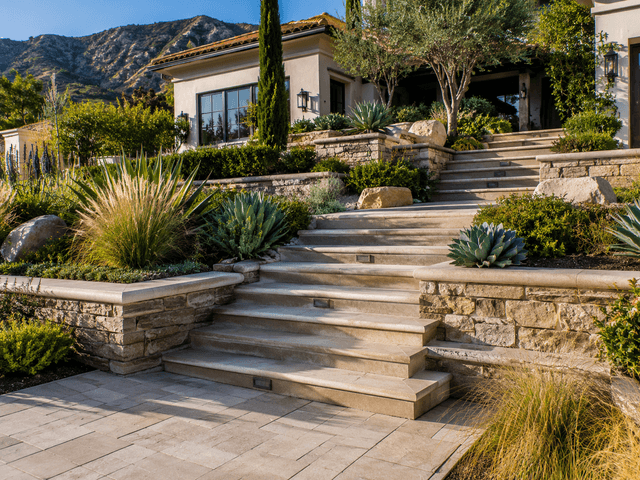
Glendale's hillside terrain gives homes wonderful views — and yards that are tricky to move around. A slope that's awkward to climb, eroding, or simply unusable is one of the most common frustrations local homeowners face. Well-designed outdoor steps and staircases Glendale yards need don't just solve that; they turn a difficult grade into safe, beautiful, usable space that connects every level of the property.
This guide covers why slopes need proper steps, the best materials, the safety and code essentials (riser and tread), how to integrate lighting, and how to manage drainage on a slope. For the bigger picture, explore our hardscaping services, and read on.
Why Slopes Need Proper Steps
A slope without proper steps is more than inconvenient — it's a liability. Makeshift dirt paths erode, get slippery, and become genuine trip-and-fall hazards, while large areas of the yard go unused simply because they're hard to reach.
Proper hillside steps change that. They create safe, comfortable access between levels, halt erosion by stabilizing the grade, and unlock terraces and corners that were previously wasted. On steeper lots, landscape stairs work hand-in-hand with retaining walls to hold the slope — which is why good retaining wall drainage and thoughtful hardscape design are part of any serious sloped-yard hardscape plan.
Materials
Steps can be built from several materials, each with a different look, durability, and price point. The right choice suits the slope, the home's style, and the climate.
- Natural stone. Flagstone and stone slabs give a timeless, organic look that suits hillside gardens.
- Concrete. Poured or board-formed concrete is strong and versatile, ideal for clean, modern stairs.
- Pavers and brick. Durable, slip-resistant, and available in many patterns to match adjacent hardscape.
- Stabilized DG with step edging. A budget-friendly, natural option for gentler garden steps.
Choosing materials suited to heat, sun, and traffic matters — our guides to hardscaping materials for the local climate, paver materials, and walkway materials help you pick a surface that stays safe and looks right for years.
Safety & Code (Riser/Tread)
Outdoor stairs live or die on consistency. The single biggest safety factor is that every step has the same riser height and tread depth — uneven steps are the leading cause of outdoor falls because the body expects each step to match the last.
A few common standards (always confirm exact requirements with the City of Glendale):
- Outdoor steps are typically more generous than indoor ones - lower risers (commonly around four to seven inches) and deeper treads (often twelve inches or more) for a comfortable, safe stride.
- A common comfort guideline is that twice the riser plus the tread lands roughly in the mid-twenties of inches.
- Handrails are generally required once a staircase has several risers, and slip-resistant surfaces matter in a climate with occasional rain.
- Consistent dimensions, solid footings, and proper construction keep stairs safe and code-compliant.
Because dimensions and handrail rules are governed by code, professional design and construction matter — and certain stairs and structures may require a permit, as covered in our look at permits on structures. A hardscape contractor who handles this keeps the project compliant.
Lighting Integration
Steps are exactly where lighting earns its keep. An unlit staircase is a nighttime hazard, so lighting every level change is a safety essential, not just a finishing touch.
Effective approaches include recessed riser lights that wash each tread, low step lights along the edges, and path lighting that guides the route to and from the stairs. Done well, the lighting keeps every step visible after dark while adding a beautiful, layered glow to the hillside. Our guide to landscape lighting design walks through how to light steps and paths safely, and it ties naturally into a lit front yard walkway.
Drainage on Slopes
On a slope, water is the enemy of any hardscape. Rain runs downhill fast, and without a plan it undermines steps, washes out bases, and erodes the surrounding soil — eventually causing steps to settle, crack, or heave.
Good sloped-yard hardscape builds drainage in from the start: proper grading to direct water away, a compacted sub-base beneath the steps, drainage behind any retaining walls, and channels or French drains to carry runoff to a safe outlet. Permeable joints and surfaces help too. These are the same principles behind broader yard drainage solutions and retaining wall drainage — on a hillside, drainage is what makes the steps last. See finished hillside work in our portfolio.
Make Your Slope Safe and Usable
If your Glendale, CA yard has a slope that's hard to navigate or losing ground to erosion, the right steps and staircases can transform it. Request a Site Visit and we'll assess the grade, soil, and drainage, and design safe, code-compliant stairs that fit your home. Call +1 (818) 303-1570 or contact us to schedule, and see our paver and hardscape work for the level of detail behind it.
Frequently Asked Questions
Why do sloped Glendale yards need proper steps?
A slope without proper steps is hard to use and unsafe - makeshift dirt paths erode, get slippery, and cause falls, while large areas go unused. Proper outdoor steps create safe access between levels, stop erosion by stabilizing the grade, and unlock terraces and corners that were previously wasted, often working alongside retaining walls on steeper lots.
What are the best materials for outdoor steps and staircases?
Natural stone and flagstone give a timeless, organic look; concrete is strong and versatile for modern stairs; pavers and brick are durable, slip-resistant, and pattern-rich; and stabilized decomposed granite suits gentler garden steps on a budget. The best choice matches the slope, the home's style, and the climate, with safety and durability in mind.
What are the standard riser and tread dimensions for outdoor steps?
Outdoor steps are usually more generous than indoor ones - commonly lower risers (around four to seven inches) and deeper treads (often twelve inches or more) for a comfortable stride. A common comfort guideline is that twice the riser plus the tread totals roughly the mid-twenties in inches. The key is consistency across every step; confirm exact requirements with the City of Glendale.
Do outdoor stairs need handrails and lighting?
Handrails are generally required once a staircase has several risers, and they add safety regardless. Lighting every step is a safety essential, not just decoration - recessed riser lights, step lights, and path lighting keep level changes visible after dark and prevent falls. Both are part of a properly designed, code-compliant staircase.
How do you prevent erosion around hillside steps?
Build drainage in from the start: grade to direct water away, compact a solid sub-base, add drainage behind retaining walls, and use channels or French drains to carry runoff to a safe outlet. Permeable joints help too. On a slope, this drainage planning is what keeps steps from settling, cracking, or washing out. Request a Site Visit at +1 (818) 303-1570.
Thinking about a new outdoor space?
We’d love to hear your ideas. Let’s explore what’s possible—no pressure, just a friendly conversation.
Give us a call:
+1 (818) 303-1570
Frequently Asked Question
WHY DO I NEED TO HIRE A LICENSED CONTRACTOR WHEN AN UNLICENSED ONE MAY BE CHEAPER?
There is always a price. Working with a licensed contractor is highly recommended for many reasons: A licensed and insured contractor offers many protections to the property owner, especially regarding residential properties. A contractor cannot obtain a State Contractors License without first possessing a minimum amount of experience. In addition, the contractor must pass a business management test. The applicant also may be subject to a criminal history background check, and must not have any unresolved contracting complaints outstanding. Here in California, if a contractor has employees, they're required to carry workers compensation insurance. The importance of this alone cannot be overstated. If a worker is injured on your property and the contractor doesn't have insurance, you could be legally liable to pay for injuries and rehabilitation. Your homeowner's insurance may not cover those costs