
OUR MISSION IS TO TAILOR FOR EACH CLIENT A BEAUTIFUL, FUNCTIONAL AND ENDURING OUTDOOR ENVIRONMENT THAT WILL PROVIDE A PLACE OF SERENITY FOR FRIENDS AND FAMILY TO APPRECIATE FOR YEARS TO COME.

BuildCal Landscape Hardscaping Article
Signs Your Retaining Wall Is Failing — and Why Cheap Walls Give Out Early
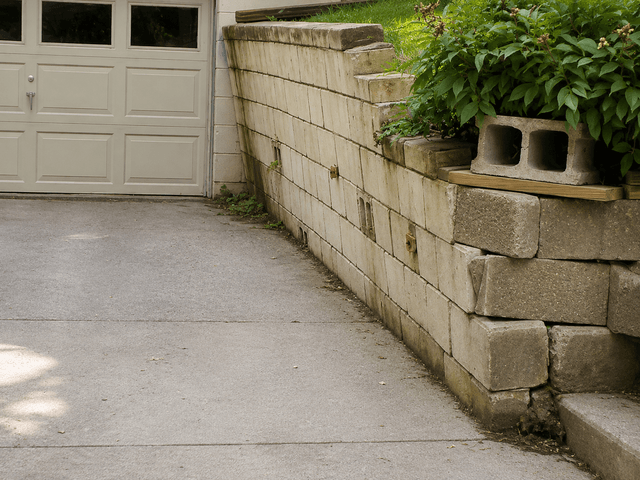
Retaining walls fail slowly, then suddenly. The lean you shrugged off last winter, the little bulge that appeared after a big rain, the crack that grew a bit longer this year — those are the early episodes of a story that ends with a wall lying in the yard, an eroding slope, or worse. And in Southern California, where hillsides, seismic activity, and winter rain all push on retaining walls in the same direction, the timeline can shorten faster than homeowners expect.
This piece does two jobs at once. First, the honest signs retaining wall failing homeowners should not ignore, so you know how urgent your situation actually is. Second, the reason so many walls fail in the first place: cheap builds that skip drainage, geogrid, base rock, or engineering. Recognize both and you can protect the wall you have, and vet the bids you get. For hardscape design and construction, see our hardscaping services, and read on.
What a Failing Wall Actually Looks Like
Failing walls give warnings. The trouble is the warnings look small until they aren't. Any one of the following is worth a professional look; two or three together mean the wall is actively failing.
Leaning
A retaining wall leaning even slightly outward is the single most telling symptom. Walls are designed vertical (or, occasionally, tilted slightly back into the slope on purpose). Any forward lean means the soil behind the wall is winning.
How to check:
- Sight along the wall from one end; a leaning wall stops reading straight.
- Hold a level or plumb line against the face at several points.
- Compare against fixed vertical references (a nearby post, corner of the house).
A wall that leans a little more each year is not stable - it is progressing. Winter rains accelerate it because the soil behind gets heavier and pushes harder.
Bulging
A bulging retaining wall - where a section of the face is pushing outward more than the rest - is a mid-stage failure sign. It usually means the load behind the wall exceeds what the wall was built to hold in that spot, and something is starting to give.
- Sight along the face at eye level; a bulge shows up as a visible curve.
- Look for horizontal cracks running along the bulge line.
- On block walls, check whether courses have shifted out of line.
Bulging is a serious warning. Walls that bulge often collapse next.
Cracking
Not all cracks are catastrophic, but the pattern matters.
- Horizontal cracks across the face are the most concerning - they usually indicate the wall is being pushed outward.
- Stair-step cracks along the mortar lines of a block wall suggest differential settlement or lateral movement.
- Vertical cracks near ends often mean the wall is separating from its return or a corner is under stress.
- Fine hairline cracks in concrete are common shrinkage cracks and generally not a structural concern - though they can let water in over time.
New cracks in an older wall, or growing cracks in a newer one, deserve attention.
Water & Efflorescence
Look at the base and face after rain. A properly draining wall stays visibly dry between courses and around the toe; water is captured behind the wall and released through weep holes or a drain outlet.
- Water seeping through the face, especially through cracks or joints.
- White powdery deposits (efflorescence) on the face, indicating water has been passing through the wall repeatedly.
- Persistent wet ground at the toe of the wall long after rain has stopped.
- Weep holes or drain outlets that are dry after heavy rain - the water is going somewhere else, and that somewhere else is usually behind the wall.
Water buildup behind a wall dramatically raises the load pushing on it. That's exactly why retaining wall drainage is treated as the number-one failure-prevention detail - and why its absence shows up in the failure signs.
Ground Behavior Around the Wall
Sometimes the wall itself looks fine but the ground tells the story.
- A gap opening up between the top of the wall and the soil behind, or the soil pulling back from the wall.
- Fresh erosion, gullies, or exposed roots at the top of the retained slope.
- Settling patios, walkways, or lawn behind the wall.
- Sinkholes, voids, or new low spots appearing near the wall.
- Broader erosion or slope movement upslope.
Ground movement around a wall is often the fastest-moving symptom. If you see it, do not wait through another rainy season.
Why Cheap Walls Give Out Early
Understanding the warning signs is the diagnosis. Knowing why walls fail is the prevention. The pattern is depressingly consistent - failure-story threads describe the same handful of cut corners over and over. Here is what a bid priced far below the going rate almost always leaves out.
Skipped or Undersized Drainage
Drainage is the single biggest reason retaining walls fail. Water builds up behind a wall that can't drain, and the resulting hydrostatic pressure is enormous - often the load that finally breaks the wall.
What a proper drainage build includes:
- A clean, angular gravel or drain-rock chimney behind the entire wall, not just a token strip.
- A perforated drain pipe at the base, wrapped in filter fabric, running to a daylighted outlet.
- Weep holes or a French drain outlet - and confirmation that water actually comes out during rain.
- Filter fabric between the drain rock and the surrounding soil so the drainage doesn't clog with fines.
A wall with no drainage looks the same as a wall with drainage on day one. It looks very different by year three. This is why retaining wall drainage is the first thing an inspector or engineer checks.
Missing or Inadequate Geogrid
On segmental block walls, and increasingly on other systems, geogrid drainage and reinforcement are what tie the wall to the soil mass behind it. Geogrid is a heavy synthetic mesh laid horizontally between courses and extending back into compacted fill. Without it - or with too little of it - the wall relies on its own weight against the earth, which for anything beyond low garden walls is not enough.
Signs geogrid was skipped or shortcut:
- The bid doesn't mention geogrid or reinforcement at all on a wall above about 3 to 4 feet.
- Geogrid layers were shorter than the specified embedment length.
- Fewer layers than the engineered plans call for.
- Cheaper landscape fabric substituted for structural geogrid.
Not Enough Base Rock or Compacted Fill
A retaining wall starts under the ground. A proper leveling pad of compacted crushed rock supports the base course. Behind the wall, drainage rock and structural fill are placed and compacted in layers. Cheap builds pour a thin base, dump loose fill, and skip compaction.
Symptoms show up quickly:
- Uneven settlement along the base.
- Voids opening behind the wall as loose fill consolidates over time.
- Base courses that no longer sit level.
No Engineer, No Permit
For walls that need them, engineering and permitting exist for a reason. A stamped design accounts for soil type, seismic loads, drainage, and any surcharge; the permit process forces the plans to be reviewed and the work inspected. A bid that quietly skips both is not saving you money - it's just moving the cost to your future self.
What crosses the engineering line depends on jurisdiction and geometry, but under California Building Code any wall over 4 feet measured from the bottom of the footing to the top, or any wall of any height supporting a surcharge (slope above, driveway, patio, pool, structure) triggers a permit and engineered design. Rules vary, and Glendale hillside areas layer extra requirements on top, so always check permit requirements with the City of Glendale Building & Safety Division before you commit to a bid. If a contractor tells you a wall you know is over the threshold or under a slope doesn't need engineering, that itself is a warning sign - see also our note on comparing quotes on diagnosis and workmanship.
Wrong Block, Wrong System, Wrong Site
The last common shortcut is using an under-spec product for the job - decorative garden-wall blocks used on a structural wall, or a light gravity system where the soil, slope, or seismic loading calls for reinforced construction. It's how a wall that looks pretty on day one starts leaning by year two.
Choosing the right materials for the site is part of what separates a durable build from a photogenic one - the same discipline that goes into hardscape materials for local conditions and considered hardscape design.
Repair or Replace?
The natural next question: can this wall be fixed, or does it have to come out? A framework for the retaining wall repair vs replace decision:
- Minor cosmetic cracks, efflorescence, or clogged weep holes: often repairable - re-point, clean drainage, address surface water.
- Localized bulging or shift on a wall that's otherwise sound: sometimes stabilized with soil-nail systems, tiebacks, or a drainage rebuild - engineer's call.
- Progressive leaning, growing cracks, or ground movement behind the wall: usually replacement, because the underlying cause (base failure, missing drainage or reinforcement, wrong system for the loads) can't be patched.
- Any wall showing multiple warning signs at once, especially near a house, driveway, or occupied space: get an inspection quickly - repair versus replace is a professional judgment, not a DIY guess.
A short-term prop or brace may buy time before rain if a wall is actively moving, but it is not a fix. Grab our free Retaining Wall Failure Warning-Signs Guide - a one-page inspection checklist covering lean, bulge, crack pattern, water, and ground behavior - so you know what to point out during an assessment.
What Not to Do
A few common moves make failing walls worse:
- Ignoring lean or bulging because "it's been like that a while." It hasn't - it's been slowly getting worse.
- Filling cracks with sealant without addressing why they're there.
- Adding weight behind the wall (piled soil, a heavier structure, a new patio) without reassessing.
- Watering heavily near the top of a wall with drainage issues.
- Accepting the cheapest bid on a wall you already suspect is under-built - the numbers you're comparing may not include the same job.
Get an Honest Retaining Wall Inspection
If your wall is showing any of these signs, or if a bid seems too good to be true, you don't have to guess. Book a free retaining wall inspection and we'll check the lean, bulge, crack pattern, drainage, and ground behavior on your site, tell you honestly whether it's repairable or needs to be rebuilt, and lay out a code-compliant plan if it does. Call +1 (818) 303-1570 or contact us to schedule, and explore our hardscape and wall work.
Frequently Asked Questions
What are the signs a retaining wall is failing?
The clearest signs retaining wall failing are outward lean, bulging in the face, horizontal or stair-step cracks, water seeping through or efflorescence on the face, and ground behavior around the wall - gaps opening behind, settling above, or fresh erosion. Any one warrants a professional look; multiple together mean the wall is actively failing. Progressive changes (lean growing year over year, cracks lengthening) matter more than static ones.
Is a leaning retaining wall dangerous?
A retaining wall leaning even slightly outward is a serious symptom because it means the soil behind is winning. Small early leans can be watched or stabilized; progressive leans should not be. Walls are designed vertical, so any measurable forward lean is significant. Winter rains accelerate the process because saturated soil pushes harder. If it's near a house, driveway, or occupied space, get an inspection quickly.
Why do retaining walls fail?
The most common answers to why retaining walls fail are missing or inadequate drainage, missing or too-short geogrid on segmental block walls, insufficient base rock and compacted fill, no engineering or permit on walls that needed both, and using the wrong product or system for the site. Almost every early failure traces to one or more of these shortcuts - which is why very cheap wall bids so often lead to expensive rebuilds.
Can a bulging retaining wall be repaired, or does it need replacing?
It depends on how far it has gone and what caused it. Minor cosmetic issues (cracks, efflorescence, clogged weep holes) are usually repairable. A localized bulge on a wall that's otherwise sound can sometimes be stabilized with soil-nail systems, tiebacks, or a drainage rebuild - an engineer's call. Progressive leaning, growing cracks, or ground movement behind the wall usually mean replacement, because the underlying cause can't be patched. The retaining wall repair vs replace decision is a professional judgment.
How can I tell if a retaining wall bid is too cheap to be trustworthy?
A suspiciously cheap wall bid usually leaves out drainage (no drain rock chimney, drain pipe, weep holes or outlet), geogrid on segmental walls above garden height, adequate base rock and compacted structural fill, and engineering and permits on walls that need them. It may also spec an under-strength block for a structural application. If your bids differ dramatically in price, chances are they are not describing the same job. Book a free retaining wall inspection at +1 (818) 303-1570 for an honest read.
Thinking about a new outdoor space?
We’d love to hear your ideas. Let’s explore what’s possible—no pressure, just a friendly conversation.
Give us a call:
+1 (818) 303-1570
Frequently Asked Question
WHAT PHASES OF LANDSCAPING SHOULD BE DONE FIRST, AND LAST?
What we call 'hardscape' should be installed first – such as walkways, walls, stonework, patios, and such. Then will come all of the irrigation and electrical installation work, to be followed finally with landscape plantings, or ‘softscape.’