
OUR MISSION IS TO TAILOR FOR EACH CLIENT A BEAUTIFUL, FUNCTIONAL AND ENDURING OUTDOOR ENVIRONMENT THAT WILL PROVIDE A PLACE OF SERENITY FOR FRIENDS AND FAMILY TO APPRECIATE FOR YEARS TO COME.

BuildCal Landscape Landscape Design Article
Gophers Wrecking Your SoCal Yard and Chewing Drip Lines? A Real Prevention Plan
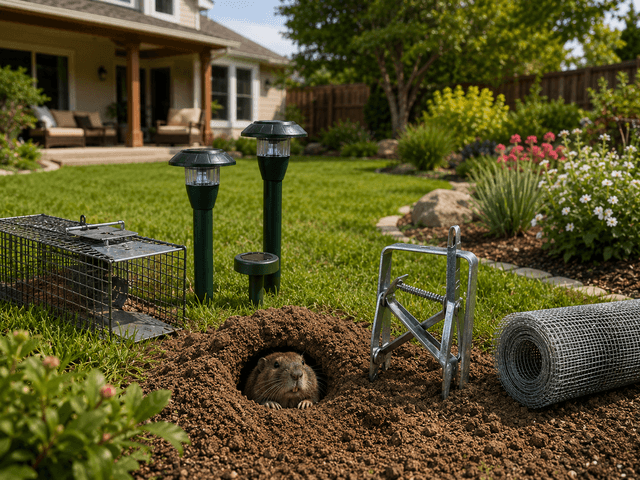
A fresh mound appears in the lawn. You rake it flat. A week later, another one shows up beside a planting bed. Then a shrub starts leaning, a patch of turf turns weak, or an irrigation zone suddenly loses pressure. You dig, expecting a loose fitting, and find chewed tubing underground.
That is when a gopher problem stops feeling like a nuisance and starts feeling like your yard is being dismantled from underneath.
For Southern California homeowners searching how to get rid of gophers in yard California, the trap is treating every mound, dead plant, and irrigation break as a separate repair. The visible damage is only the surface expression of an underground tunnel system. If you repair the lawn but leave the root zone vulnerable, or patch the drip line but leave it running through active burrows, you may be rebuilding the same problem.
The practical fix has two parts: deal with active pocket gopher control, then make the parts of the landscape you care about harder to damage again. That usually means exclusion - gopher wire, plant baskets, protected planting zones, better irrigation routing, and smarter sequencing while the yard is already open. For broader landscape repair and redesign, see our landscape design services, and read on.
A Quick Note Before the Fixes
Gophers are wildlife, not a construction defect. Even a well-built yard can be exposed when neighboring properties, open soil, slopes, or established habitat support new activity. So the goal is not to promise a yard that no gopher can ever enter. That would be unrealistic.
The goal is narrower and more useful: identify the active damage, protect high-value areas, reduce easy access to vulnerable root zones and irrigation, and make future repairs less disruptive if activity returns.
That distinction matters because removal and prevention are not the same job. Control deals with the animal that is active now. Exclusion changes what happens when a gopher reaches the same landscape area later.
First, Confirm You Actually Have a Gopher Problem
Before you lift turf, replace drip tubing, or order barrier material, confirm the pattern. Fresh pocket-gopher mounds are usually fan- or crescent-shaped with a plugged opening off to one side, and the animal spends most of its time below ground. The UC Statewide Integrated Pest Management Program identifies fresh mounds as a key sign of active gopher activity.
Walk the yard and look for a cluster of symptoms rather than one isolated clue:
- Fresh soil mounds that keep appearing in the same general area or migrate through the yard.
- Plants that suddenly wilt, lean, or lose root support without an obvious above-ground cause.
- Soft or hollow areas under turf where tunnels or collapsed soil are close to the surface.
- Damaged underground irrigation tubing in the same zones where fresh mounds are appearing.
- Disturbed DG, mulch, or rock beds where soil has been pushed upward or the surface has started settling.
Not every brown patch or low-pressure irrigation zone is a gopher problem. Irrigation leaks, compaction, root disease, poor grading, clogged emitters, and heat stress can produce overlapping symptoms. Our guide to common lawn problems in Southern California is useful when you are separating pest damage from other lawn failures.
Map the Damage Before You Repair It
Gopher prevention is a layout problem before it is a material problem. Before spending money, map what is actually being damaged and where the activity is moving.
- Mark every fresh mound. A simple flag, chalk mark, or phone photo is enough.
- Mark every plant failure. Note which plants lost roots or began leaning and how close they are to current activity.
- Record every irrigation repair. If a drip line or sprinkler lateral is damaged, photograph the location before closing the soil.
- Note the surface above the tunnels. Lawn, DG, gravel, mulch, and planted beds each create different repair consequences.
- Identify high-value zones. New trees, fruit trees, specimen shrubs, frequently used lawn, or planting near patios usually deserve more protection than an unused strip behind a shed.
Give the pattern a few days if the damage is not urgent. You may discover that the tunnels are concentrated along one bed, crossing below a DG side yard, or following a soft irrigated strip. That is far more useful than saying, 'There are gophers somewhere in the backyard.'
This is the same reason good drainage and irrigation repairs begin with diagnosis: if you do not know the path of the problem, it is easy to install the right material in the wrong place.
Why Gophers and Drip Irrigation Become the Same Problem
The phrase gophers drip irrigation sounds like two separate topics until the tubing is buried inside an active tunnel zone. UC IPM specifically notes that pocket-gopher gnawing can damage irrigation lines and sprinkler systems. Once that happens, a wildlife problem becomes a water-delivery problem too.
The common repair cycle looks like this:
1. An irrigation zone loses pressure or a plant stops receiving water.
2. A damaged section of tubing is found and patched.
3. The trench is closed and the surface is restored.
4. Another failure appears nearby because the surrounding underground conditions were never reviewed.
The mistake is not the patch. The mistake is assuming the patch completes the diagnosis.
When active gopher signs and damaged tubing occur together, repair the Irrigation Systems and inspect the surrounding landscape at the same time. Our irrigation repair guide covers the other causes of low pressure, uneven watering, leaks, and failing zones that should be ruled out before blaming every irrigation issue on wildlife.
The Real Prevention Strategy - Exclusion
For long-term gopher proof landscaping, the most important idea is exclusion. Exclusion does not mean covering the entire property with metal. It means creating physical protection where repeat damage would be costly, disruptive, or difficult to repair.
UC IPM recommends underground fencing for selected valuable landscape plants and wire baskets for individual shrubs or trees. It also describes complete underground screening for small protected beds. That gives homeowners a useful design principle: protect the zones that matter, and design the barrier as a continuous detail rather than a collection of random scraps of wire.
The strongest prevention plans usually combine some of the following:
- Underground gopher-resistant mesh beneath or around selected vulnerable areas.
- A properly sized gopher wire basket around individual new plants.
- Complete screening of small raised or specialty planting beds where appropriate.
- Irrigation routing that is easier to inspect and less exposed to known tunnel corridors.
- A repair sequence that installs underground protection before turf, DG, mulch, and finish planting close the site.
The barrier material is only one part of the system. Edges, seams, penetrations, planting openings, and future utility trenches can all become weak points. Like waterproofing, continuity matters.
Gopher Wire - Where It Makes Sense
A broad underground barrier is easiest to evaluate when the soil is already exposed - during a lawn replacement, major bed reconstruction, new landscape installation, or grading work. That is the window when you can make a prevention decision without tearing apart finished work twice.
It is especially worth discussing when:
- A lawn has suffered repeated gopher damage lawn repairs in the same area.
- A planting zone is already being excavated for new soil, irrigation, or grade correction.
- High-value trees or shrubs are being installed in a known activity corridor.
- A full yard remodel is already exposing the subgrade.
- DG, gravel, turf, or another finish surface is about to cover soil that has shown fresh gopher activity.
The important question is not, 'Can we put wire under this?' It is, 'What area are we protecting, how are the edges handled, what openings will irrigation and plants create, and how will this detail interact with root growth and future maintenance?'
There is also no universal barrier detail that fits every plant or landscape. UC IPM warns that some fencing approaches are imperfect and that wire can interfere with tree-root growth if the detail is poorly chosen. That is why permanent root-zone protection should be designed with plant size and maturity in mind rather than treated as a one-size-fits-all shortcut.
The Gopher Wire Basket - Best for Individual Plants
A gopher wire basket makes the most sense when you need to protect individual plants rather than excavate a whole bed.
Typical candidates include young trees, fruit trees, roses, expensive shrubs, and replacement plants going back into a location where roots were previously damaged.
The basket should be large enough for the planting detail and should not squeeze the root ball into a small cage. UC IPM specifically advises choosing baskets that provide room for roots to grow. The practical lesson is simple: basket sizing belongs in the planting plan, not as an afterthought after the plant arrives.
For each protected plant, coordinate four things together:
- Root-zone size. The plant needs room to establish rather than being packed tightly into wire.
- Finished grade. The basket cannot force the plant too high or too deep.
- Irrigation entry. Emitters or drip tubing still need to deliver water without creating a careless opening.
- Future growth. The detail should make sense for the mature plant, not just the nursery container sitting beside the hole.
DG and Rock Do Not Automatically Make a Yard Gopher-Proof
One of the most common misconceptions in Southern California is that converting lawn to decomposed granite or rock eliminates the problem.
DG changes the surface. Gophers operate below it.
A gopher can still tunnel through accessible soil under a dry-looking side yard or rockscape. The result may show up as soil pushed through the aggregate, a sunken patch, disturbed edging, or a tunnel that simply continues toward the next irrigated planting pocket.
This matters because homeowners sometimes spend heavily converting a lawn, only to discover that the new surface has changed the appearance of the damage rather than the underground access.
If you are already choosing between hardscape and loose landscape surfaces, our decomposed granite vs. pavers guide explains how the materials differ above ground. Gopher exclusion is a separate below-ground design decision.
Protect the Irrigation While You Protect the Plants
A gopher-resistant planting plan that leaves vulnerable irrigation scattered through known tunnel areas is only half a plan.
When a damaged bed is already open, ask a few practical questions before closing it again:
- Does the main drip tubing have to pass through the highest-activity area?
- Can distribution lines run along predictable edges where future inspection is easier?
- Are fittings or connections buried where every repair requires disturbing finished planting?
- If a plant is protected by a basket, how will irrigation enter the root zone without undermining the protective detail?
- Are valve boxes and branch points easy to locate later?
The goal is not to build an indestructible Irrigation System. It is to reduce avoidable exposure and make future troubleshooting faster.
If a zone is also showing unexplained water use, soggy areas, or pressure changes, review these signs an irrigation system may be wasting water before assuming gophers are the only cause.
Rebuilding a Lawn After Repeated Gopher Damage
Repeated gopher damage lawn repairs eventually reach a point where filling mounds and patching turf stops being a repair strategy and becomes a maintenance loop.
If a meaningful section of lawn is already compromised, a bottom-up rebuild may be more logical:
1. Remove turf that is already damaged or scheduled for replacement.
2. Locate obvious active tunnels and correct soft or collapsed soil.
3. Inspect Irrigation Systems before the area is covered again.
4. Install the selected exclusion detail where it is appropriate for the project.
5. Restore the soil profile and finished grade.
6. Reinstall turf or choose a different landscape finish that better fits how the space is used.
The order matters. Do not install beautiful new turf and then decide you wanted to protect the soil underneath it. And do not install a barrier while ignoring a leaking irrigation zone that will require the area to be opened again.
Do You Need to Put the Same Lawn Back?
Sometimes gopher damage exposes a different design question: was the lawn working for the household before the gophers arrived?
If the turf has already been lifted or heavily damaged, ask what that area is supposed to do. Is it a play surface? A dog run? A visual green zone? A path between the house and patio? A space nobody actually uses?
A smaller protected lawn may work better than rebuilding turf from fence to fence. Part of the damaged zone might become a planting bed, walkway, seating area, or another surface that is easier to maintain and inspect.
Where a water-wise replanting makes sense, use plant selection as part of the redesign rather than as a gopher cure. Our guide to drought-tolerant plants for Glendale landscapes can help with the planting palette after the underground problem has been addressed.
Changing the plant palette does not replace exclusion. It simply makes sure you are not automatically rebuilding a landscape you already wanted to change.
What Active Pocket Gopher Control Can - and Cannot - Do
Exclusion works best when active damage is being addressed too. If a gopher is currently feeding in the bed you are about to rebuild, installing new plants without dealing with current activity is poor sequencing.
UC IPM describes trapping and registered toxic baits among management options for home landscapes, while emphasizing early detection and the risks some bait products can pose to wildlife, pets, and children. California pesticide use must follow the registered product label; the California Department of Pesticide Regulation states that its product information is guidance and does not replace the legally registered label.
For a homeowner article, the useful distinction is this:
- Control reduces current activity.
- Exclusion reduces future access to selected vulnerable areas.
A successful control effort today does not physically protect an unprotected root zone from a future gopher. And a beautiful wire detail does not solve current activity elsewhere in the yard.
Those are complementary jobs, not competing strategies.
Why Sonic Stakes and Repellers Should Not Be the Whole Plan
The least disruptive solutions are naturally attractive. Homeowners see vibrating stakes, ultrasonic devices, scent products, plants marketed as repellents, and other ways to make gophers 'leave' without digging.
The problem is relying on those products as the structural protection for a new landscape. UC IPM reports that vibrating stakes, ultrasonic devices, and several commonly suggested repellent approaches have not been effective in research trials.
That does not mean a homeowner can never observe a temporary change after installing a device. It means the device should not be the only thing standing between a known gopher corridor and a newly rebuilt landscape.
A useful rule is:
Repelling tries to change animal behavior. Exclusion changes the construction detail.
If the ground is already open and high-value planting is going in, design the physical protection first.
The Layered Plan That Works for Most Gopher-Damaged Yards
For most Southern California yards, the practical prevention plan combines several smaller decisions rather than one magic product:
- Confirm active pocket-gopher activity before blaming every dead plant or leak on wildlife.
- Map the tunnel and damage pattern so the repair is focused on the actual risk zone.
- Address current activity using appropriate control methods and current product or professional guidance.
- Protect high-value planting with a suitable gopher wire basket or targeted exclusion detail.
- Consider broader underground screening when a lawn or planting bed is already being rebuilt and the site history justifies it.
- Repair and reroute irrigation thoughtfully before the surface is closed.
- Correct collapsed soil and grade so tunnels do not leave a drainage, settlement, or walking-surface problem behind.
- Rebuild the landscape around how the space is actually used, rather than automatically restoring every damaged square foot exactly as it was.
This is why gopher prevention fits naturally into a larger remodel. Our backyard remodel planning guide explains the value of making underground and layout decisions before crews begin closing finished surfaces.
Grab our free Gopher-Proofing Barrier Spec Sheet - a one-page planning asset for discussing wire locations, baskets, irrigation crossings, protected zones, and sequencing before installation.
When Professional Installation Makes the Most Sense
A single new basket around one replacement shrub is a very different project from lifting a lawn, repairing irrigation, correcting settled soil, and creating a continuous protected zone under finished landscaping.
Professional landscape involvement becomes more valuable when:
- Multiple systems are being opened at the same time - turf, irrigation, grading, planting, and edging.
- The repair needs to coordinate gopher wire with tree roots and permanent planting.
- Repeated line breaks make it unclear whether irrigation should simply be patched or partly rerouted.
- The yard is already scheduled for a broader renovation, making exclusion cheaper and cleaner to integrate now than later.
- The homeowner wants a documented plan showing what was protected before the work disappears below soil and turf.
The value is coordination. Gopher proofing is not one trade working in isolation; it sits underneath planting, irrigation, turf, DG, and sometimes hardscape edges.
What Not to Do
Several common reactions either waste money or make the next repair harder:
- Do not rebuild the exact same vulnerable lawn without discussing exclusion. If the soil is already exposed, you have your best opportunity to decide whether underground protection belongs there.
- Do not assume DG, gravel, or decorative rock is automatically gopher-proof. Those are surface materials, not underground barriers.
- Do not protect the plants and ignore the Irrigation System. A protected root ball still needs dependable water.
- Do not install random pieces of mesh and call it a system. Seams, edges, openings, and future trenching determine whether protection remains continuous.
- Do not make baskets too small for the plant. Root growth is part of the design, not an inconvenience to work around.
- Do not assume every leak is from gophers. Test the irrigation and rule out ordinary failures too.
- Do not make sonic or scent repellents the sole protection for an expensive new landscape. Research-based guidance does not support treating them as dependable exclusion.
- Do not use a pesticide, bait, fumigant, or control device outside its current label or applicable California requirements. Product availability and legal use can change; verify before use.
Get the Yard Repaired Once - Then Make the Repair Harder to Undo
Gopher mounds are the visible warning. The larger problem may be underground: damaged roots, chewed irrigation, loosened soil, and a landscape that keeps being rebuilt over the same vulnerable paths.
The honest solution is usually layered. Address current activity. Map the damage. Repair Irrigation Systems. Protect high-value root zones. Add exclusion where it makes sense while the ground is open. Then rebuild the finished landscape around the actual risk instead of repairing symptoms one at a time.
Download the Gopher-Proofing Barrier Spec Sheet before your next lawn, planting, or irrigation repair so you can decide what should be protected before the work disappears underground.
For a property-specific plan, book a free gopher-proofing repair consult at +1 (818) 303-1570. We can review the damaged areas, identify where landscape repair and underground prevention should work together, and help you rebuild the yard with the gopher risk designed into the plan rather than ignored.
Frequently Asked Questions
How do I get rid of gophers in my yard in California?
Start by confirming active pocket-gopher signs and mapping where fresh mounds, plant damage, and irrigation failures are occurring. Current control and long-term prevention are separate steps. Control addresses active animals; prevention can include targeted underground wire, a gopher wire basket around individual plants, protected small beds, irrigation changes, and exclusion installed during a lawn or planting rebuild. Follow current California requirements and product labels for any regulated control product.
Can gophers really chew drip irrigation lines?
Yes. The UC Statewide Integrated Pest Management Program specifically notes that gopher gnawing can damage irrigation lines and sprinkler systems. If a damaged tube is found in an area with fresh gopher activity, patch the line but also inspect the surrounding zone so the repair does not ignore the continuing underground problem.
Does gopher wire stop gophers permanently?
No barrier should be sold as a permanent guarantee. Underground screening can protect selected areas, but performance depends on the material, continuity, edges, openings, soil conditions, later construction, and how persistent the activity is. UC IPM describes exclusion as useful for selected valuable plants and small protected areas while also noting that fencing methods are not perfect.
What is a gopher wire basket used for?
A gopher wire basket protects the root zone of an individual plant at installation. It is commonly considered for young trees, fruit trees, roses, shrubs, or replacement plants in a known activity area. The basket should be large enough for root development and coordinated with finished grade and irrigation rather than squeezed tightly around the nursery root ball.
Will decomposed granite or gravel stop gophers?
Not by itself. DG and gravel change the finished surface, while gophers tunnel in the soil underneath. A rockscape can still show soil push-up, localized settlement, disturbed edges, or damage to irrigation serving nearby plants. Treat the surface material and underground exclusion as separate design decisions.
Are ultrasonic or vibrating gopher stakes effective?
UC IPM reports that frightening devices such as vibrating stakes and ultrasonic devices have not been effective in research trials. They should not be the sole protection for a new lawn, valuable planting, or an expensive landscape rebuild where physical exclusion can be designed into the work.
Should I gopher-proof before installing new sod?
If a lawn is being rebuilt in an area with repeated gopher damage, the open-ground stage is the right time to evaluate an underground exclusion detail because access is easiest before soil preparation and sod are complete. Coordinate any barrier with grading, irrigation, edging, and soil preparation rather than treating it as an isolated add-on.
Thinking about a new outdoor space?
We’d love to hear your ideas. Let’s explore what’s possible—no pressure, just a friendly conversation.
Give us a call:
+1 (818) 303-1570
Frequently Asked Question
HOW LONG DOES A PROJECT USUALLY TAKE?
Every property and client is different and therefore there is no set standard. The time required to complete a project relies completely on the amount of work which will be necessary. And the size of a property is not always a guide. For instance; a large property requiring minimal landscaping and irrigation installation will most likely be completed in a shorter amount of time than a small property requiring landscaping, a patio, spa, and a custom water fountain. Once a preliminary estimate is prepared, we will have a realistic estimate for project completion