
OUR MISSION IS TO TAILOR FOR EACH CLIENT A BEAUTIFUL, FUNCTIONAL AND ENDURING OUTDOOR ENVIRONMENT THAT WILL PROVIDE A PLACE OF SERENITY FOR FRIENDS AND FAMILY TO APPRECIATE FOR YEARS TO COME.

BuildCal Landscape Landscape Maintenance & Planting Article
Squirrels, Rabbits & Birds Eating Your Garden? Protecting Plants in a SoCal Yard
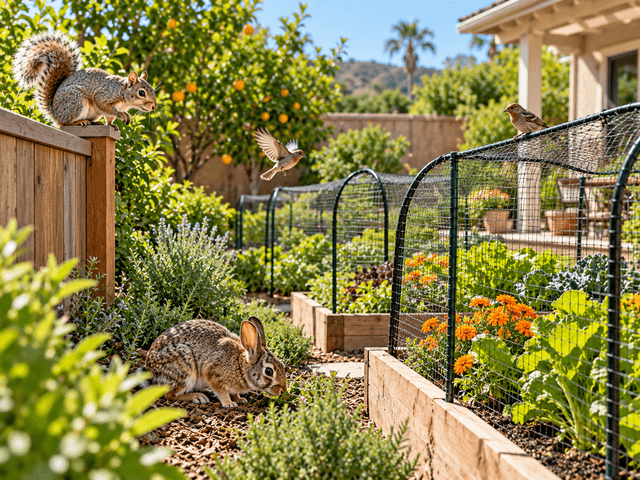
If you want to keep squirrels, rabbits, and birds from eating your plants, the honest truth is that no plant is truly critter-proof — the reliable fix is physical barriers plus smart plant choices and design. Hardware cloth, cages, raised beds, and well-secured netting protect vegetables and young plants far better than any spray or "resistant" species alone. In a Southern California yard, the right combination of barriers and planting lets you garden without feeding the local wildlife. Here's how to protect your garden effectively — and humanely — without poisons, and where a licensed landscaper fits in.
How do you keep squirrels and rabbits from eating plants?
Use barriers first. Rabbits are stopped by a low fence of fine mesh (hardware cloth) buried a few inches at the base; squirrels are kept off beds and pots with cages, cloches, or mesh covers; and birds are managed with taut, well-secured netting over vulnerable crops. Pair those with less-palatable, critter-resistant plant choices and a design that doesn't make an easy buffet. Skip poisons entirely — they're dangerous and unnecessary. Think "exclude and deter," not "eliminate," because no planting is guaranteed safe on its own.
What does protecting a garden from animals involve?
Garden protection is mostly a barriers-and-design job, not a chemical one. It combines physical exclusion (fencing, cages, raised beds, netting) with plant selection and layout that reduce the damage when something does get in. The aim is to protect the plants you care about — vegetables, young transplants, prized ornamentals — while coexisting with wildlife that isn't going anywhere. This fits within BuildCal's landscape design and planting work, where beds, barriers, and plant choices are planned together. Importantly, BuildCal installs barriers, raised beds, and planting — it is not a pest-control company, so active infestations are a separate, specialist matter.
Barriers are the real fix
Every effective strategy starts with physically keeping animals away from the plants. Fine galvanized mesh (hardware cloth) is the workhorse: a low fence with the bottom buried a few inches stops rabbits, while cages, cloches, and mesh covers protect individual plants and pots from squirrels. Raised beds with mesh bottoms also block burrowing diggers from below. Because no plant is truly critter-proof, barriers are what turn "hopeful" into "protected."
No poisons — ever
It's worth being blunt: don't use rodenticides or poisons on squirrels, rabbits, or any garden animal. They cause secondary poisoning in pets and in the hawks, owls, and other predators that help keep rodent numbers down, and they don't actually protect your plants. Exclusion and deterrence are safer, legal, and more effective.
How do you stop each animal?
Different critters call for slightly different barriers, though the principle is the same.
- Rabbits: A low fence of fine mesh, about two feet tall with the bottom buried a few inches so they can't push under, protects beds. Cloches or mesh covers guard young, tender transplants they favor.
- Squirrels: Cages, hardware-cloth covers, and mesh over pots keep them off vegetables and bulbs. For squirrels digging in pots, a layer of mesh or coarse material over the soil surface discourages them.
- Birds: Taut, well-secured netting over fruiting crops and seedlings is the standard protection — more on doing that safely below.
- Burrowing diggers: If gophers are also a problem, that's a related but distinct issue; our guide on getting rid of gophers in a California yard covers poison-free options like buried mesh baskets.
A caution on bird netting
Birds deserve a special note. Many bird species are legally protected under migratory-bird protections, so the goal is to exclude them from specific crops, never to harm them. Equally important, loose or sagging netting is a real entanglement hazard for birds and other wildlife. Always use netting that is pulled taut and well secured over a frame or structure, with no loose folds where an animal can get caught. Taut, properly installed netting protects both your crop and the wildlife around it.
Plant choices and design that help
Barriers do the heavy lifting, but planting choices reduce the pressure. Some plants are simply less appealing to squirrels and rabbits — many aromatic, fuzzy-leaved, or drought-tolerant species are browsed less — so using more of them around vulnerable crops helps. Our guide to the best drought-tolerant plants for Glendale landscapes is a useful starting point, and choosing native or non-native plants in Glendale can guide a resilient palette. Still, treat "critter-resistant" as "less preferred," not "safe" — a hungry animal will test almost anything, which is why design and barriers work together.
Who typically needs garden protection?
Vegetable gardeners losing crops are the most common, along with homeowners whose young transplants, bulbs, or ornamentals keep getting eaten or dug up — a frequent frustration across Glendale, La Crescenta, La Cañada, and the valleys where yards back onto open space. Raised-bed and edible gardeners, families teaching kids to grow food, and HOAs or commercial properties protecting ornamental plantings all benefit from well-designed barriers and beds.
What to check before starting your garden project
- Which animals are causing the damage — rabbits, squirrels, birds, or diggers?
- What exactly are they eating or disturbing — vegetables, transplants, bulbs, pots?
- Would raised beds with mesh bottoms solve several problems at once?
- Is there a fence line or bed edge where a low mesh barrier would help?
- For birds, can netting be mounted taut on a frame rather than draped loosely?
- Do you have an active infestation that needs a licensed pest professional, separate from barriers?
Protection methods by animal
| Animal | When you'd protect against it | Key considerations | Notes before starting |
|---|---|---|---|
| Rabbits | Chewed beds and tender transplants | Low fine-mesh fence, bottom buried a few inches | Cloches for young plants |
| Squirrels | Dug pots, eaten vegetables and bulbs | Cages, mesh covers, surface mesh on pots | No poisons |
| Birds | Fruit and seedlings eaten | Taut, well-secured netting on a frame | Birds are often legally protected; avoid loose netting |
| Burrowing diggers | Roots and beds undermined | Buried mesh baskets and raised-bed bottoms | See our gopher guide; no poisons |
What mistakes lead to a garden that keeps getting eaten?
- Relying on "critter-resistant" plants alone, forgetting no plant is truly safe.
- Using poisons, which endanger pets and predators and don't protect plants.
- Draping loose netting that sags — ineffective and an entanglement hazard for wildlife.
- Building a rabbit fence without burying the bottom, so they push underneath.
- Protecting mature plants but leaving tender seedlings exposed.
- Treating an active infestation as a landscaping job instead of calling a pest professional.
How do you choose the right landscaping company in Glendale?
For garden protection, look for a licensed landscape contractor (CSLB) who designs barriers and beds as part of the planting plan, uses humane, poison-free methods, and installs bird netting safely and taut. A clear written estimate and scope, realistic expectations ("less damage," not "guaranteed critter-proof"), and knowledge of plant palettes that reduce browsing all matter. If a perimeter fence is part of the answer, our fence installation in Glendale guidance covers that side of the work.
How does BuildCal help you?
BuildCal is a licensed landscape contractor (California State License Board / CSLB) in Glendale, and we protect gardens the effective, humane way: designing and installing barriers, cages, raised beds, and properly secured netting, and choosing plant palettes that are browsed less. We start with an on-site assessment of what's being eaten and by what, then build protection into the garden design — no poisons involved. We'll also be clear about the line: we install barriers, beds, and planting, but an active infestation belongs with a licensed pest-control professional. Every project comes with a written estimate and scope before work begins.
Steps to request your project from BuildCal
- Share photos of the damage and the garden, and describe what's being eaten.
- Schedule an on-site assessment of the beds, access points, and surrounding yard.
- Receive a written estimate with scope, barriers, plants, and timeline.
- Approve the plan and schedule the work.
- Installation and a final walkthrough, with planting and care notes.
Frequently asked questions about protecting plants from animals
What's the most effective way to keep squirrels and rabbits from eating plants?
Physical barriers, consistently. A low fine-mesh fence with a buried base stops rabbits, and cages or mesh covers keep squirrels off beds and pots. Pair those with less-palatable plant choices and a layout that doesn't offer an easy buffet. Because no plant is truly critter-proof, barriers are what reliably protect a garden — plant selection reduces the pressure but won't do the job on its own.
Are there plants squirrels and rabbits won't eat?
There are plants they tend to avoid — often aromatic, fuzzy-leaved, or drought-tolerant species — but "resistant" means "less preferred," not "safe." A hungry animal, especially in dry months, will sample almost anything. So use less-palatable plants around your vulnerable crops as part of the strategy, but still rely on barriers for the plants you really want to protect. Our drought-tolerant and native planting guides suggest resilient options.
Should I use poison or repellent to stop garden pests?
Never use poisons or rodenticides. They cause secondary poisoning in pets and in the hawks and owls that naturally control rodents, and they don't protect your plants. Some gardeners try scent-based repellents, but results are inconsistent and short-lived. The dependable, humane, and legal approach is exclusion with barriers and smart planting. If you have an active infestation, a licensed pest-control professional is the right call — that's outside what a landscaper does.
Is bird netting safe to use?
It can be, when installed correctly. Many birds are legally protected, so netting should exclude them from specific crops, never trap or harm them. Use netting pulled taut over a frame or structure and well secured, with no loose, sagging folds — loose netting is a serious entanglement hazard for birds and other wildlife. Taut, properly mounted netting protects your crop while keeping the animals around it safe.
Do raised beds help keep animals out?
They help a lot, especially with the right additions. A raised bed with a mesh bottom blocks burrowing diggers from below, and its height plus a mesh cover or low cage makes it harder for rabbits and squirrels to reach plants. Raised beds also improve soil and drainage, so they solve several problems at once. They're one of the most practical foundations for an edible garden in a critter-heavy yard.
Can you build barriers that still look good?
Yes. Garden protection doesn't have to look like a fortress — well-designed raised beds, tidy low fencing, and netting mounted on a clean frame can be attractive as well as functional. Because we design barriers as part of the overall planting plan, the protection blends into the garden rather than fighting it. We'll include the look as well as the function in the scope so the finished garden is both safe and appealing.
Request your estimate today
If you're trying to keep squirrels, rabbits, and birds from eating your plants in Glendale or the greater Los Angeles area, BuildCal can design and build the barriers and planting that actually protect your garden — humanely and without poisons. Send us a few photos of your space to schedule an on-site assessment and get a written estimate before any work begins. Call (818) 303-1570 or request your free estimate online.
Thinking about a new outdoor space?
We’d love to hear your ideas. Let’s explore what’s possible—no pressure, just a friendly conversation.
Give us a call:
+1 (818) 303-1570
Frequently Asked Question
WHAT IF I’M NOT READY FOR AN INSTALLATION AND ONLY NEED A LANDSCAPE DESIGN OR SITE CONSULTATION?
We can provide anything from a complete on-site consultation to a complete landscape design and plan. Many people will use this as a reliable and cost-effective solution when exploring options and ideas before investing a large amount of time and expense into a project they might not be happy with in the end.