
OUR MISSION IS TO TAILOR FOR EACH CLIENT A BEAUTIFUL, FUNCTIONAL AND ENDURING OUTDOOR ENVIRONMENT THAT WILL PROVIDE A PLACE OF SERENITY FOR FRIENDS AND FAMILY TO APPRECIATE FOR YEARS TO COME.

BuildCal Landscape Hardscaping Article
Decomposed Granite vs Pavers for Glendale Pathways & Patios
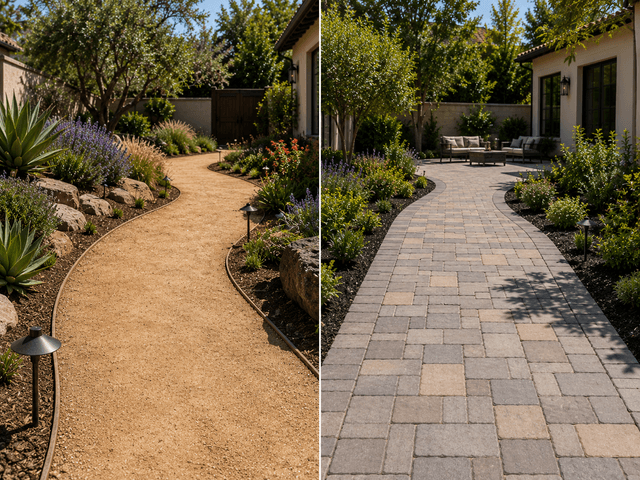
When it comes to paths and patios, two surfaces top most Glendale shortlists: decomposed granite and pavers. The honest answer to decomposed granite vs pavers isn't that one is better — it's that they're built for different jobs. Decomposed granite is budget-friendly, natural, and permeable; pavers are durable, firm, and premium. Knowing where each shines saves money and regret.
This guide gives a straight comparison: what decomposed granite actually is, the real pros and cons of each, the cost factors that matter, and which works best for which Glendale, CA project. For the paver side of the work, see our paver installation, and read on.
What Is DG?
Decomposed granite — DG — is granite that has naturally weathered into a fine, gravel-like material. Compacted, it forms a firm, slightly textured surface with a warm, earthy color that suits naturalistic and Mediterranean landscapes.
There are three common forms. Loose DG is the most basic and economical, but it shifts and tracks more. Stabilized DG mixes in a binder so it sets firmer and resists erosion. Resin-bound DG uses a stronger binder for the most solid, low-maintenance finish. Compared with plain gravel, DG is finer and compacts into a far more walkable surface — which is why the gravel vs pavers question often becomes a DG-versus-pavers one for paths and casual patios.
DG Pros/Cons
Pros
- Budget-friendly, with lower upfront material and installation cost.
- Natural, soft look that blends into garden and drought-tolerant designs.
- Permeable, so rainwater soaks through — a plus for drainage and the environment, complementing yard drainage solutions.
- Easy to install, reshape, and repair, with flexible curves and edges.
Cons
- Can erode or wash out on slopes and in heavy rain, especially loose DG.
- Tracks indoors, can be dusty, and needs occasional topping up and re-grading.
- Less firm for furniture, heels, or wheeled traffic, and weeds can appear if not maintained.
Stabilized or resin-bound DG mitigates several of these drawbacks, making a decomposed granite patio more durable than loose DG while keeping the natural look. Pairing DG with drought-tolerant landscaping is a classic, low-water combination.
Pavers Pros/Cons
Pros
- Highly durable and long-lasting, with a firm, level surface.
- Premium look and a huge range of materials, colors, and patterns.
- Support furniture, foot traffic, and even vehicles, and handle slopes well with a proper base.
- Low long-term maintenance, and repairable one unit at a time.
Cons
- Higher upfront cost and a more involved installation (base prep and edging).
- Can heat up in full sun, and weeds can appear in joints if not maintained (polymeric sand helps).
Material choice makes a big difference — our guides to paver materials, pavers for hot weather, and paver walkway patterns help you pick a surface that performs and looks the part.
Cost Factors
Without quoting prices, the budget comparison comes down to upfront cost versus lifespan.
- Upfront. DG is generally the lower-cost option to install; pavers cost more upfront due to materials, base work, and labor.
- Lifespan. Pavers last longer and resist erosion, while DG is cheaper to refresh but needs periodic topping and re-grading.
- Site factors. Slope, drainage, base prep, stabilization, and edging all shift the figure — see what a hardscape contractor should include.
Think in lifecycle terms: DG wins on initial budget; pavers often win on cost-per-year over a long life. The same upfront-versus-lifetime logic appears in our pavers versus concrete comparison.
Best Use Cases in Glendale
Match the material to the job, and Glendale's slopes, clay soils, and winter storms to the choice.
Decomposed granite is the smart pick for:
- Garden paths and a casual DG pathway Glendale gardens use to connect zones.
- Secondary or naturalistic patios, drought-tolerant gardens, and budget-conscious projects on relatively flat ground.
Pavers are the better choice for:
- Main patios, driveways, entertaining areas, and high-traffic or formal spaces.
- Sloped areas (with proper base and edging) and anywhere furniture or vehicles need a firm, level surface.
Many Glendale yards use both — pavers for the main patio and entry, DG for garden paths and quiet corners. For walkways specifically, our looks at walkway materials for the climate and creative walkway ideas help, and our landscape design ideas show the two working together.
Not Sure Which Surface Fits Your Project?
The right answer depends on your slope, traffic, style, and budget — and often it's a mix of both materials. Ask About Paver Installation and we'll assess your site and recommend the surface (or combination) that fits your Glendale, CA pathways and patios. Call +1 (818) 303-1570 or contact us to get started, and see finished work in our portfolio.
Frequently Asked Questions
What's the difference between decomposed granite and pavers?
Decomposed granite is fine, weathered granite that compacts into a natural, permeable, budget-friendly surface, ideal for paths and casual patios. Pavers are manufactured or cut units that form a firm, durable, premium surface for patios, driveways, and high-traffic areas. DG costs less upfront and looks soft and natural; pavers last longer and handle heavier use.
Is decomposed granite cheaper than pavers?
Generally yes, upfront. DG has lower material and installation costs, which is why it's popular for budget-conscious projects and large path areas. Pavers cost more initially due to materials, base prep, and labor, but they last longer and resist erosion - so over a long lifespan the cost-per-year can be competitive. Site conditions affect both.
Is DG good for a patio?
It can be, especially a casual or naturalistic one. A decomposed granite patio works well for relaxed, garden-style spaces, particularly using stabilized or resin-bound DG for a firmer, lower-maintenance surface. For a main entertaining patio with furniture and heavy traffic, pavers usually hold up better and feel more solid underfoot.
Does decomposed granite hold up in Glendale's weather?
On flat ground, yes - especially stabilized DG. The main concern is erosion on slopes and during heavy winter rain, where loose DG can wash out. Good edging, proper grading, and a stabilized or resin-bound mix help a DG pathway Glendale homeowners install stay put. On steep or high-runoff areas, pavers are often the safer choice.
Should I choose gravel, DG, or pavers for a pathway?
For a walkable, natural path on a budget, DG beats loose gravel because it compacts firmer and tracks less. For a durable, formal, or high-traffic path - or anything on a slope or carrying furniture and wheels - pavers are the stronger choice. Many yards mix them. Ask About Paver Installation at +1 (818) 303-1570 to decide.
Thinking about a new outdoor space?
We’d love to hear your ideas. Let’s explore what’s possible—no pressure, just a friendly conversation.
Give us a call:
+1 (818) 303-1570
Frequently Asked Question
HOW DOES THE DESIGN PROCESS WORK?
While the process may vary depending on the designer, the client’s needs, and the complexity of the project, most residential design projects include the following:
Initial Consultation, This is a chance to meet the designer and review the requirements and objectives of the project. Many designers charge for this visit, so to get the most out of the experience, ask the designer the best way to prepare and be sure you understand exactly what will be covered at this meeting.
Concept Plan. After listening to your ideas and priorities, the designer analyzes the site’s character, strengths and problems, and then develops one or more alternative concept plans for review.
Master Plan. The final master plan represents the culmination of your choices with the designer, and typically includes a complete spatial layout for your outdoor living spaces and other hardscape or architectural concepts.
Planting Plan. This is a working drawing from which the garden will actually be planted, and includes botanical names, container sizes, specific plant locations, and planting instructions to the contractor.
Additional Plan Documents. Depending on the scoop of your project, your designer may also provide a lighting plan, specialized guidelines on planting or irrigation, or notes and sketches on design elements such as water features or furniture and accessories placement.
Installation Assistance Many landscape designers will assist you in soliciting and reviewing construction bids, including referring contractors appropriate for your project. Others may choose to provide drawings only. Designers often stay involved throughout the installation phase to advise on design modifications, material selections and purchase and placement of garden art and accessories.