
OUR MISSION IS TO TAILOR FOR EACH CLIENT A BEAUTIFUL, FUNCTIONAL AND ENDURING OUTDOOR ENVIRONMENT THAT WILL PROVIDE A PLACE OF SERENITY FOR FRIENDS AND FAMILY TO APPRECIATE FOR YEARS TO COME.

BuildCal Landscape Landscape Design Article
Landscaping vs Hardscaping: What Your Glendale Yard Needs
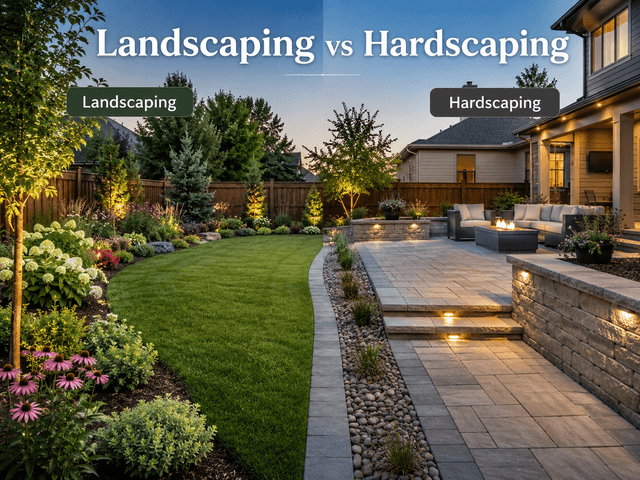
When homeowners start a yard project, the first real decision is rarely "which plants?" It's landscaping vs hardscaping — how much of the budget and space should go to the living, green parts of the yard versus the built, structural parts. Get that balance right and the yard works year-round, ages well, and fits how you actually live. Get it wrong and you end up with a beautiful lawn no one can use, or a sea of concrete with no life to it.
This is a decision framework, not a verdict — because in Glendale, CA the right answer depends on your slope, soil, sun, and how you want to use the space. Below, we define the terms, show when each one earns its place, weigh the Southern California climate factors that tilt the decision, and explain how to combine both into one cohesive plan. For the full picture of landscaping and hardscaping services, start here and read on.
Definitions
The simplest way to understand landscaping vs hardscaping is by what each is made of. The landscape vs hardscape distinction is the same idea in industry terms.
- Landscaping (softscape): the living layer — lawn or artificial turf, planting beds, trees, shrubs, ground covers, and the irrigation that keeps them healthy. Landscape brings color, shade, privacy, and a sense of life, and it changes with the seasons.
- Hardscaping (hardscape): the built, non-living structure — patios, walkways, driveways, retaining walls, steps, outdoor kitchens, and fire features. Hardscape gives a yard its shape, circulation, and usable surfaces, and it stays put year-round.
Neither is "better." Softscape without structure can feel shapeless and high-maintenance; hardscape without planting can feel hard and lifeless. The best yards layer both — and our roundup of landscape design ideas for Southern California homes shows how the two work together in practice. For the hardscape side specifically, our guide to hardscape design breaks down the built elements.
When You Need Each
Instead of choosing a side, match the solution to the problem you're trying to solve. A few common situations point clearly toward one or the other.
Lean toward more hardscaping when:
- You have a slope that needs to be terraced or held back, or erosion to control.
- You want flat, usable space for dining, entertaining, or play.
- You need reliable circulation — paths and a driveway that stay clean and stable.
- You want to cut water use and weekly upkeep by replacing thirsty lawn with surface.
Lean toward more landscaping when:
- You want shade, cooling, and greenery to soften the home and the heat.
- Privacy and screening matter — living hedges and trees can do what walls can't.
- Curb appeal and color are the priority, or you want to grow food and pollinator habitat.
Most Glendale yards need a measure of both. If a sloped or messy yard is your starting point, the structure usually comes first; for greenery-led goals, planting and privacy hedges and trees lead the way. Browse our portfolio of completed projects to see how different yards strike the balance.
SoCal Climate Factors
Southern California's climate and Glendale's terrain push the landscaping vs hardscaping decision in specific directions. Four factors matter most.
- Heat and sun. Long, hot, dry summers favor durable, heat-tolerant surfaces and shade. Light-colored, heat-resistant materials stay comfortable underfoot — see choosing hardscaping materials for the local climate — while shade trees cool the softscape side.
- Water and drought. With water-conscious rules and dry conditions, many homeowners reduce thirsty lawn in favor of hardscape and drought-tolerant plants suited to Glendale. Artificial turf compared with natural grass is a common middle path, and efficient irrigation systems protect whatever you plant.
- Soil and slope. Glendale's clay-heavy soils and hillside lots often require hardscape solutions — retaining walls, terracing, and proper grading. On slopes, retaining walls and the drainage behind them aren't optional, and broader drainage and grading planning protects the whole yard.
- Fire awareness. In hillside areas, thoughtful spacing, hardscape buffers, and plant selection all factor into a resilient design.
Budget Split
Once you know what your yard needs, the next question in yard planning Glendale homeowners face is how to divide the budget between hardscape and softscape. There's no universal ratio, but a few principles hold.
Hardscaping is typically the larger, more structural investment — it involves excavation, base preparation, drainage, and durable materials, and it's harder to change later. Landscaping usually costs less upfront but carries ongoing care, and it's easier to add or adjust over time. Because the built elements are the foundation everything else sits around, many homeowners weight the initial budget toward hardscape and phase in planting afterward. Our comparison of durable surface materials shows how upfront and long-term value differ, and our guide to what a hardscape contractor includes helps you see where the real cost drivers live (without committing to a number before a site visit).
If lowering long-term cost and upkeep is the goal, low-maintenance landscaping choices reduce the softscape side of the ledger while keeping the yard green.
Combining Both
The strongest yards don't treat landscaping and hardscaping as competing line items — they design them together. Integration is where a yard stops looking like a collection of features and starts feeling like one space.
Sequence matters: hardscape generally goes in first because it sets levels, drainage, and circulation, then softscape fills in around it. A patio defines where you gather; planting beds and trees frame and soften it; outdoor lighting makes both usable after dark; and irrigation keeps the green layer healthy. Done well, the result is a true outdoor living space rather than two disconnected projects.
The practical takeaway: decide the balance based on your slope, soil, sun, and lifestyle — then design the hard and soft layers as one plan so drainage, levels, and planting all work together from the start.
Not Sure Which Your Yard Needs?
The fastest way to settle the landscaping vs hardscaping question for your property is to walk it with a designer who can read the slope, soil, and sun. Discuss Your Backyard Remodel with us and we'll help you strike the right balance and design both layers as one cohesive plan. Call +1 (818) 303-1570 or contact us to get started — you can also explore our paver installation and hardscaping work to see the structural side in action.
Frequently Asked Questions
What's the difference between landscaping and hardscaping?
Landscaping (softscape) is the living layer of a yard — lawn or turf, plants, trees, beds, and irrigation. Hardscaping (hardscape) is the built, non-living structure — patios, walkways, driveways, retaining walls, and outdoor living features. Softscape brings life and shade; hardscape provides shape, usable surfaces, and year-round structure. Most complete yards use both.
Is softscape or hardscape better for a Glendale yard?
Neither is universally better — it depends on your goals and site. Glendale's heat, water rules, clay soil, and slopes often push toward more hardscape and drought-tolerant softscape, but greenery still matters for shade, privacy, and curb appeal. The right mix is a balance set by your slope, sun, and how you want to use the space.
Do sloped Glendale yards need more hardscaping?
Often, yes. Sloped and hillside lots commonly need retaining walls, terracing, and proper grading to create usable, stable space and to control erosion and water. On any slope, drainage behind retaining walls is essential — it's the detail that decides whether the structure lasts, so it should be planned from the start.
How should I split my budget between landscaping and hardscaping?
There's no fixed ratio. Hardscaping is usually the larger, structural investment and is hard to change later, so many homeowners weight the initial budget toward it and phase in planting afterward. Landscaping costs less upfront but carries ongoing care. The right split comes from your priorities and a site assessment — not a number quoted before a visit.
Should landscaping and hardscaping be designed together?
Yes. Designing both as one plan avoids costly rework — for example, setting drainage, levels, and patio placement before planting beds go in. Hardscape typically goes in first to establish structure and circulation, then softscape fills in around it, producing a cohesive space. Discuss Your Backyard Remodel at +1 (818) 303-1570 to plan both together.
Thinking about a new outdoor space?
We’d love to hear your ideas. Let’s explore what’s possible—no pressure, just a friendly conversation.
Give us a call:
+1 (818) 303-1570
Frequently Asked Question
WHAT IF I ALREADY HAVE A DESIGN OR PLAN?
Not a problem at all. We will gladly review your design at the initial consultation and discuss the best way to proceed and achieve the very best finished product