
OUR MISSION IS TO TAILOR FOR EACH CLIENT A BEAUTIFUL, FUNCTIONAL AND ENDURING OUTDOOR ENVIRONMENT THAT WILL PROVIDE A PLACE OF SERENITY FOR FRIENDS AND FAMILY TO APPRECIATE FOR YEARS TO COME.

BuildCal Landscape Hardscape & Patios Article
Paver Patio Cost in Glendale - What Actually Drives the Price
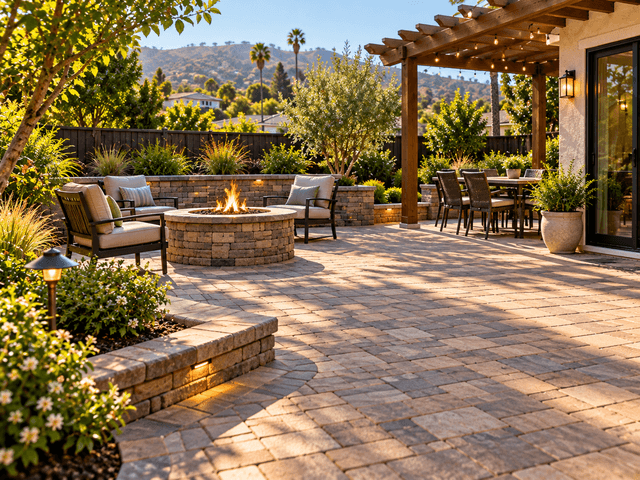
If you're researching paver patio cost in Glendale, the honest answer is that there's no single price — the cost is driven by the size of the patio, how much base preparation and grading the site needs, the materials you choose, and how easy the yard is to access. Two patios of the same square footage can land far apart once you account for what's happening under the surface. The pavers you see are a small part of the job; the base, drainage, and grading beneath them decide whether the patio lasts. Here's what actually moves the number, and how to get an accurate, written estimate.
What drives paver patio cost in Glendale?
The biggest cost drivers are patio size, base preparation depth, the paver material and pattern, site access, grading and drainage needs, and any demolition of an existing surface. A flat, open backyard with simple access costs less to build than a sloped or hard-to-reach site that needs extra excavation, base, and grading. Because every yard differs, a reliable figure comes from an on-site assessment and a written estimate — not an online calculator. This information is current as of October 2026.
What goes into a paver patio project?
A proper paver patio is a layered system, not just stones on soil. It starts with excavation, then a compacted aggregate base, a bedding layer, the pavers themselves, edge restraints to hold everything in place, and joint sand to lock the surface. Grading is built in so water drains away from the house and off the patio. The visible pavers are the final layer; the durability comes from everything underneath. This work falls under BuildCal's hardscape construction services, and the right approach depends on the site's soil, grade, and how the space will be used.
Why base prep and grading matter more than the pavers
It's worth being blunt about this: proper base preparation and grading, not the surface material, determine whether a patio holds up. A deep, well-compacted base over stable, correctly graded ground keeps pavers from sinking, shifting, and pooling water. Skimp on the base to hit a lower price, and the patio may look fine for a season, then settle, develop low spots, and need costly rework. When comparing quotes, what's specified below grade matters as much as the paver on top.
The main cost drivers, explained
Here's what moves the price on a Glendale-area paver patio, and why.
- Size. Square footage is the starting point — more area means more excavation, base, material, and labor.
- Base preparation depth. The required base depth depends on soil and use. Expansive clay soil or a patio that will carry heavy use needs more excavation and aggregate, which adds cost but protects the result.
- Material and pattern. Paver type, quality, and the laying pattern affect both material and labor. Intricate patterns and premium pavers take more time and cost more than a simple running-bond layout. Our guide to patio paver materials walks through the options.
- Site access. If machinery and materials can reach the yard easily, work goes faster. Narrow side yards, stairs, or tight gates mean more hand-hauling and labor.
- Grading and drainage. A site that needs regrading, a slope managed, or drainage added costs more than a naturally well-draining, level yard — but skipping it causes bigger problems later.
- Demolition. Removing and hauling an existing concrete slab, deck, or old patio adds to the scope before the new build even starts.
- Extras. Seating walls, steps, lighting, or a fire feature integrated into the patio add their own cost.
What to check before starting your patio project
- How large is the patio area, and how will you use it (dining, lounging, heavy traffic)?
- What's the soil and grade like — flat and draining, or sloped and clay-heavy?
- Is there an existing surface that needs demolition and removal?
- How accessible is the yard for equipment and materials?
- Does water currently pool anywhere, signaling a drainage need?
- Are you clear on what each quote specifies below the surface, not just the paver?
Cost drivers at a glance
| Cost driver | When it raises the price | Key considerations | Notes before starting |
|---|---|---|---|
| Size | Larger patio area | More excavation, base, material, labor | Match size to real use |
| Base prep & grading | Clay soil, slope, poor drainage | Deeper base and regrading protect durability | Don't cut here to save money |
| Material & pattern | Premium pavers, intricate layouts | Affects material and labor time | Balance look, durability, budget |
| Access | Narrow or stepped yard access | More hand-hauling, slower work | Flag tight access early |
| Demolition | Removing an old slab or patio | Adds haul-away before the build | Include in the scope |
What mistakes lead to a costly or failed patio?
- Choosing a quote on surface price alone, without checking base and grading specs.
- Skipping proper base preparation, leading to sinking, shifting, and low spots.
- Ignoring grading and drainage, so water pools on the patio or runs toward the house.
- Underestimating access, so labor costs come as a surprise.
- Hiring an unlicensed installer for work that deserves a licensed contractor.
- No written scope, so materials and timeline drift mid-project.
How do you choose the right landscaping company in Glendale?
For a paver patio, look for a licensed landscape contractor (CSLB) who specifies the base and drainage work, not just the paver, and gives you a clear written estimate, scope, and timeline. Experience with Glendale-area soils and grades matters, as does knowledge of any permit or HOA requirements. Comparing bids fairly is its own skill — our guide on comparing landscaping and hardscape quotes in Glendale helps you read past the headline number to what's actually included.
How does BuildCal help you?
BuildCal is a licensed landscape contractor (California State License Board / CSLB) based in Glendale, and we build paver patios as the layered system they should be — proper excavation, a compacted base, correct grading and drainage, and clean edge restraint, finished with the paver and pattern you choose. We start with an on-site assessment of your yard's size, soil, grade, drainage, and access, then provide a written estimate with scope, materials, and timeline before any work begins. Pricing and schedule are confirmed after that assessment rather than guessed up front, because a well-planned, properly built patio costs less over time than one that needs rework.
Steps to request your project from BuildCal
- Share a few photos of the space and a short description of the patio you want.
- Schedule an on-site assessment of the yard, grade, drainage, and access.
- Receive a written estimate with scope, materials, and timeline.
- Approve the plan and schedule the work.
- Installation and a final walkthrough, with cleanup and aftercare notes.
Frequently asked questions about paver patio cost in Glendale
How much does a paver patio cost in Glendale?
There's no honest flat figure, because cost depends on size, base-preparation depth, material, access, grading, and any demolition. A small, flat, easy-access patio with a simple paver sits at the lower end; a large, sloped, or hard-to-reach site needing extra base and drainage costs more. The reliable way to know is an on-site assessment and a written estimate. This information is current as of October 2026 and varies with site conditions.
Why are some paver patio quotes so much cheaper?
Usually because of what's left out below the surface. A low quote may specify a thinner base, less excavation, or skip grading and drainage — savings that show up later as sinking, shifting, and pooling water. The paver you see is a small part of the real cost; the base and grading are where durability lives. When comparing quotes, check what each specifies underground, not just the price and the paver.
Does base preparation really change the price that much?
Yes, and it should. Base preparation depth depends on your soil and how the patio will be used, and Glendale-area clay soils often need more excavation and aggregate to stay stable. That work adds cost up front but is exactly what keeps pavers from settling and the surface draining correctly. Paying for a proper base is almost always cheaper than rebuilding a failed patio a few years on.
Do I need a permit for a paver patio?
It depends on the specifics of the project and your location, and rules can vary by city and HOA. A ground-level patio is treated differently than structures or significant grading. Because requirements change and depend on the details, it's best to confirm with your local building department. We identify any permit needs during the on-site assessment and build them into the scope and timeline so nothing stalls mid-project.
How long does a paver patio take to install?
Timelines vary with the size, site conditions, access, weather, and any demolition or drainage work. A straightforward patio moves faster than one needing extensive excavation, regrading, or integrated features like seating walls or lighting. Our guide to the patio installation timeline for Glendale projects gives a realistic picture, and your written estimate includes a schedule based on your specific scope.
Is it worth planning the patio before getting quotes?
Definitely. Knowing your size, intended use, and whether the site has slope or drainage issues lets a contractor scope the job accurately and lets you compare quotes fairly. Our guide on how to plan a patio for a Glendale home covers what to think through first. A little planning up front reduces surprises, keeps the estimate accurate, and helps the finished patio match how you'll actually use the space.
Request your estimate today
If you're weighing paver patio cost in Glendale or the greater Los Angeles area, the most useful next step is a real number based on your actual yard. Send BuildCal a few photos of your space to schedule an on-site assessment and get a written estimate — covering the base, grading, materials, and timeline — before any work begins. Call (818) 303-1570 or request your free estimate online.
Thinking about a new outdoor space?
We’d love to hear your ideas. Let’s explore what’s possible—no pressure, just a friendly conversation.
Give us a call:
+1 (818) 303-1570
Frequently Asked Question
WHAT IF I’M NOT READY FOR AN INSTALLATION AND ONLY NEED A LANDSCAPE DESIGN OR SITE CONSULTATION?
We can provide anything from a complete on-site consultation to a complete landscape design and plan. Many people will use this as a reliable and cost-effective solution when exploring options and ideas before investing a large amount of time and expense into a project they might not be happy with in the end.