
OUR MISSION IS TO TAILOR FOR EACH CLIENT A BEAUTIFUL, FUNCTIONAL AND ENDURING OUTDOOR ENVIRONMENT THAT WILL PROVIDE A PLACE OF SERENITY FOR FRIENDS AND FAMILY TO APPRECIATE FOR YEARS TO COME.

BuildCal Landscape Hardscape & Patios Article
Paver Installation Done Right - The Base Prep That Prevents Sinking, Weeds & Lippage
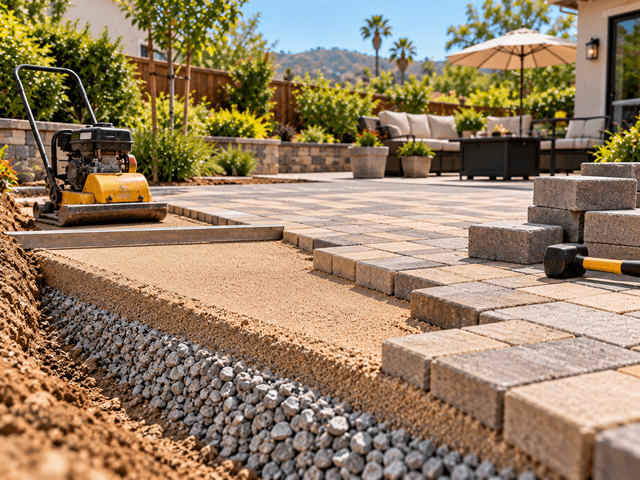
The difference between a paver surface that stays flat for decades and one that sinks, shifts, and sprouts weeds is almost entirely paver installation base preparation — the work that happens before a single paver is laid. Proper excavation, a compacted aggregate base built in layers, a screeded bedding course, solid edge restraint, and the right joint sand are what hold a paver patio, walkway, or driveway together. The pavers on top are the easy part. If you've been burned by a previous job or you're vetting installers, this is what separates a real install from a quick one, and what to look for in a quote.
What makes a paver install last?
A lasting paver installation comes from the layers beneath the surface: excavating to the right depth, compacting a crushed-aggregate base in thin lifts, screeding a consistent bedding layer, setting the pavers with proper joints, locking the perimeter with edge restraint, and building in a slope so water drains away. Skip or rush any of these and you get sinking, uneven edges (lippage), and weeds in the joints. The visible paver matters least; the base, compaction, drainage, and edges are what keep the surface flat and tight.
What does proper paver installation involve?
A correctly built paver surface is an engineered stack, each layer doing a job. Done right, BuildCal's paver installation work follows the same sequence whether it's a patio, walkway, or driveway, scaled to the load and the soil. Here's the sequence a quality install follows.
Sub-base excavation
The ground is excavated to a depth that accounts for the base, bedding, and paver thickness — plus extra for heavier loads like a driveway. Cutting this depth short to save time is the root cause of most failures, because there's then no room for a base thick enough to stay stable.
Compaction in lifts
Crushed aggregate base is added and compacted in thin layers ("lifts") rather than dumped and compacted once. Compacting a few inches at a time is what actually locks the base into a solid, load-bearing platform. A deep layer compacted in a single pass stays loose underneath and settles later.
Base depth matched to use
The base thickness is matched to the application and soil — a foot-traffic patio needs less than a vehicle driveway, and expansive Glendale-area clay soils often call for more. There's no universal number; the depth is a judgment based on load and site conditions.
Bedding sand, screeded level
A thin, consistent bedding layer is screeded over the compacted base to set the pavers on. The key is uniform thickness — an uneven bedding layer telegraphs straight up into an uneven surface.
Edge restraint
A proper edge restraint locks the perimeter pavers so the whole field can't spread or "creep" outward over time. Without it, edges drift apart, joints open, and the surface loosens — one of the most common reasons a cheap install fails. Good paver edge restraint is non-negotiable.
Joint and polymeric sand
Sand is swept into the joints to lock the pavers together, and polymeric sand (which stiffens when set) helps resist washout and weed growth. Correct jointing is a big part of why some paver surfaces stay weed-free while others don't — more on that in our guide to weeds between pavers and how to stop them.
Slope for drainage
The whole surface is built with a slight, deliberate slope so water sheds away from the house and off the pavers. Flat or back-pitched installs trap water, which undermines the base and feeds weeds and moss.
Why do shortcuts fail?
When an install cuts corners below the surface, the results are predictable — not because pavers are fragile, but because the base wasn't built to carry and drain properly.
- Sinking and settling: too little excavation or a base compacted in one thick pass leaves voids that collapse over time, creating low spots.
- Lippage: uneven bedding or a settling base makes adjacent pavers sit at different heights — a trip hazard and an eyesore.
- Weeds and washout: poor jointing and bad drainage let seeds settle and water wash sand out, opening the joints.
- Edge creep: missing edge restraint lets the field spread, widening joints and loosening the surface.
None of this is scare talk — it's just what happens when the base and drainage are treated as optional. The fix is always more expensive than doing it right the first time.
What to check before starting your paver project
- Does the quote specify excavation depth and base thickness, or just the paver?
- Is the base compacted in lifts, and to what depth for your use (patio vs. driveway)?
- Is edge restraint included around the full perimeter?
- What jointing is used — plain or polymeric sand?
- Is a drainage slope built into the design?
- Does the installer account for your soil type and site grade?
What separates a real install from a quick one
| Layer / step | Done right | The shortcut | What the shortcut causes |
|---|---|---|---|
| Excavation | Dug to depth for base + use | Shallow dig | No room for a stable base; settling |
| Compaction | Aggregate compacted in lifts | One thick pass | Loose base; sinking later |
| Bedding | Screeded, uniform layer | Uneven sand | Lippage, uneven surface |
| Edges | Full edge restraint | No restraint | Edge creep, open joints |
| Joints & slope | Polymeric sand, drainage slope | Loose sand, flat pitch | Weeds, washout, pooling |
Who typically needs quality paver installation?
Homeowners building a new patio, walkway, or driveway are the core audience — along with anyone replacing a failed install that sank, heaved, or weeded over. It's especially relevant on Glendale-area clay soils and sloped foothill lots in La Crescenta and La Cañada, where base depth and drainage make or break the result. HOAs and property managers also rely on proper installation for surfaces that stay safe and low-maintenance under heavy foot traffic.
What mistakes lead to a failed paver surface?
- Choosing an installer on surface price without checking the base specification.
- Shallow excavation that leaves no room for an adequate base.
- Compacting the base in one thick layer instead of lifts.
- Skipping edge restraint, so the field spreads and joints open.
- Using plain sand and no drainage slope, inviting weeds and washout.
- Ignoring soil type — treating clay the same as well-draining ground.
How do you choose the right landscaping company in Glendale?
For paver work, choose a licensed landscape contractor (CSLB) whose quote spells out the base, compaction, edge restraint, jointing, and drainage — not just the paver and the price. Ask how they handle your specific soil and grade. A quality installer will happily explain what's going in below the surface, because that's where their work actually lives. Material choice matters too, and our guide to patio paver materials helps you weigh the options once you trust the install.
How does BuildCal help you?
BuildCal is a licensed landscape contractor (California State License Board / CSLB) in Glendale, and we build paver surfaces as the engineered system they should be: proper excavation, aggregate base compacted in lifts and matched to your soil and use, a screeded bedding layer, full edge restraint, polymeric jointing, and a built-in drainage slope. We assess your site's soil, grade, and drainage first, then provide a written estimate and scope that spells out what goes below the surface, not just the paver on top. If you're comparing paver options and surfaces, our overview of decomposed granite, gravel, and pavers lays out the honest trade-offs. A properly built surface costs less over its life than one that needs rebuilding.
Steps to request your project from BuildCal
- Share a few photos of the area and a short description of the surface you want.
- Schedule an on-site assessment of the soil, grade, drainage, and access.
- Receive a written estimate with scope, base specification, materials, and timeline.
- Approve the plan and schedule the work.
- Installation and a final walkthrough, with cleanup and aftercare notes.
Frequently asked questions about paver installation base preparation
Why is base preparation so important for pavers?
Because the base, not the paver, carries the load and manages water. A properly excavated, compacted aggregate base built in lifts keeps the surface flat, stable, and draining for the long term. When base preparation is rushed or too shallow, the surface settles, develops lippage, and opens at the joints. Paying for a correct base is the single biggest factor in whether a paver patio, walkway, or driveway lasts.
How thick should a paver base be?
There's no single number — base thickness depends on the use and the soil. A foot-traffic patio needs less than a driveway carrying vehicles, and Glendale-area clay soils often call for more base than well-draining ground. That's why a quality installer assesses your site rather than quoting a one-size depth. The right base depth is a judgment based on load, soil, and drainage, confirmed during an on-site assessment.
Why are my pavers sinking or uneven?
Almost always a base problem. Too-shallow excavation, a base compacted in one thick pass instead of lifts, or an uneven bedding layer leaves voids and weak spots that settle under use — producing low areas and lippage where pavers sit at different heights. Poor drainage accelerates it by washing out support. Correcting it usually means rebuilding the base properly, which is why getting it right the first time matters.
How do I stop weeds from growing between pavers?
Good jointing and drainage. Polymeric sand swept into tight joints resists weed growth and washout far better than loose sand, and a proper drainage slope keeps water from sitting and feeding seeds. Weeds in paver joints usually signal washed-out or inadequate jointing underneath. Our guide on weeds between pavers explains the causes and fixes in detail, but the prevention starts at installation with correct joints and slope.
What is edge restraint and do I really need it?
Edge restraint is the barrier that locks the perimeter pavers in place so the field can't spread outward over time. Yes, you need it — without it, the edges "creep," joints widen, and the whole surface gradually loosens. It's one of the most commonly skipped steps in a cheap install and one of the most common reasons paver surfaces fail. A proper install restrains the full perimeter.
Do you need a licensed contractor to install pavers?
For a quality, lasting result, you want one. Paver work done right involves excavation, grading, drainage, and base engineering — skills a licensed landscape contractor (CSLB) brings and that protect you if something goes wrong. An unlicensed crew may be cheaper up front, but the savings disappear when a poorly based surface needs rebuilding. A licensed pro also gives you a written scope specifying the work below the surface, not just the paver.
Request your estimate today
If you want paver installation done right — with the base preparation, edge restraint, and drainage that keep a surface flat and weed-free for the long term — start with a look at your actual site. Send BuildCal a few photos of your space to schedule an on-site assessment in Glendale or the greater Los Angeles area and get a written estimate before any work begins. Call (818) 303-1570 or request your free estimate online.
Thinking about a new outdoor space?
We’d love to hear your ideas. Let’s explore what’s possible—no pressure, just a friendly conversation.
Give us a call:
+1 (818) 303-1570
Frequently Asked Question
CAN YOU PROVIDE A LANDSCAPE PLAN?
Yes – we have our own Design group who can draw anything from basic hand-drawn layouts and sketches, highly detailed concept plans, or a complete set of working construction drawings. Clients will often call upon us to provide this service as a first step to their overall project.