
OUR MISSION IS TO TAILOR FOR EACH CLIENT A BEAUTIFUL, FUNCTIONAL AND ENDURING OUTDOOR ENVIRONMENT THAT WILL PROVIDE A PLACE OF SERENITY FOR FRIENDS AND FAMILY TO APPRECIATE FOR YEARS TO COME.

BuildCal Landscape Landscape Maintenance & Tree Care Article
When a Tree Has to Go - Removal in SoCal — Warning Signs, Costs & Permits
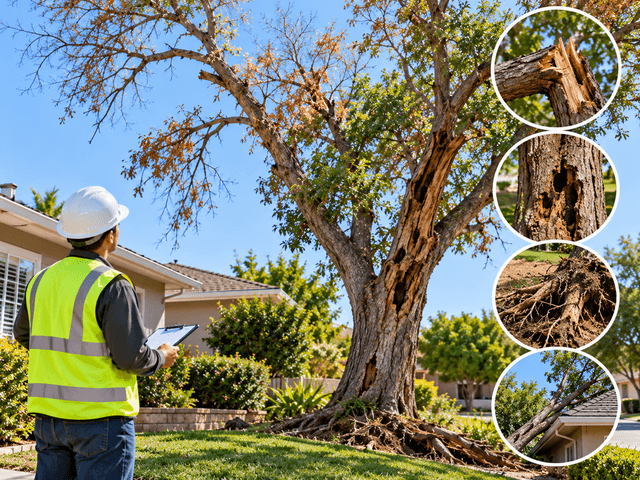
Deciding when to remove a tree comes down to safety, health, and placement: a tree that is dead, structurally failing, diseased beyond recovery, or growing into your house or power lines may need to come out, while many others can be saved with proper pruning or cabling first. Removal should be the last resort, not the first move — and in Southern California it often involves local permit rules, especially for protected or street trees. Below are the warning signs to watch for, the factors that drive removal cost, how permits work around Glendale, and why a licensed contractor and a certified arborist belong in the decision.
When do you need to remove a tree?
Consider removal when a tree is dead or mostly dead, leaning suddenly with lifted or cracked soil at the base, has large dead or hanging limbs over people or structures, shows major trunk cracks, cavities, or fungal conks, or is growing too close to the foundation, roof, or utility lines. A badly diseased or root-damaged tree may also qualify. But many of these can first be assessed by an ISA Certified Arborist — sometimes targeted pruning or cabling resolves the risk, and removal is only warranted when the hazard can't be managed another way.
What does tree removal involve?
Professional tree removal is more than cutting a trunk. It means assessing the tree's condition and the space around it, planning a safe felling or sectional dismantling (especially near structures and power lines), removing the wood and debris, and deciding what happens to the stump. It's skilled, often hazardous work, which is why it belongs with licensed, insured professionals rather than a DIY weekend. Tree removal is part of the broader additional yard and property services BuildCal provides, typically alongside the planting and landscape work that follows once the tree is gone.
Removal is a last resort
Before removing anything, it's worth asking whether the tree can be saved. A healthy, well-placed tree adds real value — shade, curb appeal, and cooling — so pruning to clear a structure, removing specific hazardous limbs, or cabling a weak union can sometimes solve the problem without losing the tree. An ISA Certified Arborist is the right person to assess a tree's health and risk and tell you honestly whether removal is truly necessary.
What are the warning signs a tree may be dangerous?
Some problems are cosmetic; others are structural. The dangerous-tree signs worth acting on include:
- A sudden lean, with soil heaving or cracking on one side of the base.
- Large dead, broken, or hanging limbs — especially over the house, driveway, or play areas.
- Deep trunk cracks, large cavities, or soft, decayed wood.
- Fungal conks or mushrooms at the base or on the trunk, which can signal internal rot.
- A dead crown, or a tree that leafed out poorly or not at all this season.
- Roots that are cut, decayed, or heaving nearby hardscape.
If you spot these, have the tree assessed promptly. Some are manageable; others mean the tree should come out before it fails on its own.
Tree too close to the house?
Placement is one of the most common reasons homeowners weigh removal. A tree crowding the foundation, lifting a patio, overhanging the roof, or tangling with power lines creates ongoing risk and damage. Often the real lesson is in the original species choice and spacing — our guide to trees not to plant near a house explains which species cause the most trouble and why. When a poorly placed tree does come out, choosing a better replacement matters; our overview of shade tree types for Southern California yards can guide what goes back in.
What drives tree removal cost?
Costs vary widely by project, so rather than a figure, it's more useful to understand the factors. This information is current as of October 2026, and a firm number only comes from an on-site assessment.
- Size and species. Height, trunk diameter, and wood density all affect the effort involved.
- Access. A tree in an open front yard is simpler than one boxed in by fences, structures, or neighboring yards.
- Proximity to structures and power lines. Trees near a house, roof, or utility lines require careful sectional removal, which adds complexity.
- Condition. A dead or unstable tree can be more hazardous and delicate to take down safely.
- Stump and debris. Whether you want the stump ground out and how much wood and debris is hauled away affects scope — our guide to tree stump removal options covers the choices.
- Permits. Protected or street trees may require a permit, which adds steps and time.
Do you need a permit to remove a tree in SoCal?
Often, yes — and the rules vary by city, so this is general information, not legal advice; always confirm with your local authority before removing a tree. In Glendale, the Indigenous (Protected) Tree Program protects native species including Coast Live Oak, Valley Oak, Mesa Oak, Scrub Oak, California Sycamore, and California Bay, as well as any city-owned street or park tree. Routine pruning of small live wood (cuts under about 2 inches) generally doesn't need a permit, but pruning more than a quarter of a protected tree's live foliage is prohibited without one, and removal or encroachment tied to development requires plan review and a permit. For specifics and current forms, Glendale directs residents to its Public Works department. Neighboring cities and Los Angeles have their own ordinances, and street or parkway trees are typically regulated everywhere.
Who typically needs tree removal?
Homeowners with a dead, hazardous, or badly placed tree are the most common, particularly across the foothill communities of Glendale, La Crescenta, and La Cañada where mature trees and slopes meet homes. HOAs and property managers remove failing or liability-prone trees from common areas, and commercial properties address trees that threaten structures, signage, or safe access. New owners inheriting an overgrown lot also often need an honest assessment of what should stay and what should go.
What to check before starting your tree project
- Is the tree showing structural warning signs — lean, cracks, decay, dead limbs?
- Could pruning or cabling resolve the risk instead of full removal?
- Is the tree a protected native species or a city street/parkway tree?
- Have you checked whether your city requires a permit?
- How close is it to the house, roof, hardscape, or power lines?
- Do you want the stump ground out and the area replanted afterward?
Removal decision factors at a glance
| Situation | When removal is likely | Key considerations | Notes before starting |
|---|---|---|---|
| Dead or dying tree | Crown is dead or failed to leaf out | Can become unstable; safer removed than left | Confirm with an arborist; check permit status |
| Structural failure risk | Sudden lean, major cracks, root heave | Hazard over people or structures | Prompt assessment; sometimes cabling helps |
| Too close to house/lines | Crowding foundation, roof, or utilities | Proximity raises complexity and cost | Replace with a better-suited species |
| Protected / street tree | Only with approval | Permit and city rules apply | Verify with local authority first |
What mistakes make tree removal go wrong?
- Removing a tree that could have been saved with pruning or cabling.
- Skipping an arborist assessment and guessing at the hazard.
- Taking down a protected or street tree without checking permit rules.
- Attempting DIY removal near structures or power lines — a serious safety risk.
- Hiring an unlicensed, uninsured crew for hazardous work.
- Forgetting the stump and replanting, leaving an unfinished, trip-prone spot.
How does BuildCal help you?
BuildCal is a licensed landscape contractor (California State License Board / CSLB) based in Glendale, and we treat tree removal as a considered decision, not a default. We start with an on-site assessment of the tree, its condition, and what surrounds it, and we'll tell you honestly when pruning or an ISA Certified Arborist's evaluation is the smarter first step. When removal is genuinely warranted, we plan it safely around structures and access, handle the stump and debris per your scope, and can replant and restore the area afterward through our landscape design and planting services. You'll get a written estimate and scope before work begins, and we flag any permit requirements up front so there are no surprises.
Steps to request your project from BuildCal
- Share a few photos of the tree and its surroundings, with a short description of your concern.
- Schedule an on-site assessment of the tree's condition, access, and proximity to structures.
- Receive a written estimate with scope, approach, and timeline, including any permit steps.
- Approve the plan and schedule the work.
- Removal, stump handling, cleanup, and a final walkthrough — with replanting options if you want them.
Frequently asked questions about tree removal
How do I know when a tree really needs to be removed?
Clear signals include a dead or mostly dead crown, a sudden lean with heaving soil, major trunk cracks or decay, large dead limbs over people or structures, and roots or growth threatening the house or utilities. Not every problem means removal, though — some are manageable with pruning or cabling. The reliable way to know is to have an ISA Certified Arborist assess the tree's health and risk before you decide.
Is it cheaper to remove a tree myself?
It rarely pays off and can be dangerous. Removing anything beyond a small sapling — especially near a house, fence, or power lines — carries real risk of injury and property damage, and improper cuts can cause a tree to fall unpredictably. Licensed, insured professionals have the training and equipment to do it safely. The cost reflects that safety and the complexity of the specific site.
Do I need a permit to remove a tree in Glendale?
Possibly. Glendale protects certain indigenous species — including coast live oak, valley oak, California sycamore, and California bay — plus city street and park trees, and permits are required for regulated pruning, removal, or development-related work. Rules differ in Los Angeles and neighboring cities, and street or parkway trees are generally regulated everywhere. This is general guidance, so always confirm current requirements with your local authority before removing a tree.
What happens to the stump after removal?
That's your choice, and it affects scope. A stump can be left, ground down below grade, or fully removed, depending on whether you plan to replant, pave, or simply tidy the area. Grinding is the most common option for a clean finish. Our guide to tree stump removal options walks through the trade-offs so you can decide what fits your plans and budget before the work is scheduled.
Can a tree that's too close to my house be saved?
Sometimes. Depending on the species, age, and how it's growing, selective pruning to clear the roof or structure may be enough, and an arborist can advise whether that's safe and sustainable. In other cases — aggressive roots near the foundation or a species poorly suited to the spot — removal and replacement with a better-placed tree is the sounder long-term fix. An on-site assessment is the way to tell which applies.
Do you replant after removing a tree?
Yes. Because we're a full-service landscape company, we can restore and replant the area once a tree is removed, helping you choose a species and location that won't repeat the original problem. Many homeowners use removal as a chance to rethink shade, privacy, or curb appeal. We'll include any replanting or landscaping in the written scope so the finished result is complete, not just an empty hole.
Request your estimate today
If you're weighing when to remove a tree in Glendale or the greater Los Angeles area, BuildCal can give you an honest assessment before anything comes down. Send us a few photos of your tree to schedule an on-site evaluation and get a written estimate — including any permit steps — before work begins. Call (818) 303-1570 or request your free estimate online.
Thinking about a new outdoor space?
We’d love to hear your ideas. Let’s explore what’s possible—no pressure, just a friendly conversation.
Give us a call:
+1 (818) 303-1570
Frequently Asked Question
IF I ALREADY KNOW EXACTLY WHAT I WANT, WHY DO I EVEN NEED DESIGN SERVICES OR CONSULTATION?
This is a very good question. Creating a pleasing and lasting landscape project is more than simply digging holes, laying sod, and stacking stones. Every site has its own unique set of issues which need to be addressed. Items such as sun exposures, site drainage, grading, and a number of other conditions can have a dramatic impact on whether or not the finished project will stand the test of time and function as it was intended. During the course of preparing your landscape design and planning of each project, we record and analyze all the issues which will affect the final results, including follow up maintenance. With this information, we can proceed with a game plan which, in the end, will add to your complete satisfaction, as well as saving you money by addressing these issues before the project begins.