
OUR MISSION IS TO TAILOR FOR EACH CLIENT A BEAUTIFUL, FUNCTIONAL AND ENDURING OUTDOOR ENVIRONMENT THAT WILL PROVIDE A PLACE OF SERENITY FOR FRIENDS AND FAMILY TO APPRECIATE FOR YEARS TO COME.

BuildCal Landscape Landscape Design & Small-Space Article
Vertical Gardens & Green Walls for Small SoCal Yards - What Thrives and What to Skip
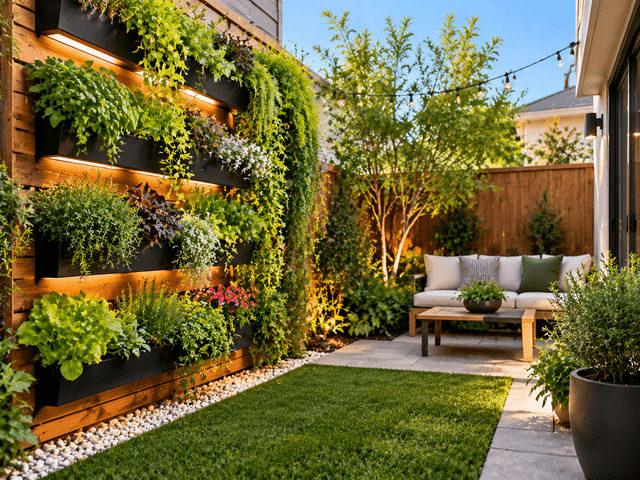
When you run out of floor space, the only direction left is up — and that is exactly why a vertical garden in a small backyard has become one of the smartest moves for townhomes, narrow lots, and courtyard-sized yards across SoCal. A green wall turns a blank fence, side-yard wall, or patio divider into living greenery and privacy without giving up a single square foot of ground. But "grow up" is not as simple as bolting a few pockets to a wall and hoping. Living walls dry out fast, bake against a hot exposure, and can damage the wall behind them if water is not managed. The ones that thrive are the ones where the structure, plant choices, irrigation, and drainage are planned together. This guide covers when a vertical garden makes sense, which systems and plants actually work here, how to water a wall, and how to combine greenery with privacy.
When a Vertical Garden or Green Wall Fits
Vertical greenery shines in exactly the situations where a traditional garden cannot — when ground space is the constraint but wall or fence space is available. It is a natural fit for small-lot living.
- Townhomes, condos, and small lots with little or no planting ground.
- Narrow side yards where a full bed will not fit but a wall will.
- Courtyards and patios that need greenery without losing seating space.
- Blank fences and walls that need softening.
- Spots where you want small yard greenery and privacy from one feature.
If your yard is tight overall, a green wall is one piece of a larger strategy — our small-yard landscaping ideas that maximize space show how vertical elements fit alongside paths, seating, and planting in a compact lot.
Compare Pockets Panels Trellises and Planters
There is no single "green wall" — there are several systems, and they differ a lot in maintenance, cost, and reliability. Choosing the right one for your wall and your patience level is the most important decision.
| System | How it works | Trade-offs |
|---|---|---|
| Trellis + climbing vines | Plants root in the ground and climb a trellis or wires on the wall | Lowest-tech and most forgiving; slower to fill in; needs training and pruning |
| Modular panels / trays | Pre-planted modules or trays mount to a frame on the wall | Cleaner, denser look; higher cost; depends on reliable irrigation |
| Pocket planters (felt/fabric) | Plants grow in fabric pockets attached to the wall | Affordable and flexible; dry out fast and need frequent, consistent watering |
| Freestanding vertical planters | Stacked or tiered planters that stand against a wall | No wall attachment or damage risk; movable; limited height and mass |
For many small SoCal yards, a well-built trellis with a good climbing plant delivers a lush green wall with far less risk than a high-tech living-wall system — it is a great source of vertical planter ideas that do not depend entirely on an irrigation system never failing.
Pick Plants That Thrive on a SoCal Wall
Choosing the right green wall plants SoCal walls can support is where many projects live or die. A wall is a harsher environment than the ground — it drains fast, can bake in reflected heat, and catches wind — so plant selection has to match the exact exposure.
- Match plants to the wall's sun: a hot south- or west-facing wall needs tough, sun- and heat-tolerant plants; a shaded wall needs shade-lovers.
- Favor drought-tolerant plants that handle wall conditions and fast-draining root zones.
- Use low-maintenance plants so the wall does not become a full-time job.
- Consider succulents for modular systems, and vigorous evergreen climbers for trellises and privacy.
- Account for wind, which dries plants faster and can stress a tall wall of greenery.
Get the Irrigation and Drainage Right
Irrigation is the single biggest reason living walls succeed or fail. Because the root zone is thin and vertical, it dries out quickly, so living wall irrigation almost always means automated drip on a timer — not hand-watering. Just as important is what happens to the water after it passes through.
- Use drip irrigation set up and maintained correctly, with a timer sized to how fast the wall dries.
- Check the system regularly for clogged emitters and dry zones, especially at the top where walls dry first.
- Protect the building — a proper moisture barrier behind the system keeps water off the wall or fence so it does not rot, stain, or damage the structure.
- Plan drainage and an overflow catch at the base so excess water is collected or directed away, not pooling against the foundation.
- Design the mounting to carry the saturated weight of the planted wall safely.
Combine Privacy and Greenery on One Wall
One of the best reasons to build up is that a privacy green wall does two jobs at once — it screens a view and adds greenery in the same footprint. On a small lot where a hedge would eat the whole yard, a vertical solution keeps the ground open.
- Use a trellis with dense evergreen climbers to screen a neighbor's window or an unattractive view.
- Raise the effective height of a fence with a planted panel or trellis extension where rules allow.
- Combine a green wall with lighting and seating to turn a blank boundary into a usable, private outdoor room.
- Keep the screen where the privacy is actually needed rather than wrapping the entire yard.
Frequently Asked SoCal Vertical Garden Questions
Do Green Walls Actually Work in SoCal?
Yes, when they are designed for the climate. The keys are matching plants to the wall's sun and wind exposure, using automated drip irrigation because vertical root zones dry out fast, protecting the wall behind the system with a moisture barrier, and planning drainage. A trellis with climbing vines is often the most reliable green wall for a small SoCal yard, while high-tech living-wall panels can work beautifully but depend on consistent irrigation and maintenance.
Which Plants Survive on a Living Wall Here?
The best green wall plants SoCal walls support depend on the exposure. Hot, sunny walls need tough, heat- and drought-tolerant plants and succulents; shaded walls need shade-lovers; and trellises for privacy do well with vigorous evergreen climbers. Fast-draining, low-maintenance, wind-tolerant plants tend to thrive because a wall is harsher than the ground. Choose species for the specific wall rather than by looks alone.
How Do You Water a Vertical Garden?
Almost always with automated drip irrigation on a timer, because a vertical garden's thin root zone dries out far faster than a garden bed and cannot rely on hand-watering. The system should be sized to how quickly the wall dries, checked for clogged emitters, and paired with a moisture barrier to protect the wall and a drainage catch at the base. Reliable irrigation is the difference between a lush living wall and a dead one.
Are Green Walls High-Maintenance?
It depends on the system. Pocket and modular living walls can be higher-maintenance because they dry out quickly and depend entirely on the irrigation working. A trellis with an established climbing plant is generally far more forgiving — closer to normal pruning and training than constant upkeep. Choosing the right system for your patience level, and getting the irrigation and plant selection right, keeps maintenance manageable.
Design Your Green Wall Today
If you want a vertical garden in a small backyard that actually thrives — adding greenery and privacy without stealing floor space — the answer is planning the structure, plants, irrigation, and drainage together. Contact BuildCal Landscape for a vertical-garden design consultation or call +1 (818) 303-1570. Our hardscaping and structure services can build and mount the wall or trellis, and our landscape and planting services can select the plants and set up the irrigation so your Glendale or Los Angeles green wall stays lush and low-hassle.
Thinking about a new outdoor space?
We’d love to hear your ideas. Let’s explore what’s possible—no pressure, just a friendly conversation.
Give us a call:
+1 (818) 303-1570
Frequently Asked Question
WHY DO I NEED TO HIRE A LICENSED CONTRACTOR WHEN AN UNLICENSED ONE MAY BE CHEAPER?
There is always a price. Working with a licensed contractor is highly recommended for many reasons: A licensed and insured contractor offers many protections to the property owner, especially regarding residential properties. A contractor cannot obtain a State Contractors License without first possessing a minimum amount of experience. In addition, the contractor must pass a business management test. The applicant also may be subject to a criminal history background check, and must not have any unresolved contracting complaints outstanding. Here in California, if a contractor has employees, they're required to carry workers compensation insurance. The importance of this alone cannot be overstated. If a worker is injured on your property and the contractor doesn't have insurance, you could be legally liable to pay for injuries and rehabilitation. Your homeowner's insurance may not cover those costs