
OUR MISSION IS TO TAILOR FOR EACH CLIENT A BEAUTIFUL, FUNCTIONAL AND ENDURING OUTDOOR ENVIRONMENT THAT WILL PROVIDE A PLACE OF SERENITY FOR FRIENDS AND FAMILY TO APPRECIATE FOR YEARS TO COME.

BuildCal Landscape Landscape Design & Planting Article
Fixing SoCal Clay Soil for a Garden - Compost, Amendments & What Actually Works
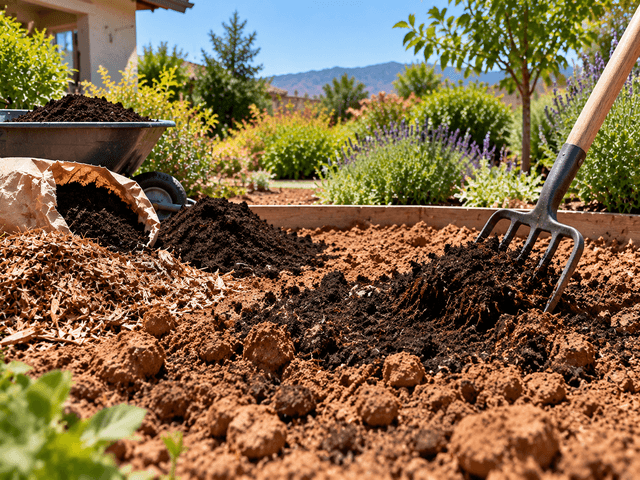
If you have ever tried to dig a planting hole in a SoCal yard and hit something that felt like brick, you have met our region's clay. It is dense, slow-draining, and rock-hard when dry — and it defeats a lot of gardeners who reach for the wrong fix. The good news: you absolutely can plant successfully in it, and learning how to improve clay soil for a garden in California is mostly about doing a few right things and skipping a few popular mistakes. The wrong moves — dumping in sand, relying on a bag of gypsum, or digging a nicely amended hole in the middle of solid clay — often make things worse. The right moves are unglamorous but reliable: build organic matter with compost over time, plant on mounds or in raised beds to escape poor drainage, choose plants that tolerate clay, and water the way clay actually wants. This guide walks through all of it.
What Makes SoCal Clay So Hard to Plant
Clay is not "bad" soil — in fact it is often rich in nutrients. The problem is its physical structure. Clay is made of tiny, tightly packed particles, which is why it behaves the way it does in a garden.
- Slow drainage: Water moves through clay slowly, so soil stays waterlogged after rain or irrigation and roots can suffocate or rot.
- Compaction: Clay compacts easily, leaving little air space for roots.
- Hard when dry: In dry season it sets like concrete, and roots struggle to penetrate.
- Hardpan clay: Some yards have a dense, compacted layer below the surface that blocks both drainage and root growth.
Because so many clay-soil problems are really the drainage problems clay soil creates, improving the soil and improving drainage usually go hand in hand — you cannot fix one while ignoring the other.
Compost and Organic Matter Are the Real Fix
If there is one lesson here, it is this: the reliable way to amend clay soil is organic matter, added consistently over time. Compost clay soil regularly and it gradually changes structure — improving drainage, air space, and biological life — in a way no single quick fix can match.
- Work generous amounts of compost and organic matter into the planting area, not just a single hole.
- Amend the whole bed to a reasonable depth so roots have improved soil to grow into.
- Top-dress with compost and mulch over time; organic matter breaks down and needs replenishing.
- Be patient — soil improvement is gradual, and clay rewards consistency over one heroic effort.
- Avoid walking on or compacting the improved soil, which undoes your progress.
| Common "fix" | Does it work? | Why |
|---|---|---|
| Compost / organic matter | Yes — the real fix | Improves structure, drainage, air, and biology over time |
| Adding sand | No — often makes it worse | Sand plus clay without enough organic matter can set up dense, concrete-like |
| Gypsum (as a cure-all) | Usually not for typical garden clay | Mainly helps high-sodium (sodic) soils, which most SoCal gardens are not |
| Mounding / raised beds | Yes — for drainage | Lifts roots above slow-draining clay |
The Gypsum Myth and When It Helps
Gypsum is one of the most oversold products in the clay-soil aisle. The gypsum clay myth is the belief that a bag of gypsum will magically loosen any heavy clay. In reality, gypsum works by displacing sodium, so it primarily helps sodic (high-sodium) soils — and most Southern California garden clay is not sodic.
- Gypsum can help genuinely sodic or alkali soils, where sodium is the problem.
- For ordinary, non-sodic clay, gypsum generally does not meaningfully improve structure — organic matter does.
- If you suspect sodic conditions or persistent problems, a soil test tells you what you are actually dealing with.
- Do not skip compost in favor of gypsum; for most gardens, organic matter is the fix and gypsum is not.
Mound and Plant High to Beat Drainage
Even with amendment, clay drains slowly, so the smartest move is often to plant above it rather than fighting it. Mounding and raised planting lift roots into better-draining soil and are especially valuable for plants that hate wet feet.
- Plant on mounds or berms so the crown and upper roots sit above the surrounding clay.
- Use raised beds for vegetables and sensitive plants to control the soil and drainage entirely.
- Avoid the "bathtub" mistake — digging a hole in solid clay and backfilling with rich, fluffy amended soil creates a sump that collects water and drowns roots. Amend the whole bed, or plant into native soil with the plant set slightly high.
- For hardpan, breaking up the compacted layer or planting above it may be necessary so water and roots can move.
Mounding and grading work best as part of a real planting plan — the same principle behind amending soil and grading in a planting plan rather than treating each hole in isolation.
Choose Clay-Tolerant Plants and Water Them Right
You can also make life easier by choosing plants that already tolerate heavy soil, and by watering the way clay demands. The best soil for planting SoCal gardeners can work with is often the clay they already have — improved, mounded, and matched to the right plants.
- Favor drought-tolerant plants suited to clay soil and many California natives adapted to local ground.
- Lean on low-maintenance plants that handle tough soil so the garden is resilient while the soil improves.
- Water deeply and infrequently — clay holds moisture a long time, so frequent watering keeps roots waterlogged.
- Let the soil dry appropriately between waterings; overwatering clay is a top cause of plant loss.
- Mulch to moderate moisture and temperature and to feed the soil as it breaks down.
Frequently Asked SoCal Clay Soil Questions
How Do I Improve Clay Soil for Planting?
The reliable method is adding organic matter — compost worked into the bed and replenished over time — which gradually improves structure, drainage, and air space. Combine that with mounding or raised beds to lift roots above slow-draining clay, clay-tolerant plants, and deep, infrequent watering. Avoid quick fixes like sand or relying on gypsum, and be patient: clay soil improves steadily rather than overnight.
Does Gypsum Actually Work on Clay Soil?
Gypsum mainly helps high-sodium (sodic) soils by displacing sodium, and most Southern California garden clay is not sodic — so for typical clay, gypsum usually does not meaningfully loosen the soil. Organic matter is the real structural fix. If you suspect genuinely sodic or alkali conditions or have persistent problems, a soil test will tell you whether gypsum is appropriate rather than guessing.
Can I Just Add Sand to Fix Clay?
No — adding sand to clay is a common mistake that often makes things worse. Without a large amount of organic matter, sand and clay can combine into a dense, concrete-like mix. The dependable amendment is compost and organic matter, not sand. If drainage is the main issue, mounding, raised beds, and grading are far more effective than trying to "sandy up" heavy clay.
What Plants Grow Well in Clay Soil?
Many California natives and drought-tolerant plants tolerate clay because they evolved in local soils, and numerous low-maintenance ornamentals handle heavy ground once drainage is managed. The best strategy is to improve the soil, plant slightly high or on mounds, and choose species suited to clay rather than fighting to grow moisture-sensitive plants in it. Match the plant to the soil and the watering to the clay.
Get a Planting & Soil-Prep Plan Today
If you want to know how to improve clay soil for a garden in California and actually get plants to thrive, the fix is soil prep and drainage done right — not a bag of the wrong amendment. Contact BuildCal Landscape for a planting and soil-prep consultation or call +1 (818) 303-1570. Our landscape design and installation services can amend the beds, plan mounding and drainage, and select clay-tolerant plants so your Glendale or Los Angeles garden grows in the soil you have.
Thinking about a new outdoor space?
We’d love to hear your ideas. Let’s explore what’s possible—no pressure, just a friendly conversation.
Give us a call:
+1 (818) 303-1570
Frequently Asked Question
WE WANT A LOT DONE, BUT CANNOT AFFORD TO DO IT ALL NOW. CAN YOU STILL WORK WITH US?
Yes – it is not uncommon to do a project in phases, especially when there are such constraints as budget and time. Because we draw up our own plans, we can design a project to be installed in phases. Once the complete plan is established, the property owner can easily pick and choose which parts to be completed now and in the future.