
OUR MISSION IS TO TAILOR FOR EACH CLIENT A BEAUTIFUL, FUNCTIONAL AND ENDURING OUTDOOR ENVIRONMENT THAT WILL PROVIDE A PLACE OF SERENITY FOR FRIENDS AND FAMILY TO APPRECIATE FOR YEARS TO COME.

BuildCal Landscape Hardscaping & Drainage Article
Mossy, Muddy North-Side Yard That Never Dries? Fixing the Damp, Shady Side of the House in SoCal
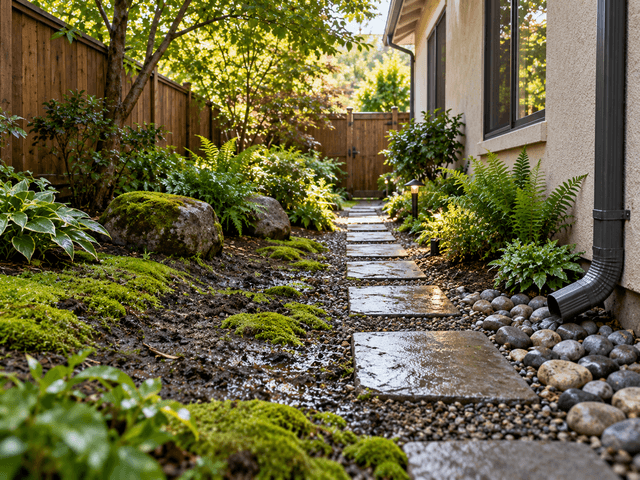
The real shady damp side yard fix starts with water, not plants. If the north side of your house stays mossy, muddy, and cold long after the rest of the yard has dried, the cause is almost always drainage — roof runoff, AC condensate, and ground that slopes toward the house instead of away from it. Fix the water first (redirect downspouts, establish a positive grade, add a drain where needed), then add slip-safe surfaces and true shade plants. Done in that order, the space becomes usable and, just as important, you protect the house from chronic moisture against the foundation.
How do you fix a damp, shady side yard?
Address it in order. First, manage the water: redirect downspouts and AC condensate away from the area, regrade so the ground slopes away from the house, and install a drain (such as a French drain or channel drain) where water still collects. Second, make the space safe to walk with a slip-resistant surface instead of slick, mossy concrete or mud. Third, plant shade-loving species suited to the conditions. Fixing drainage before planting is what makes the solution last — plants alone can't dry out a wet, poorly graded side yard.
What does fixing a shady, damp side yard involve?
It's primarily a drainage and hardscape project, finished with the right planting. The work typically means redirecting water sources, correcting the grade, adding drainage where needed, replacing or installing a safe walking surface, and then choosing plants that actually thrive in deep shade and even moisture. Because the foundation of the fix is grading and drainage, it draws on BuildCal's hardscape and drainage construction, where proper base preparation and grading matter far more than the surface you see on top.
Why drainage comes first
A north-facing side yard gets little direct sun, so whatever water arrives evaporates slowly — and if the grade sends roof runoff or condensate toward the house, the soil stays saturated. No plant or surface can overcome that. Getting the water moving is the step everything else depends on, which is why a proper assessment of grade and water sources comes before any planting plan.
Step one: manage the water
Most damp side yards share the same culprits, and each has a fix.
- Downspouts: Redirect roof runoff away from the side yard and the foundation rather than letting it dump into the low, shady strip.
- AC condensate: The condensate line and any other water sources should drain away from the house, not pool beside it.
- Grade: Establish a positive slope so the ground falls away from the foundation. Correcting the grade is often the single most effective fix.
- Drainage: Where water still collects, a drain carries it off. Our comparison of a French drain versus regrading explains when each is the right call, and our broader landscape drainage solutions guide covers the options.
Why moss and chronic damp matter
Moss isn't the problem itself — it's a signal. It grows where moisture lingers in shade, so a mossy side yard is telling you the area stays wet too long. That matters beyond appearance: chronic dampness against the house can contribute to mold and, over time, foundation and moisture issues inside the home. Treating the damp side yard as home protection, not just a cosmetic cleanup, is the right frame. Clearing the moss without fixing the water just means it comes back — and leaves the underlying risk in place.
Step two: slip-safe surfaces
Shady, damp surfaces get slippery, and a mossy concrete path or a muddy strip along the house is a genuine fall hazard. Once drainage is handled, a slip-resistant surface makes the space safe and usable. Textured pavers, stable decomposed granite, or a well-built path work far better here than smooth, algae-prone concrete. Our honest comparison of decomposed granite, gravel, and pavers covers which surfaces hold up to mud and shade. One caution: avoid piling heavy, moisture-holding mulch in a chronically wet, shady spot — it keeps the ground soggy and can make the damp worse rather than better.
Step three: plants for deep shade
Only after the water and surfaces are handled does planting make sense — and the plants have to suit genuine shade. Many "shade-tolerant" plants still want some light and will sulk on a true north side, so the palette needs species that handle deep shade and the local climate. Our guide to shade plants for the South Pasadena area offers suitable options for these conditions. Chosen well, shade plants turn a dim, mossy corner into a cool, green, intentional part of the yard.
Who typically needs this work?
Homeowners with a narrow north-side yard or a shaded side strip that stays wet, mossy, and slick are the core audience — common across Glendale, La Crescenta, La Cañada, and the valleys, where houses sit close together and side yards get little sun. It also suits owners noticing moisture against the house, families wanting a safe path down the side of the home, and property managers dealing with persistently damp, hazardous walkways.
What to check before starting your landscaping project
- Where is the water coming from — downspouts, AC condensate, a neighbor's slope, or grade?
- Does the ground slope toward or away from the house?
- Is there standing water or mud after rain or irrigation?
- Is the existing surface slippery or mossy and unsafe to walk?
- Is there any sign of moisture against the foundation or wall?
- Are current plants struggling because the spot is too shady or too wet?
Damp side-yard fixes at a glance
| Step | When you'd need it | Key considerations | Notes before starting |
|---|---|---|---|
| Redirect water | Downspouts or condensate feed the area | Move roof and AC water away from the house | Do this first |
| Regrade / drainage | Ground slopes toward house or pools | Positive grade; French drain where needed | The core of a lasting fix |
| Slip-safe surface | Path is mossy, slick, or muddy | Textured pavers or stable DG, not smooth concrete | Avoid heavy mulch in wet shade |
| Shade planting | After water and surfaces are fixed | True deep-shade species for the climate | Plant last, not first |
What mistakes lead to a failed or costly side-yard fix?
- Planting first and hoping greenery will dry out a wet, poorly graded strip.
- Ignoring the grade, so water keeps running toward the foundation.
- Leaving downspouts and AC condensate draining into the shady area.
- Just pressure-washing the moss off without fixing the moisture behind it.
- Using smooth concrete that turns slick, instead of a slip-safe surface.
- Piling heavy mulch in a chronically wet spot, keeping it soggy.
How do you choose the right landscaping company in Glendale?
For a damp side yard, the priority is a licensed landscape contractor (CSLB) who treats it as a drainage and grading problem first, not a planting one. Look for genuine attention to grade, water sources, and base preparation, quality slip-safe hardscape, realistic plant choices for deep shade, and a clear written estimate and scope. A company that leads with "let's fix the water" rather than "let's add plants" understands what actually makes these side yards fail — and what makes a fix last.
How does BuildCal help you?
BuildCal is a licensed landscape contractor (California State License Board / CSLB) in Glendale, and we approach a mossy, damp side yard in the right order. We start with an on-site assessment of the grade, downspouts, AC condensate, and where water collects, then correct the drainage — redirecting water, establishing a positive grade away from the house, and adding a drain where needed. From there we install a slip-safe surface and choose true shade plants suited to the spot. Because chronic damp against the house is a home-protection issue, we treat the fix accordingly, and you get a written estimate and scope before work begins.
Steps to request your project from BuildCal
- Share photos of the side yard and where water pools, with a short description of the problem.
- Schedule an on-site assessment of the grade, drainage, water sources, and access.
- Receive a written estimate with scope, drainage, surfaces, plants, and timeline.
- Approve the plan and schedule the work.
- Installation and a final walkthrough, with care and maintenance notes.
Frequently asked questions about fixing a damp, shady side yard
Why does my north-side yard stay wet and never dry out?
Because it gets little direct sun, so moisture evaporates slowly, and usually because water is being directed into it — roof runoff, AC condensate, or a grade that slopes toward the house. The shade and the water together keep the soil saturated. That's why the fix starts with managing the water and grading the ground to drain away from the home, rather than with plants, which can't dry out a poorly drained strip on their own.
How do I get rid of moss on the side of my house?
Moss is a sign the area stays too wet in shade, so removing it without fixing the moisture just invites it back. The lasting solution is to reduce the dampness: redirect downspouts and condensate, correct the grade, and add drainage where water collects. Once the ground dries appropriately and you have a slip-safe surface, moss has far less reason to return. Treat the moss as a symptom, not the root problem.
Is a damp side yard bad for my house?
It can be. Chronic moisture against the foundation and walls can contribute to mold and, over time, moisture or foundation issues inside the home. That's why a persistently wet, shady side yard is worth treating as home protection rather than just a cosmetic nuisance. Correcting drainage and grading so water moves away from the house addresses both the unusable yard and the risk to the structure at the same time.
Do I need a French drain or just regrading?
It depends on the site. Sometimes correcting the grade so the ground slopes away from the house is enough; other times, where water still collects or there's nowhere for it to go, a French drain or channel drain is needed to carry it off. Often it's a combination. An on-site assessment determines which is right — our guide comparing a French drain versus regrading walks through when each approach makes sense.
What surface is best for a shady, slippery path?
A slip-resistant one. Smooth concrete grows algae and gets dangerously slick in damp shade, so textured pavers or a stable, well-built decomposed granite path are usually better choices for safe footing. The right surface depends on how the space is used and how much foot traffic it sees. Avoid piling heavy, moisture-holding mulch along a chronically wet path, since it keeps the area soggy and can make things worse.
What plants grow in a deep-shade side yard?
Species that genuinely tolerate deep shade and the local climate — many plants labeled "shade-tolerant" still want some light and struggle on a true north side. Once drainage is handled, a palette of real shade lovers can turn the space green and inviting. Our guide to shade plants for the South Pasadena area suggests suitable options. The key is choosing for the actual conditions and planting only after the water and surfaces are sorted.
Request your estimate today
If you need a shady damp side yard fix in Glendale or the greater Los Angeles area — one that solves the drainage, makes the path safe, and protects your home — BuildCal can help. Send us a few photos of the side yard and where water collects to schedule an on-site assessment and get a written estimate before any work begins. Call (818) 303-1570 or request your free estimate online.
Thinking about a new outdoor space?
We’d love to hear your ideas. Let’s explore what’s possible—no pressure, just a friendly conversation.
Give us a call:
+1 (818) 303-1570
Frequently Asked Question
CAN YOU PROVIDE A LANDSCAPE PLAN?
Yes – we have our own Design group who can draw anything from basic hand-drawn layouts and sketches, highly detailed concept plans, or a complete set of working construction drawings. Clients will often call upon us to provide this service as a first step to their overall project.