
OUR MISSION IS TO TAILOR FOR EACH CLIENT A BEAUTIFUL, FUNCTIONAL AND ENDURING OUTDOOR ENVIRONMENT THAT WILL PROVIDE A PLACE OF SERENITY FOR FRIENDS AND FAMILY TO APPRECIATE FOR YEARS TO COME.

BuildCal Landscape Landscape Design & Functional Yards Article
Landscaping Around Backyard Chickens in SoCal - Coop Zone, Beds, Fencing & Mud Control
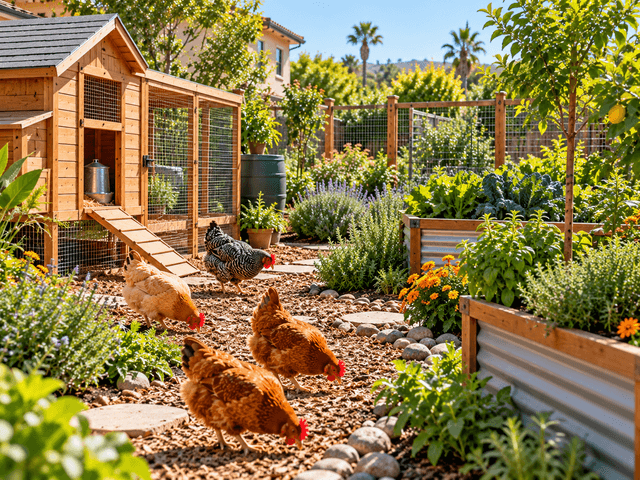
Good backyard chicken landscaping is about zoning the yard: give the birds a secure coop and run, protect your planting beds from scratching and pecking, and control the mud and mess so the rest of the yard stays usable and attractive. Chickens are hard on landscaping if you let them roam freely — they scratch, dig, and churn soil into mud — so the design has to separate "their" space from "yours" with the right fencing, surfaces, and drainage. Here's how to keep a tidy, functional yard with chickens in Southern California, and where a licensed landscaper helps.
How do you landscape a yard with chickens?
Create a defined coop-and-run zone with predator-proof fencing and good drainage, keep your vegetable and ornamental beds protected or physically separated from the birds, and use durable, easy-to-clean surfaces around the coop to control mud. Choose plants that are safe around chickens, compost the manure before using it, and check your local rules first. In short, design the yard as two coordinated areas — the chicken zone and the garden zone — rather than letting the flock treat the whole yard as a run.
What does landscaping around chickens involve?
It's a mix of fencing, hardscape, drainage, and planting, planned together. You're building a secure, well-drained coop and run, protecting or separating the garden areas, and managing the transitions so mud and mess don't spread. Because it draws on fencing, surfaces, and beds at once, it sits within BuildCal's broader additional yard and property services alongside standard landscaping. The goal is a yard that works for the chickens and still looks and functions well for the people using it.
Design the yard in zones
The single most useful idea is zoning. Decide where the coop and run live, where the garden and seating areas are, and how you'll keep them separate. Free-ranging chickens over an entire yard almost always ends in bare, muddy, scratched-up ground, so a clear boundary — fencing, pathways, or raised beds acting as dividers — protects the parts of the yard you want to keep nice while giving the birds their own healthy space.
Predator-proof fencing for the coop and run
Fencing is where many backyard setups fall short. Standard "chicken wire" keeps chickens in but does little to keep predators out — raccoons, coyotes, and dogs can tear through or reach through it. For real protection, the run and coop should use hardware cloth (welded wire mesh), not just chicken wire, with the mesh extended into a buried apron around the perimeter so digging predators can't tunnel under. Just as important, the coop itself needs to be secured at night, when most predators hunt. Our fence installation guidance for Glendale covers the fencing side, and the same build-it-right principle applies to the run enclosure.
Protecting beds and keeping the garden nice
Chickens and tender garden beds don't mix unsupervised. The practical answer is physical separation: raised beds the birds can't reach, protected planting areas, and barriers around anything you don't want scratched up. Raised beds do double duty here — they grow vegetables well and act as a boundary — and our guide to raised-bed vegetable gardens in SoCal is a useful companion. A supervised "chicken-friendly" area can be planted with hardy, safe species, while the beds you care about stay fenced or elevated out of reach.
Plants and chicken safety
Plant choice matters for the birds' health, not just the garden's looks. Some common landscape and garden plants are toxic to chickens, so before planting anything in or near the run, verify each species against a current, reputable chicken-safe plant list. Treat "probably fine" as a reason to check, not to plant — species-by-species verification is the safe habit. Hardy, non-toxic shrubs and grasses can give the run shade and enrichment without risk.
Mud and mess control
A muddy run is the most common complaint, and it's really a drainage and surfaces problem. Chickens churn bare soil, and without proper grading and drainage the run turns to mud after every rain or hose-down. The fixes are good drainage and the right ground surface — our overview of landscape drainage solutions covers moving water away from the run, and our comparison of decomposed granite, gravel, and pavers helps you choose a durable, cleanable surface for the coop surround and paths. Keeping the area well-drained also makes it easier to keep clean and reduces odor.
Composting the manure
Chicken manure is a great soil amendment, but it's "hot" — too high in nitrogen to use fresh, and it can burn plants and carry pathogens. Compost it fully before adding it to garden beds. Planning a spot for composting as part of the layout keeps the yard tidy and turns a waste problem into free fertilizer for the beds.
Check your local rules first
Before building anything, confirm your local rules — they vary by city and HOA. Many areas allow backyard hens but limit the number, frequently restrict or prohibit roosters, and set setback requirements for how far a coop must sit from property lines or dwellings. HOAs may have their own restrictions. This is general guidance, not legal advice, so verify current requirements with your city and HOA before you design the coop's size and location.
Who typically needs chicken-area landscaping?
Homeowners keeping a small backyard flock who still want an attractive, functional yard are the core audience — increasingly common across Glendale, La Crescenta, La Cañada, and the valleys. It suits families adding chickens for eggs and wanting the project done right, owners frustrated by a muddy or torn-up run, and anyone integrating a coop into a broader yard renovation rather than bolting it on.
What to check before starting your chicken landscaping project
- Do your city and HOA allow chickens, how many, and are roosters restricted?
- What coop setbacks from property lines or the house apply?
- Where will the coop-and-run zone go, and how will it be separated from the garden?
- Is the fencing hardware cloth with a buried apron, and is the coop secure at night?
- How will you drain the run and surface it to prevent mud?
- Are the plants in and near the run verified safe for chickens?
Chicken yard elements at a glance
| Element | When it matters | Key considerations | Notes before starting |
|---|---|---|---|
| Predator fencing | Every coop and run | Hardware cloth + buried apron; night-secure coop | Chicken wire alone isn't predator-proof |
| Bed protection | Keeping the garden intact | Raised beds and barriers separate birds from plants | Verify plants are chicken-safe |
| Drainage & surfaces | Preventing a muddy run | Grading plus a durable, cleanable surface | Plan water flow before surfacing |
| Rules & setbacks | Before building | Hen limits, rooster rules, coop setbacks, HOA | Verify with city and HOA first |
What mistakes lead to a muddy, torn-up chicken yard?
- Letting chickens free-range the whole yard, so everything gets scratched and muddy.
- Using chicken wire as predator protection instead of hardware cloth with a buried apron.
- Leaving the coop unsecured at night, when predators are most active.
- Skipping drainage, so the run turns to mud after rain or cleaning.
- Planting species toxic to chickens in or near the run.
- Using fresh manure on beds instead of composting it first.
- Building without checking hen limits, rooster rules, or coop setbacks.
How do you choose the right landscaping company in Glendale?
For a chicken-friendly yard, look for a licensed landscape contractor (CSLB) who can handle fencing, hardscape, drainage, and planting together, understands predator-proof construction, and knows local setback and HOA considerations. A clear written estimate and scope, durable base and drainage work, and a design that keeps the rest of the yard attractive all matter — this is as much about the garden and surfaces as it is about the coop.
How does BuildCal help you?
BuildCal is a licensed landscape contractor (California State License Board / CSLB) in Glendale, and we design chicken-friendly yards as coordinated spaces: a secure, well-drained coop-and-run zone with hardware-cloth fencing and a buried apron, protected or raised garden beds, and durable, cleanable surfaces that keep mud under control. We start with an on-site assessment of your yard, grade, drainage, and access, flag local setback and HOA considerations, and plan a spot for composting the manure. You get a written estimate and scope before work begins, and a yard that stays tidy and attractive while supporting a healthy flock.
Steps to request your project from BuildCal
- Share photos of your yard and any existing coop, and describe your flock and goals.
- Schedule an on-site assessment of the space, grade, drainage, and access.
- Receive a written estimate with scope, fencing, surfaces, beds, and timeline.
- Approve the plan and schedule the work.
- Installation and a final walkthrough, with care and maintenance notes.
Frequently asked questions about backyard chicken landscaping
How do I keep chickens from destroying my garden?
Separate the birds from the beds. Give chickens a defined run and keep your vegetables and ornamentals in raised beds or protected areas they can't reach. Chickens naturally scratch and dig, so unsupervised free-ranging over the whole yard almost always leads to bare, muddy ground. Zoning the yard — a clear chicken area and a protected garden area, divided by fencing, paths, or raised beds — is the reliable way to keep both healthy.
What fencing keeps predators away from chickens?
Use hardware cloth (welded wire mesh), not just chicken wire, which keeps birds in but doesn't stop determined predators. Extend the mesh into a buried apron around the run so animals can't dig underneath, and make sure the coop itself is securely closed at night, when raccoons, coyotes, and dogs are most active. Predator protection is about the whole enclosure — mesh, apron, and a secure nighttime coop working together.
What's the best ground cover for a chicken run to avoid mud?
Start with drainage — a muddy run is usually a water problem — then choose a durable, cleanable surface. Proper grading to move water away, combined with a surface suited to the run, keeps things dry and easy to maintain. Our comparison of decomposed granite, gravel, and pavers covers the trade-offs for mud, weeds, and upkeep, so you can pick a surface that holds up to daily use and cleaning.
Are there plants that are poisonous to chickens?
Yes, several common landscape and garden plants are toxic to chickens. Because the list is species-specific and chickens may nibble what's within reach, verify every plant in or near the run against a current, reputable chicken-safe plant list before planting. Treat anything you're unsure about as a reason to check rather than risk it. Hardy, non-toxic shrubs and grasses can still give the run shade and enrichment safely.
Do I need a permit or approval to keep chickens?
Rules vary by city and HOA. Many areas allow a limited number of hens, frequently restrict or ban roosters, and set coop setback requirements from property lines or homes. HOAs may add their own limits. This is general guidance, not legal advice, so confirm the current requirements with your city and HOA before you design the coop's size and location. Getting this right up front avoids costly changes later.
Can I use chicken manure in my garden?
Yes, but not fresh. Chicken manure is "hot" — very high in nitrogen — so used raw it can burn plants and may carry pathogens. Compost it fully first, and it becomes an excellent soil amendment for your beds. Planning a composting spot into the yard layout keeps things tidy and turns the flock's waste into free fertilizer, closing the loop between the chicken zone and the garden.
Request your estimate today
If you want backyard chicken landscaping that keeps your SoCal yard tidy, secure, and attractive — coop zone, protected beds, predator fencing, and mud control — BuildCal can design and build it. Send us a few photos of your yard to schedule an on-site assessment in Glendale or the greater Los Angeles area and get a written estimate before any work begins. Call (818) 303-1570 or request your free estimate online.
Thinking about a new outdoor space?
We’d love to hear your ideas. Let’s explore what’s possible—no pressure, just a friendly conversation.
Give us a call:
+1 (818) 303-1570
Frequently Asked Question
WHAT ABOUT THE BUDGET FOR MY LANDSCAPE INSTALLATION?
There is extensive documentation of the value that intelligent, thoughtful landscape design can add to your home. In many parts of California, the value of the land surrounding your home is equal to, or sometimes even greater than the value of the home itself. Well designed, installed and maintained landscaping can lead to a substantial increase in the overall value of your home.
A budgeting rule of thumb for a complete landscape installation or renovation is 5-10% of the total value of your home, including the land. Therefore, if you own a $550,000 home, plan to spend between $27,500-$55,500 for a basic, functional landscape that will return up to 200 percent in value. Unusual materials mature specimen plantings, or elaborate hardscape will add to this figure.
The most successful landscape projects start with a realistic budget. Don’t hesitate to share your budget with the landscape designer. The designer can help strike a balance between special materials and cost-conscious choices to create a beautiful space that meets your functional, aesthetic, and budget preferences before you ask contractors for bids.
Finally, be sure to budget for the ongoing care and maintenance of your new surroundings. Good maintenance will protect your investment, as well as ensure many years of personal enjoyment and satisfaction.