
OUR MISSION IS TO TAILOR FOR EACH CLIENT A BEAUTIFUL, FUNCTIONAL AND ENDURING OUTDOOR ENVIRONMENT THAT WILL PROVIDE A PLACE OF SERENITY FOR FRIENDS AND FAMILY TO APPRECIATE FOR YEARS TO COME.

BuildCal Landscape Landscape Design & Planting Article
Raised-Bed Vegetable Gardens in SoCal - Beating Clay Soil, Gophers & Heat
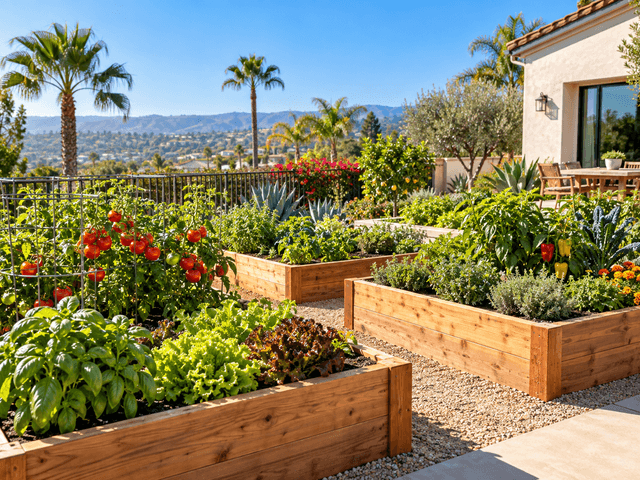
A backyard vegetable garden sounds simple until you meet a Southern California yard — rock-hard clay that roots cannot penetrate, gophers that eat carrots and chew through drip lines from below, and summer heat that dries a bed out by noon. A well-built raised bed garden in Southern California sidesteps all three at once, but only if it is designed for those exact problems rather than dropped in like a big-box kit. The height has to clear the clay, the base needs gopher wire, the soil mix has to drain without baking, and the watering has to run on drip and a timer so the bed survives a heat wave. This guide walks through bed design, gopher-proofing, soil, irrigation, placement, and pest control — and when it is worth having beds built professionally instead of rebuilding a failed DIY project twice.
Why SoCal Yards Fight Your Vegetable Garden
Most vegetable garden SoCal problems trace back to three site conditions working against you at the same time. Understanding them first is what makes a raised bed the right fix rather than an expensive planter box.
- Heavy clay: Dense, compacted clay drains slowly, holds little air, and can waterlog roots in winter while setting like concrete in summer.
- Gophers: Pocket gophers tunnel up from below, eat roots and bulbs, and can damage buried drip tubing.
- Heat and evaporation: Long, dry, hot stretches pull moisture out of shallow soil fast, stressing shallow-rooted vegetables.
- Alkaline, low-organic soil: Many local soils are alkaline and low in organic matter, which limits nutrient availability for hungry crops.
A raised bed lets you control the soil, drainage, and root barrier instead of fighting the native ground. It is also why raised beds clay soil pairings work so well: you garden in an amended mix on top while the clay below simply becomes something to drain over, not plant into. If your yard also pools or stays soggy, it helps to understand how clay soil and drainage problems develop before you set the beds.
Design a Raised Bed Garden for SoCal Clay
Bed height, material, and base detail matter more than shape. A raised bed garden in Southern California generally performs better when it is deep enough to give roots real room above the clay and built from materials that tolerate heat and moisture.
| Bed element | Practical guidance | Why it matters in SoCal |
|---|---|---|
| Height | Deeper beds give root crops and drainage more room above compacted clay | Roots grow in your mix, not the clay; water drains through instead of pooling |
| Width | Narrow enough to reach the center from either side without stepping in | Keeps the soil loose and uncompacted for better air and drainage |
| Material | Rot- and heat-tolerant options such as appropriate wood, metal, block, or masonry | Handles sun exposure and irrigation moisture over many seasons |
| Base detail | Line the bottom with gopher wire before filling | Blocks gophers from tunneling up into the root zone |
| Drainage | Open bottom to native soil, plus a mix that drains freely | Prevents a waterlogged bed sitting on slow clay |
Line the Base With Gopher Wire First
A gopher proof raised bed starts at the bottom, before any soil goes in. Galvanized hardware cloth or a purpose-made gopher wire mesh laid across the base and up the lower sides creates a physical barrier that gophers cannot chew through easily. Fasten it securely so there are no gaps at the corners or edges, since a gopher only needs a small opening.
- Install the wire before filling, not after — retrofitting a full bed is far harder.
- Overlap seams and secure edges so the mesh forms a continuous basket.
- Choose a corrosion-resistant mesh so it lasts as long as the bed.
- Remember the wire stops burrowing pests from below; it does not stop birds or squirrels from above.
Fill Beds for Drainage Not Waterlogging
The soil mix is where many DIY beds quietly fail. Filling a bed with heavy native clay, or with a mix that compacts and holds water, recreates the exact problem the bed was meant to solve. A productive vegetable mix generally balances a quality garden or raised-bed soil with compost for organic matter, structured so it holds moisture but still drains.
- Blend in compost for organic matter, nutrients, and better structure.
- Avoid dumping in straight native clay, which compacts and drains poorly.
- Keep the mix loose; do not walk on or compress the bed.
- Top with mulch to slow evaporation and moderate soil temperature.
- Refresh compost and organic matter between plantings, since it breaks down over time.
Pairing edible beds with low-maintenance, low-water plants around the garden's edges keeps the whole area easier to care for while the beds do the heavy lifting.
Water With Drip on a Timer
Hand-watering a hot-climate garden is where good intentions collapse — miss two evenings in a heat wave and shallow-rooted vegetables suffer. Drip irrigation raised beds solve this by delivering water slowly and directly to the root zone, on a schedule, with far less evaporation and overspray than hand-watering or spray heads.
- Run drip lines or emitter tubing across the bed and connect them to a timer.
- Water deeply and less often to encourage deeper roots, adjusting for weather and season.
- Use mulch over the drip lines to hold moisture and reduce surface drying.
- Check the system periodically for clogged emitters, leaks, or lines disturbed by animals.
- Reduce or pause watering during rain and cool periods to avoid waterlogging.
Place Beds for Sun and Afternoon Shade
Most vegetables want plenty of sun, but SoCal's afternoon intensity can scorch tender crops and dry beds quickly. Aim for strong morning-through-midday sun while considering some protection from the harshest late-afternoon exposure in the hottest months.
- Give fruiting crops the most sun; leafy greens tolerate a little more shade.
- Use a wall, fence, tree canopy, or shade cloth to soften brutal afternoon heat where needed.
- Keep beds accessible to the water source, a path, and daily tending.
- Avoid low spots where cold air or runoff collects, and keep beds off the hottest reflected-heat corners when possible.
Thinking about the beds as part of the overall yard — not an isolated box — is the same principle behind good drought-tolerant, climate-adapted design, where sun, soil, water, and layout are planned together.
Keep Birds Squirrels and Ants Out
Gopher wire handles the threat from below, but a raised bed still attracts pests from above and around. Plan for them rather than reacting after the damage.
- Use netting or lightweight covers to protect seedlings and ripening crops from birds.
- Discourage ground squirrels with barriers and by removing easy food and shelter nearby.
- Watch for ants, which often follow damp mulch, overwatering, or irrigation leaks — fix the moisture source first.
- Keep the surrounding area tidy so pests have fewer places to hide and nest.
When to Have Raised Beds Built Professionally
Edible landscaping is one of the most rewarding parts of a yard, but a bed that fails on clay, gophers, or heat gets rebuilt — often twice. A professionally built system handles the parts DIYers most often get wrong: a proper gopher-wire base, a drainage-first fill, drip on a timer, and placement that accounts for sun, access, and the rest of the yard. It also integrates the beds with irrigation, hardscape paths, and drainage so the garden fits the property instead of sitting awkwardly in it. If you would rather grow food than troubleshoot a bed, our landscape design and installation services can plan and build the beds, irrigation, and surrounding layout together, and ongoing garden and landscape maintenance can keep the beds productive season after season.
Frequently Asked Raised Bed Garden Questions
How Deep Should a Raised Bed Be Over Clay?
Over heavy clay, a deeper raised bed generally performs better because it gives roots and drainage more room above the compacted soil. Root crops in particular benefit from extra depth. The exact height depends on what you are growing and your site, but the goal is enough good soil that plants root in your mix rather than the clay, with water draining through instead of pooling on top of the clay layer.
Do I Really Need Gopher Wire in the Bed?
In gopher-prone areas, a gopher proof raised bed with wire mesh lining the base is one of the most reliable defenses, and it is far easier to install before the bed is filled than to retrofit later. Gophers tunnel up from below and can destroy root crops and damage drip lines. If your neighborhood has gophers or you have seen mounds nearby, lining the base is usually worth it.
Is Drip Irrigation or Hand-Watering Better?
For a hot, dry climate, drip irrigation raised beds on a timer are generally more reliable than hand-watering. Drip delivers water slowly to the root zone with less evaporation and waste, keeps beds evenly moist during heat, and does not depend on you remembering every evening. Hand-watering can work for a very small garden, but it is easy to fall behind during a heat wave.
What Is the Best Spot for a Raised Bed?
Most vegetables want strong sun, so choose a location with good morning-through-midday exposure, reasonable protection from the harshest late-afternoon heat in summer, easy access to water, and a spot that is not a low collection point for runoff or cold air. Keeping the bed near a path and the water source also makes daily tending and drip maintenance much easier.
Start Your Raised-Bed Garden Plan Today
If you want a raised bed garden in Southern California built to handle clay, gophers, and heat from the start, contact BuildCal Landscape for an edible-garden design consultation or call +1 (818) 303-1570. BuildCal can plan the beds, gopher-proofing, soil, drip irrigation, and placement as one system — and coordinate them with the rest of your Glendale or Los Angeles yard.
Thinking about a new outdoor space?
We’d love to hear your ideas. Let’s explore what’s possible—no pressure, just a friendly conversation.
Give us a call:
+1 (818) 303-1570
Frequently Asked Question
DO YOU USE A LOT OF HARSH CHEMICALS AND PESTICIDES IN YOUR LANDSCAPE MAINTENANCE SERVICE?
No – We prefer a more naturalistic approach to practices of fertilization, pest problems, and weed control. While uses of chemicals are at times necessary, they should always be used minimally and in the recommended application