
OUR MISSION IS TO TAILOR FOR EACH CLIENT A BEAUTIFUL, FUNCTIONAL AND ENDURING OUTDOOR ENVIRONMENT THAT WILL PROVIDE A PLACE OF SERENITY FOR FRIENDS AND FAMILY TO APPRECIATE FOR YEARS TO COME.

BuildCal Landscape Wildlife & Garden Pests Article
How to Get Rid of Gophers in Your Yard Without Poison (SoCal Guide)
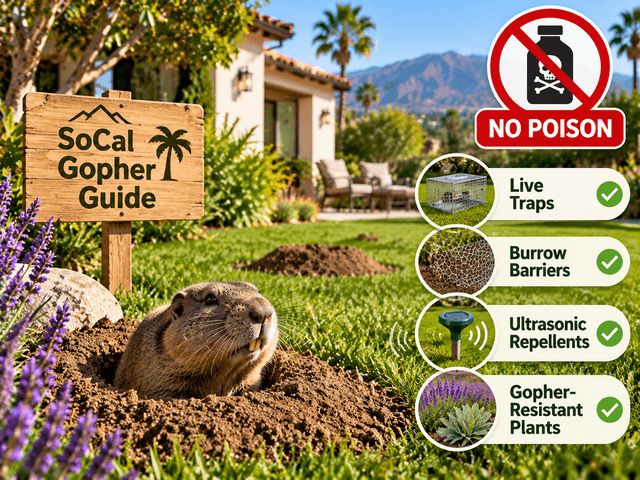
If you're searching how to get rid of gophers in your yard, the honest answer most of those endless online "war on gophers" threads miss is this: you don't need poison, and the fixes that actually last are physical, not chemical. Gophers are drawn to soft, watered soil and plant roots, so the reliable approach is excluding them from the areas and plants you care about — buried mesh baskets, hardware-cloth barriers, raised beds, and trapping — rather than gimmicks like sonic stakes, flooding, or gum. In Southern California, where new plantings are a real investment, protection is part of good landscaping. Here's what works, what doesn't, and where a licensed landscaper fits in.
How do you stop gophers without poison?
Protect the plants and beds you care about with physical barriers: line new planting holes and raised beds with galvanized wire mesh (gopher baskets or hardware cloth) so roots are shielded from below, and use trapping to remove active gophers. Skip poisons — they risk your pets and the hawks and owls that naturally hunt gophers — and skip the folklore fixes that don't hold up. For a serious, active infestation, a licensed wildlife or pest professional handles the animals, while a landscaper designs and installs the protection that keeps them out going forward. This information is current as of November 2026.
Is it a gopher or a mole?
Before you fight anything, identify it — the fixes differ. Gophers are herbivores that eat plant roots and bulbs, and they leave crescent- or fan-shaped mounds of soil with the hole plugged off to one side. Moles eat insects and earthworms (not your plants) and push up volcano-shaped mounds with the hole in the center, plus raised surface tunnels. In most SoCal yards, the plant-killing culprit is a pocket gopher. If plants are wilting or disappearing and you're seeing fan-shaped mounds, you're dealing with gophers, and root protection is the priority.
What actually works against gophers
The methods that reliably protect a yard are about exclusion and removal, not scent or sound.
Buried mesh baskets and hardware cloth
This is the most effective long-term protection. Lining a planting hole with a galvanized wire basket, or laying hardware cloth under a bed or lawn, physically stops gophers from reaching roots from below. It's the standard way to protect valuable plantings, and it's most easily done at planting or installation time — which is exactly when a landscaper can build it in.
Raised beds with wire bottoms
A raised bed with a hardware-cloth bottom blocks gophers entirely from below while improving drainage and soil — a strong fit for vegetables and prized plants. Our guide to raised-bed vegetable gardens in SoCal covers how to build them, and adding a wire base turns them into gopher-proof growing space.
Trapping
For gophers already in the yard, trapping is the proven, poison-free removal method. Done correctly — locating the main tunnel and setting traps properly — it removes the active animal without chemicals. It takes some skill and persistence, which is why many homeowners pair it with a professional.
Smart planting choices
Gophers avoid some plants more than others, and heavily watered, lush beds attract them most. Choosing appropriate, climate-suited species — including options covered in our guides to choosing native or non-native plants in Glendale and the best drought-tolerant plants for Glendale landscapes — won't make a yard gopher-proof on its own, but it reduces the buffet and pairs well with barriers.
What doesn't work (the myths)
The "war on gophers" threads are full of tricks that waste time. Here's the honest read:
- Sonic/vibrating stakes: widely sold, but evidence that they reliably drive gophers out is weak; gophers often just tunnel around them. Don't count on them.
- Flooding the tunnels: rarely works, wastes water (a real issue in SoCal), and can worsen drainage or erosion near the home.
- Chewing gum, castor-oil "cures," and home remedies: folklore with no dependable result.
- Poisons and gas cartridges: effective at killing but dangerous — more on that below — and they don't stop the next gopher from moving in.
Will poison hurt my dog?
It can, which is a core reason to avoid it. Rodenticides pose a real risk of secondary poisoning: pets that dig up or eat a poisoned gopher, and the hawks, owls, and other predators that naturally keep gopher numbers down, can be harmed. Beyond the danger, poison doesn't solve the problem — it leaves the tunnels open for the next gopher. Exclusion and trapping protect your plants without putting your dog, local wildlife, or kids at risk, which is why we build protection around barriers rather than bait.
How do you protect new plants?
Protect them at planting time. The moment to install gopher baskets, hardware cloth, and wire bed bottoms is while the beds are open and the plants are going in — retrofitting protection around established plantings is far harder. If you're investing in new landscaping, building gopher protection into the installation is the single best way to keep that investment safe. This is where landscaping and pest protection overlap: the planting plan and the protection are one job, best done together through professional landscape design and installation.
Gopher control methods at a glance
| Method | Does it work? | Key considerations | Notes |
|---|---|---|---|
| Buried mesh baskets / hardware cloth | Yes — most reliable | Best installed at planting time | Protects roots from below |
| Raised beds with wire bottoms | Yes | Also improves soil & drainage | Great for veggies & prized plants |
| Trapping | Yes — proven removal | Takes skill and persistence | Poison-free |
| Sonic / vibrating stakes | Unreliable | Gophers tunnel around them | Don't count on it |
| Flooding / home remedies | No | Wastes water, risks erosion | Folklore |
| Poison / rodenticide | Risky | Harms pets & predators | We don't use or recommend it |
Who typically needs gopher protection?
Homeowners installing new planting beds, lawns, or gardens — especially across Glendale, La Crescenta, and La Cañada Flintridge, where foothill yards back onto open space — are the core group. It's also key for vegetable gardeners, anyone who's already lost plants to gophers, and owners of higher-value plantings they want to safeguard. HOAs and property managers protect common-area landscaping the same way. If you're about to plant, that's the ideal moment to build in protection.
What mistakes make the gopher problem worse?
- Reaching for poison first, risking pets and the predators that help you.
- Spending on sonic stakes and gimmicks instead of physical barriers.
- Planting valuable new beds with no root protection, then retrofitting later.
- Flooding tunnels — wasting water and risking erosion near the house.
- Misidentifying moles as gophers (or vice versa) and using the wrong fix.
- Ignoring an active infestation that needs a professional.
What to check before protecting your yard
- Is it actually a gopher (fan-shaped mounds, plants dying) or a mole?
- Which plants and beds most need protecting?
- Are you planting new — the best time to install barriers?
- Do you have pets or local raptors that poison would endanger?
- Is the infestation active enough to need a pest professional?
- Would raised beds with wire bottoms solve several problems at once?
How do you choose the right landscaping company in Glendale?
For gopher-safe planting, look for a licensed landscape contractor (CSLB) who builds root protection into the installation — baskets, hardware cloth, wire bed bottoms — and chooses climate-appropriate planting, rather than one who just drops plants in and hopes. A clear written scope that includes protection, poison-free methods, and honest guidance about when to bring in a pest professional all signal the right partner. The goal is planting that survives the gophers, not a chemical quick-fix that endangers your pets.
How does BuildCal help you?
BuildCal is a licensed landscape contractor (California State License Board / CSLB) in Glendale, and we protect your plantings the poison-free way: installing gopher baskets and hardware-cloth barriers at planting time, building raised beds with wire bottoms, and choosing climate-suited plants that pair well with protection. We start with an on-site assessment of your yard, soil, and where the damage is, then design planting and protection together — no rodenticides involved. We're clear about the line, too: an active infestation belongs with a licensed wildlife or pest professional, while we handle the landscaping and exclusion that keep gophers out long-term. You get a written estimate and scope before any work begins.
Steps to request your project from BuildCal
- Share photos of the damage and your beds, with a short description of the problem.
- Schedule an on-site assessment of the yard, soil, plantings, and access.
- Receive a written estimate with scope — including planting and protection — and timeline.
- Approve the plan and schedule the work.
- Installation and a final walkthrough, with planting and care notes.
Frequently asked questions about getting rid of gophers
Do sonic stakes work on gophers?
Not reliably. Vibrating or sonic stakes are heavily marketed, but evidence that they consistently drive gophers out is weak — gophers frequently just tunnel around or ignore them. They may seem to work briefly while a gopher moves on for unrelated reasons, then the problem returns. For dependable results, physical barriers like buried mesh baskets and hardware cloth, plus trapping, are far more effective than any sound-based device.
Is it a gopher or a mole in my yard?
Check the mounds and the damage. Gophers eat plant roots and leave fan- or crescent-shaped mounds with the hole plugged to one side, so you'll see plants wilting or disappearing. Moles eat insects and earthworms, not plants, and leave volcano-shaped mounds with a central hole plus raised surface tunnels. In most SoCal yards, the plant-killer is a pocket gopher — and if plants are dying, root protection is what you need.
Will gopher poison hurt my dog?
It can. Rodenticides create a real risk of secondary poisoning — pets that dig up or eat a poisoned gopher can be harmed, as can the hawks and owls that naturally control gophers. Poison also doesn't fix the problem, since new gophers move into the open tunnels. That's why we avoid it entirely and rely on exclusion and trapping, which protect your plants without endangering your dog, local wildlife, or children.
How do I protect new plants from gophers?
Build protection in at planting time. Line each planting hole with a galvanized wire gopher basket, lay hardware cloth under beds or lawns, and use raised beds with wire bottoms for vegetables and prized plants. Retrofitting protection around established plantings is much harder, so the moment you're installing new landscaping is the ideal time. Pairing barriers with climate-appropriate, less-tempting plants gives new plantings the best chance to establish safely.
Do I need a pest control company or a landscaper?
Often both, for different parts. A licensed wildlife or pest-control professional removes an active infestation — the animals themselves. A landscaper designs and installs the protection that keeps gophers out long term: baskets, hardware cloth, raised beds, and smart planting. If you're installing new landscaping, the protection is best built in by the landscaper during the work, while serious ongoing infestations are handled by the pest pro. We'll tell you honestly which you need.
Can you really keep gophers out of a whole yard?
No honest company promises a 100% gopher-free yard, especially in foothill areas near open space. What's realistic is strong, lasting protection for the beds, lawns, and plants that matter — through barriers installed at planting time and poison-free removal of active gophers. Think of it as protecting your planting investment and dramatically reducing damage, rather than a guarantee. Built in properly from the start, that protection holds up far better than any gimmick or spray.
Request your estimate today
If gophers are undoing your yard and you want to stop them without poison in Glendale or the greater Los Angeles area, the best step is protection built into your planting. Send BuildCal a few photos of your space to schedule an on-site assessment and get a written estimate before any work begins. Call (818) 303-1570 or request your free estimate online.
Thinking about a new outdoor space?
We’d love to hear your ideas. Let’s explore what’s possible—no pressure, just a friendly conversation.
Give us a call:
+1 (818) 303-1570
Frequently Asked Question
WE WANT A LOT DONE, BUT CANNOT AFFORD TO DO IT ALL NOW. CAN YOU STILL WORK WITH US?
Yes – it is not uncommon to do a project in phases, especially when there are such constraints as budget and time. Because we draw up our own plans, we can design a project to be installed in phases. Once the complete plan is established, the property owner can easily pick and choose which parts to be completed now and in the future.