
OUR MISSION IS TO TAILOR FOR EACH CLIENT A BEAUTIFUL, FUNCTIONAL AND ENDURING OUTDOOR ENVIRONMENT THAT WILL PROVIDE A PLACE OF SERENITY FOR FRIENDS AND FAMILY TO APPRECIATE FOR YEARS TO COME.

BuildCal Landscape Soil & Planting Article
Planting in Hard Clay Soil - What Actually Grows in Glendale Yards
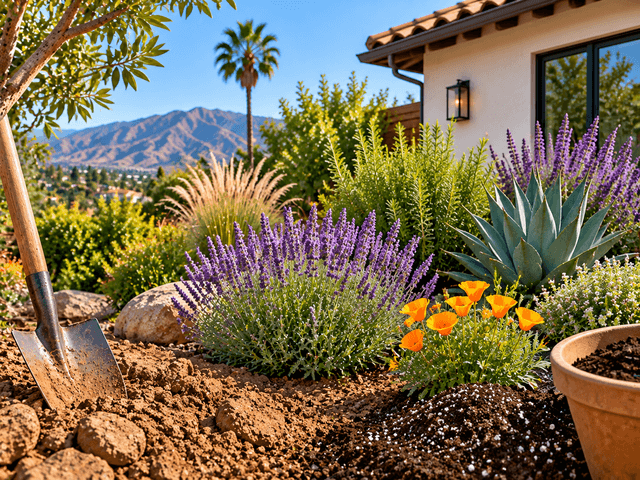
If your shovel bounces off the dirt and you're searching how to plant in clay soil, the short version is this: you don't have to replace the soil to garden well. Across Glendale and much of the greater Los Angeles area, hard clay is the default, and the reliable fix is a mix of adding organic matter, choosing clay-tolerant and native plants, and building up with raised beds or mounds rather than trying to dig down through concrete-hard ground. Gypsum helps only certain clays, not all. A licensed landscape contractor who reads your actual soil and grade can design planting that thrives in it. Here's what works, what's a myth, and where to start.
Why is clay soil so hard to plant in?
Clay is made of very fine particles packed tightly together, so it holds water and nutrients well but drains slowly and compacts into a dense, shovel-bouncing mass when dry. In Southern California's dry-then-wet cycle, it swells when wet and cracks when it dries out. That makes it tough to dig, slow to drain, and hard for many plant roots to push through. The good news: clay is often fertile. The problem is almost always structure and drainage, not fertility — which is why the right approach is improving structure and planting to suit, not starting over.
How do you plant in clay soil?
Work organic matter — compost and the like — into the top several inches to improve structure and drainage, then choose plants that tolerate clay, favoring California natives and drought-tolerant species adapted to heavy soil. Where drainage is poor or digging is impractical, build up instead of down with raised beds or planting mounds. Water deeply but less often so clay doesn't stay waterlogged. Skip the myth that gypsum fixes every clay — it helps only certain sodic clays. This information is current as of November 2026, and the right mix depends on your site's soil, grade, and how the space will be used.
Does gypsum actually work on clay soil?
Sometimes — and that's the honest answer the internet threads usually skip. Gypsum (calcium sulfate) can improve structure in specific sodic clays, where excess sodium is causing the soil to disperse and seal up. In those soils the calcium helps the particles clump into a better structure. But most Southern California garden clay is not sodic, and in ordinary clay, gypsum does little to nothing for drainage or workability. Spreading it as a universal "clay cure" is a common waste of money.
What reliably helps almost any clay is organic matter. Compost and similar amendments improve structure, feed soil life, and open up the dense texture over time. If you suspect a genuinely sodic soil, a soil test tells you before you spend on gypsum. Our deeper guide to improving clay soil for a California garden walks through the amendment side in detail.
Do you replace the soil or raise the beds?
For most yards, neither full replacement nor fighting the clay with a shovel is the best route. Wholesale soil replacement is expensive, labor-intensive, and often unnecessary — and the surrounding clay still affects drainage at the edges. The two approaches that actually pay off are amending in place and building up.
Amend in place
Mix organic matter into the top several inches across the planting area, rather than digging a deep hole and backfilling with fluffy soil. A rich hole surrounded by dense clay acts like a bathtub — water collects in it and roots drown. Improving a broader, shallower zone works far better with clay.
Build up with raised beds or mounds
Where drainage is poor, digging is brutal, or you want control over the soil, raised beds and planting mounds let you grow above the clay entirely. This is often the simplest answer for vegetables and fussier plants. Raised beds also solve drainage, which is clay's core weakness. If you're considering this route for edibles or ornamental beds, it pairs naturally with a planned garden and planting design.
What actually grows in clay soil in SoCal?
Plenty — once you plant to suit. The smartest move is choosing species that tolerate or even prefer heavy soil, rather than forcing in plants that need fast drainage. Many California natives and drought-tolerant plants handle clay well because they evolved with it. Good directions to look include:
- California native shrubs and perennials adapted to local heavy soils.
- Drought-tolerant, water-wise species suited to Southern California's climate and water rules.
- Deep-rooted plants that help break up and improve clay over time.
- Many ornamental grasses and tough groundcovers that tolerate dense soil.
Choosing the right palette for your sun, slope, and soil is where a plan matters most. Our guide to the best drought-tolerant plants for Glendale landscapes is a strong starting point for clay-friendly, water-wise choices. Matching the plant to the soil beats amending the soil to fit a plant that was never going to be happy there.
How deep do you amend clay soil?
Focus on the top several inches to roughly a foot, worked across the whole bed, rather than deep isolated holes. Most feeder roots live in that upper zone, and improving a broad shallow layer avoids the bathtub effect that deep amended holes create in clay. Over several seasons, organic matter and plant roots gradually improve structure deeper down on their own. For trees and large shrubs, loosen a wide area at planting rather than a narrow deep pit, and plant slightly high so the root crown isn't sitting in a wet pocket. Patience plus repeated organic matter does more than any one-time deep dig.
Who typically needs help with clay soil?
Homeowners across Glendale, La Crescenta, La Cañada Flintridge, and the San Fernando and San Gabriel Valleys — where heavy clay and foothill soils are common — are the core group. It's especially relevant for anyone planning a new front- or backyard, vegetable gardeners frustrated by poor drainage, owners whose past plantings failed in dense soil, and HOAs or property managers maintaining landscaping on clay-heavy sites. If your shovel bounces and plants sulk, soil structure is almost certainly the issue.
What mistakes make clay-soil planting fail?
- Digging a deep hole and backfilling with loose soil, creating a water-trapping bathtub.
- Spreading gypsum on non-sodic clay as a universal fix and expecting drainage to improve.
- Choosing plants that need fast drainage, then fighting the soil forever.
- Overwatering clay, which stays wet and rots roots.
- Replacing soil wholesale when amending or building up would work better.
- Ignoring grade and drainage, so water pools against the house or in beds — a real concern given how expansive clay soil can affect foundations.
What to check before planting in clay soil
- Is your clay actually sodic (gypsum may help) or ordinary (favor organic matter)? A soil test tells you.
- How does the area drain after rain or deep watering?
- Would raised beds or mounds solve drainage more easily than digging?
- Are you choosing clay-tolerant, drought-tolerant, or native plants?
- Does the grade move water away from the house and beds?
- Is your watering schedule adjusted for slow-draining soil?
Clay-soil approaches at a glance
| Approach | When you'd use it | Key considerations | Notes |
|---|---|---|---|
| Amend in place with organic matter | Most beds and planting areas | Work the top several inches broadly | Reliable for nearly all clay |
| Raised beds / mounds | Poor drainage, veggies, hard digging | Grow above the clay | Best drainage control |
| Plant-to-suit (natives / drought-tolerant) | Low-input, water-wise yards | Match species to heavy soil | Often the easiest long-term win |
| Gypsum | Confirmed sodic clay only | Soil test first | Not a universal fix |
| Full soil replacement | Rarely necessary | Costly; edges still drain poorly | Usually the wrong first move |
How do you choose the right landscaping company in Glendale?
For clay-soil planting, look for a licensed landscape contractor (CSLB) who actually assesses your soil, grade, and drainage before recommending anything — not one who prescribes the same gypsum-and-amendment routine for every yard. Good signs include a willingness to test or read the soil, honest guidance on amend-vs-build-up, a plant palette suited to your conditions, proper grading and drainage planning, and a clear written estimate and scope before work starts. Knowledge of local Glendale and LA conditions, water rules, and how clay behaves here matters more than a generic planting pitch.
How does BuildCal help you?
BuildCal is a licensed landscape contractor (California State License Board / CSLB) in Glendale, and we design planting that works with your clay instead of against it. We start with an on-site assessment of your soil, grade, drainage, and sun, then recommend the right mix — amending in place, raised beds or mounds, and a clay-tolerant, drought-tolerant, or native plant palette suited to Southern California. We'll tell you honestly whether gypsum applies to your soil or whether organic matter and plant-to-suit is the smarter spend. We handle grading and drainage so water moves away from the house and beds, and we work for homeowners, HOAs, property managers, and commercial clients. You get a written estimate and clear scope before any work begins.
Steps to request your project from BuildCal
- Share photos of your space and a short description of what you want to grow.
- Schedule an on-site assessment of the soil, grade, drainage, and access.
- Receive a written estimate with scope, materials, and timeline.
- Approve the plan and schedule the work.
- Installation and final walkthrough, with planting and aftercare notes.
Frequently asked questions about planting in clay soil
Does gypsum really improve clay soil?
Only certain clays. Gypsum helps sodic clays, where excess sodium makes the soil seal up — the calcium helps particles form a better structure. But most Southern California garden clay isn't sodic, and in ordinary clay gypsum does little for drainage or workability. A soil test tells you whether yours is sodic before you spend. For the majority of yards, working in organic matter improves clay far more reliably than gypsum does.
Should I replace my clay soil or use raised beds?
Raised beds usually beat full replacement. Replacing soil wholesale is costly, and the surrounding clay still affects drainage at the edges. Raised beds or planting mounds let you grow above the clay with soil you control, which also solves clay's main weakness — slow drainage. For many yards, amending the existing soil in place plus building up where needed is both cheaper and more effective than digging everything out and starting over.
What plants grow best in SoCal clay soil?
Plants adapted to heavy soil — especially many California natives and drought-tolerant species that evolved with local clay. Deep-rooted plants, tough groundcovers, and many ornamental grasses also handle it well. The key is planting to suit rather than forcing in species that need fast drainage. Matching the plant palette to your actual soil, sun, and slope gives far better results than amending heavily to keep a plant alive that was never suited to clay.
How deep should I amend clay soil?
Focus on the top several inches to about a foot, worked across the whole bed rather than in deep isolated holes. Most feeder roots live in that zone, and improving a broad shallow layer avoids the bathtub effect that deep amended holes cause in clay. Over several seasons, roots and organic matter improve the soil deeper on their own. For trees, loosen a wide area and plant slightly high so the crown isn't sitting in a wet pocket.
Why does water pool in my clay yard?
Clay drains slowly because its fine particles pack tightly, so water sits on or in it rather than moving through. Poor grade makes it worse by letting water collect in low spots or against the house. The fixes are improving soil structure with organic matter, building up with raised beds, and correcting grade and drainage so water flows away. Standing water near a foundation is worth addressing promptly, since expansive clay can affect foundations.
Do I need a licensed contractor to plant in clay soil?
You can handle small beds yourself, but a licensed landscape contractor (CSLB) is worth it for larger projects, drainage or grading work, and when you want a planting plan that actually thrives in heavy soil. The value is in correctly reading your soil, designing the right amend-or-build-up approach, choosing a suitable plant palette, and handling grade and drainage properly. That avoids the costly trial-and-error of plants failing in clay and water pooling where it shouldn't.
Do you offer free estimates?
Yes. BuildCal provides a free on-site assessment and a written estimate with scope, materials, and timeline before any work begins. Pricing and schedule depend on the size of the project, site conditions, soil, access, and the plants and materials chosen, so they're confirmed after we see the space. This information is current as of November 2026. Send a few photos to get started and we'll arrange a visit.
Request your estimate today
If you're tired of a shovel that bounces and plants that sulk, and you want to know how to plant in clay soil the right way in Glendale or the greater Los Angeles area, send BuildCal a few photos of your space to schedule an on-site assessment and get a written estimate before any work begins. Call (818) 303-1570 or request your free estimate online.
Thinking about a new outdoor space?
We’d love to hear your ideas. Let’s explore what’s possible—no pressure, just a friendly conversation.
Give us a call:
+1 (818) 303-1570
Frequently Asked Question
HOW CAN WE PLAN A LOW-MAINTENANCE LANDSCAPE?
There are several ways to create a lush and lasting low maintenance landscape. Such as: installing smaller planting beds, filling the property with hardy plants and border color (such as perennials), applying a 3” layer of mulch to retain moisture, picking correct plants for the existing sun exposure, soil conditions, and water availability.