
OUR MISSION IS TO TAILOR FOR EACH CLIENT A BEAUTIFUL, FUNCTIONAL AND ENDURING OUTDOOR ENVIRONMENT THAT WILL PROVIDE A PLACE OF SERENITY FOR FRIENDS AND FAMILY TO APPRECIATE FOR YEARS TO COME.

BuildCal Landscape Outdoor Structures Article
Pergola, Patio Cover or Shade Structure in SoCal - Cost, Permits & Which to Choose
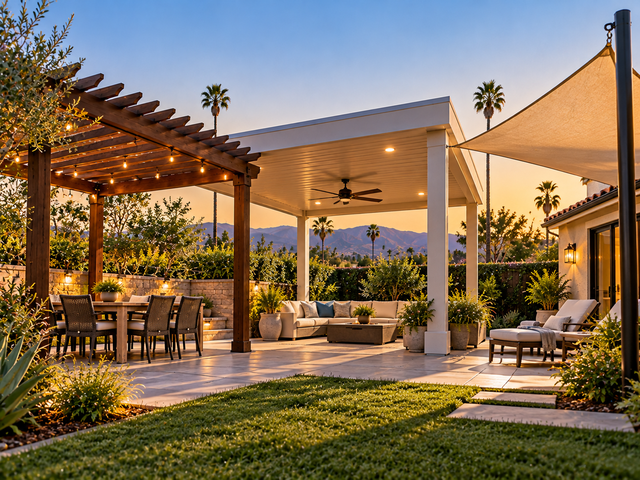
In the patio cover vs. pergola decision, the real question is how much shade you want and how it's built. An open pergola filters sunlight with spaced rafters and keeps an airy, architectural look; a solid-roof patio cover blocks sun and light rain for full shade; a shade sail is the lighter, lower-cost middle ground. Each differs on shade, appearance, cost drivers, maintenance — and permits, since attached and solid-roof covers typically need one while open pergolas vary. Here's how to choose the right structure for your SoCal patio or deck, and what to expect. This is general guidance, not legal advice, and is current as of October 2026.
Pergola, patio cover, or shade sail?
Choose an open pergola for a stylish structure with filtered, dappled shade and good airflow. Choose a solid-roof patio cover when you want full shade and protection from sun and light rain, turning a patio into a near-all-weather room. Choose a shade sail for a flexible, lower-cost way to shade a space without a full structure. Attached and solid covers generally require a building permit; open pergolas vary by size and whether they're attached. The best fit depends on how you'll use the space, your budget, and the look you want.
What are the options, and how do they differ?
All three create shade, but they're different builds with different results. A pergola is a framework of posts and spaced rafters — open to the sky, giving partial, patterned shade. A patio cover has a solid roof for full coverage. A shade sail is tensioned fabric stretched between anchor points. BuildCal designs and builds these through its pergola and shade structure services, and the right choice depends on how the space will be used and the sun exposure it gets. If you're weighing a pergola against other open structures, our guide on gazebo and pergola structure differences is a useful companion.
Open pergola
Spaced rafters filter sunlight for dappled shade and keep an open, architectural feel with good airflow — well suited to SoCal's climate. It won't give full shade or rain protection on its own, though a canopy or climbing plants can add coverage. Generally the lightest-touch structure, and often the one with the simplest permit path depending on size.
Solid-roof patio cover
A solid roof blocks sun and light rain, creating full shade and a usable outdoor room even in peak summer. It's more enclosed and more of a built structure, which is why attached and solid covers typically require a permit. Higher cost and more construction, but maximum protection and the most "indoor-outdoor room" feel.
Shade sail
Tensioned fabric between posts or anchor points delivers shade quickly and at lower cost, with a modern look and flexibility in placement. It provides sun shade but not rain protection, and the fabric needs eventual replacement. A good option when budget or flexibility matters more than a permanent structure.
Comparison: shade, look, cost drivers, maintenance
| Factor | Open pergola | Solid patio cover | Shade sail |
|---|---|---|---|
| Shade | Partial, dappled | Full, plus light rain | Sun shade, no rain |
| Look | Open, architectural | Enclosed, room-like | Light, modern |
| Cost driver | Mid — posts, rafters, material | Higher — roof structure | Lower — fabric and anchors |
| Permit | Varies by size/attachment | Typically required | Often minimal, varies |
| Maintenance | Low–moderate (material-dependent) | Low, but a real roof | Fabric replaced over time |
| Best for | Style + airflow | Full shade / rain cover | Budget / flexibility |
Do you need a permit for a pergola or patio cover?
Often, depending on the structure. As general guidance, attached patio covers and solid-roof structures typically require a building permit, because they're attached to the house and fully roofed. Open pergolas vary — a smaller, freestanding open pergola may have a simpler path, while a larger or attached one can require a permit. Requirements differ by city and change over time, so confirm with your local building department before building. Our pergola and deck permit checklist for Glendale is a helpful starting reference, and we identify what applies during design.
What drives the cost?
- Type. A solid-roof cover is more construction than an open pergola, which is more than a shade sail.
- Size. Larger structures use more material and labor.
- Attachment. Attaching to the house adds structural detail versus a freestanding build.
- Material. Wood, aluminum, vinyl, or a fabric sail differ in cost, look, and upkeep.
- Footings and posts. Sized to the structure and soil.
- Permit and engineering. Covers and larger structures add design and review steps.
- Add-ons. Lighting, fans, canopies, or integrated features add cost.
What to check before starting your shade project
- Do you want partial shade and airflow, or full shade and rain protection?
- Will the structure attach to the house or stand freestanding?
- What's your budget, and how long do you want the structure to last?
- How much maintenance are you willing to do (wood vs. low-upkeep materials)?
- Have you confirmed permit requirements for your chosen type with the city?
- How does sun track across the space you want to shade?
Who typically needs a shade structure?
Homeowners wanting to make a patio or deck usable through SoCal's hot months are the core audience — common across Glendale, La Crescenta, La Cañada, and the valleys, where summer sun can make an unshaded patio unusable midday. It also suits owners adding an outdoor dining or lounge "room," and those finishing a larger backyard project. For a deeper local comparison, our articles on pergola vs. patio cover for Glendale homes and pergola vs. patio cover in Southern California go further.
What mistakes lead to a disappointing or non-compliant structure?
- Choosing an open pergola expecting full shade, then being frustrated by midday sun.
- Building a solid attached cover without the required permit.
- Undersizing posts or footings for the structure and wind loads.
- Picking a material without considering SoCal sun exposure and upkeep.
- Hiring an unlicensed builder for an attached, permitted structure.
- No written scope, so materials and timeline drift.
How do you choose the right landscaping company in Glendale?
Choose a licensed landscape contractor (CSLB) who builds all three types and will match the structure to how you'll actually use the space — not push a single product. Look for a clear written estimate and scope, knowledge of the permit path for attached covers versus open pergolas, and proper footings sized for wind and load. A contractor who explains the shade, look, cost, and permit trade-offs honestly is giving you what you need to choose well.
How does BuildCal help you?
BuildCal is a licensed landscape contractor (California State License Board / CSLB) in Glendale, and because we design and build open pergolas, solid patio covers, and shade sails, our recommendation follows how you want to use the space rather than one product. We assess your patio or deck, sun exposure, and the look you want, identify whether your chosen structure needs a permit, and build with properly sized posts and footings for SoCal wind and sun. You get a written estimate and scope before work begins, and a shade structure that fits the space, the climate, and your budget.
Steps to request your project from BuildCal
- Share a few photos of the patio or deck and a short description of the shade you want.
- Schedule an on-site assessment of the space, sun exposure, attachment points, and access.
- Receive a written estimate with the recommended type, scope, materials, and timeline, including any permit steps.
- Approve the plan and schedule the work.
- Construction and a final walkthrough, with cleanup and aftercare notes.
Frequently asked questions about pergolas and patio covers
What's the difference between a pergola and a patio cover?
A pergola is an open framework of posts and spaced rafters that filters sunlight for partial, dappled shade and keeps an airy look. A patio cover has a solid roof that blocks sun and light rain for full shade, making a patio usable like an outdoor room. The practical difference is coverage: pergolas give style and filtered shade with airflow, while solid covers give full protection. Which is right depends on whether you want partial or complete shade.
Do I need a permit for a pergola or patio cover in the LA area?
Often, depending on the type. As general guidance, attached patio covers and solid-roof structures typically require a building permit, while open pergolas vary by size and whether they're attached. Requirements differ by city and change over time, so confirm with your local building department before building. We identify which permits apply for your chosen structure during design and include them in the scope, so the code side is handled from the start.
Which gives better shade, a pergola or a solid patio cover?
A solid patio cover gives better, fuller shade because its roof blocks the sun entirely and sheds light rain, creating consistent shade all day. An open pergola provides partial, dappled shade that shifts with the sun and keeps airflow, which many people prefer for its look and breeziness but which won't fully block midday sun on its own. If complete shade is the goal, a solid cover is the stronger choice; for style with some shade, a pergola fits.
What does a pergola or patio cover cost in SoCal?
There's no honest flat figure, because cost depends on the type, size, whether it attaches to the house, the material, footings, and any permit or engineering. A shade sail is generally the lowest-cost option, an open pergola mid-range, and a solid roofed cover the most involved. The reliable way to know is an on-site assessment and a written estimate. Costs vary with site conditions and materials; this framing is current as of October 2026.
Can I attach a pergola or cover to my house?
Yes, and attached structures are common for extending shade directly off the home. The trade-off is that attaching to the house adds structural detail and typically brings the project into permit territory, especially for solid covers. A proper attachment protects the house from water intrusion and is sized for load. We assess the attachment point and build it correctly, and flag the permit requirement during design so it's handled properly.
What material is best for a shade structure in SoCal?
It depends on your priorities. Wood offers a classic look but needs periodic sealing or staining in the strong SoCal sun; aluminum and vinyl are lower-maintenance and resist fading and rot; fabric sails are flexible and affordable but need eventual replacement. There's no single best — the right material balances look, maintenance, and budget. We'll walk through the options so your structure holds up to the climate and matches how much upkeep you want to do.
Request your estimate today
If you're weighing a patio cover vs. pergola — or a shade sail — for a patio or deck in Glendale or the greater Los Angeles area, the best next step is an on-site look at the space, the sun, and how you'll use it. Send BuildCal a few photos of your patio to schedule an assessment and get a written estimate, including any permit steps, before work begins. Call (818) 303-1570 or request your free estimate online.
Thinking about a new outdoor space?
We’d love to hear your ideas. Let’s explore what’s possible—no pressure, just a friendly conversation.
Give us a call:
+1 (818) 303-1570
Frequently Asked Question
IS THERE A FEE FOR THE INITIAL CONSULTATION?
No, we do not charge for the initial site visit. This is your opportunity to share your ideas and vision for your landscape project, start the process of design by discussing initial ideas, pin-point any landscape problems you are having, and get a scope of the overall size of scope. Plus this gives you the opportunity to meet us, learn more about our company, and ask questions.