
OUR MISSION IS TO TAILOR FOR EACH CLIENT A BEAUTIFUL, FUNCTIONAL AND ENDURING OUTDOOR ENVIRONMENT THAT WILL PROVIDE A PLACE OF SERENITY FOR FRIENDS AND FAMILY TO APPRECIATE FOR YEARS TO COME.

BuildCal Landscape Landscape Design & Planting Article
Hummingbird & Pollinator Gardens for SoCal - Plants, Water & Design That Actually Draw Them In
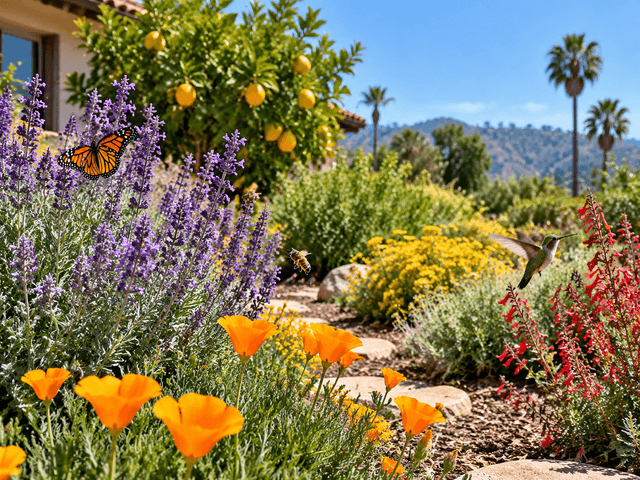
There is a myth that a water-wise SoCal garden has to be a quiet field of gravel and succulents. The opposite is true — some of the most alive, buzzing, fluttering gardens in Southern California are also the lowest-water ones, because the plants that shrug off drought are often the same natives that hummingbirds, bees, and butterflies evolved alongside. A well-designed pollinator garden in Southern California marries habitat value with drought tolerance: the right nectar plants, a small water source, and a bloom sequence that keeps something flowering nearly year-round. This guide covers what actually draws pollinators (it is not just any flower), which native and drought-tolerant plants do the work here, how to plan blooms across the seasons, why a little water matters, and how to design in layers without reaching for pesticides that quietly undo the whole effort.
What Actually Draws Hummingbirds Bees and Butterflies
Not every pretty flower is a pollinator magnet. Different pollinators are drawn to different flower shapes, colors, and nectar, so a garden that "actually draws them in" is designed around those preferences rather than filled with whatever looked nice at the nursery.
| Pollinator | What draws it | Plant qualities to favor |
|---|---|---|
| Hummingbirds | Tubular flowers, often red or orange, rich in nectar | Salvias, penstemon, monkeyflower, and other tubular native bloomers |
| Native bees | Open, accessible flowers; abundant pollen; clustered blooms | California lilac, buckwheat, and daisy-family natives |
| Butterflies | Flat landing surfaces, nectar, and host plants for caterpillars | Nectar flowers plus larval host plants such as native milkweed for monarchs |
The single most important design idea: plant for the whole life cycle. A butterfly garden California pollinators actually use needs caterpillar host plants, not just nectar — otherwise adults visit and move on.
Native and Drought-Tolerant Pollinator Plants for SoCal
The best native pollinator plants for this region tend to be the ones already adapted to our heat, sun, and dry summers — which is exactly why a pollinator garden can also be a low-water garden. Many drought pollinator plants that thrive in Glendale and Los Angeles yards do double duty as habitat and water-wise landscaping.
- Salvias: A cornerstone of hummingbird plants SoCal gardeners rely on, with tubular flowers and long bloom.
- California lilac (Ceanothus): Clouds of flowers that bees love; drought-tolerant and evergreen.
- Manzanita and toyon: Native shrubs that provide early flowers and berries for wildlife.
- Native buckwheat: A long-blooming bee and butterfly favorite that tolerates poor, dry soil.
- Penstemon and monkeyflower: Colorful, nectar-rich natives that draw hummingbirds and bees.
- Native milkweed: The host plant monarch caterpillars require to complete their life cycle.
For a broader palette, our guide to drought-tolerant plants for Glendale highlights several pollinator-friendly natives, and designing the garden by grouping plants by water need keeps a bee friendly garden low-water and easy to irrigate efficiently. Choose the exact species and native milkweed type suited to your local area and conditions.
Plan Bloom Succession for Year-Round Activity
A common disappointment is a garden that erupts with pollinators in spring and then goes silent. The fix is bloom succession — choosing plants so that something is always flowering across the seasons, giving pollinators a continuous food source rather than a single burst.
- Combine early, mid-season, and late bloomers so nectar is available across the year.
- Include evergreen and long-blooming natives to fill gaps between flushes.
- Plant in drifts of the same species so pollinators can forage efficiently.
- Leave some seed heads and structure rather than cutting everything back at once.
Leaning on low-maintenance, pollinator-friendly plants makes year-round bloom easier to sustain without turning the garden into constant work.
Add Water With a Feature or Shallow Dish
Pollinators need water, not just nectar. A small, safe water source can dramatically increase how much wildlife uses the garden, and it does not require a pond.
- A shallow dish with stones or pebbles gives bees and butterflies a safe place to land and drink.
- A small recirculating feature or dripper appeals to hummingbirds and adds gentle sound.
- Keep water shallow and refresh it regularly so it stays clean and does not become stagnant mosquito habitat.
- Place water near, but not directly under, dense planting so wildlife feels safe approaching it.
A water feature can be woven into a water-wise layout — even something as simple as a dry creek bed for structure and drainage can hold a small pooling element while doubling as a design and runoff feature.
Skip Pesticides and Plant in Layers
The fastest way to undo a pollinator garden is to spray it. Broad pesticide use kills the bees, butterflies, and beneficial insects you are trying to attract, and it can linger in flowers and foliage. A healthier approach relies on plant diversity, beneficial insects, and tolerance for a little imperfection.
- Avoid broad-spectrum insecticides; let beneficial insects and birds manage most pests.
- Design in layers — groundcovers, perennials, shrubs, and small trees — so pollinators find food, shelter, and nesting sites at different heights.
- Leave some bare ground and undisturbed areas for ground-nesting native bees.
- Accept some chewed leaves; caterpillar damage is a sign the habitat is working.
- Mulch and water efficiently so plants stay healthy and resilient without heavy inputs.
Frequently Asked SoCal Pollinator Garden Questions
What Are the Best Plants for Hummingbirds in SoCal?
Hummingbirds are drawn to tubular, nectar-rich flowers, often in red or orange. Reliable hummingbird plants SoCal gardeners use include native salvias, penstemon, and monkeyflower, along with other tubular bloomers. Planting several of these in drifts, with staggered bloom times, gives hummingbirds a steady food source. Pair them with a small water feature or dripper and avoid pesticides to keep the birds coming back.
Do I Need a Water Feature for a Pollinator Garden?
A water source is not strictly required, but it noticeably increases how much wildlife uses the garden. It does not need to be elaborate — a shallow dish with stones for bees and butterflies, or a small recirculating dripper for hummingbirds, works well. Keep water shallow and refresh it so it stays clean and does not become mosquito habitat. Even a modest feature makes a pollinator garden in Southern California more active.
Do Pollinator Plants Have to Be Native?
Natives are not strictly required, but they are usually the most effective because local pollinators evolved with them, and many are naturally drought-tolerant. A strong strategy combines native pollinator plants for habitat value with a few well-behaved non-natives for extra bloom and color. Avoid invasive species, and prioritize larval host plants like native milkweed for monarchs, since nectar alone will not support a full butterfly life cycle.
How Do I Get Blooms Year-Round for Pollinators?
Use bloom succession — select early, mid-season, and late-blooming plants so something is always flowering, and include long-blooming and evergreen natives to fill the gaps. Planting in drifts of the same species helps pollinators forage efficiently, and leaving some seed heads and structure extends the garden's value into the off-season. A year-round, low-water palette keeps activity high without heavy maintenance.
Design Your Habitat Garden Today
If you want a pollinator garden in Southern California that is lively, low-water, and blooming across the seasons, contact BuildCal Landscape for a habitat-garden design consultation or call +1 (818) 303-1570. Our landscape design and installation services can plan the native plant palette, bloom succession, water feature, and irrigation so hummingbirds, bees, and butterflies actually show up — and stay.
Thinking about a new outdoor space?
We’d love to hear your ideas. Let’s explore what’s possible—no pressure, just a friendly conversation.
Give us a call:
+1 (818) 303-1570
Frequently Asked Question
WHAT IF I ALREADY HAVE A DESIGN OR PLAN?
Not a problem at all. We will gladly review your design at the initial consultation and discuss the best way to proceed and achieve the very best finished product