
OUR MISSION IS TO TAILOR FOR EACH CLIENT A BEAUTIFUL, FUNCTIONAL AND ENDURING OUTDOOR ENVIRONMENT THAT WILL PROVIDE A PLACE OF SERENITY FOR FRIENDS AND FAMILY TO APPRECIATE FOR YEARS TO COME.

BuildCal Landscape Hardscaping & Drainage Article
Capturing Rain & Runoff in SoCal - Rain Gardens, Barrels & Reuse That Protect Your Yard
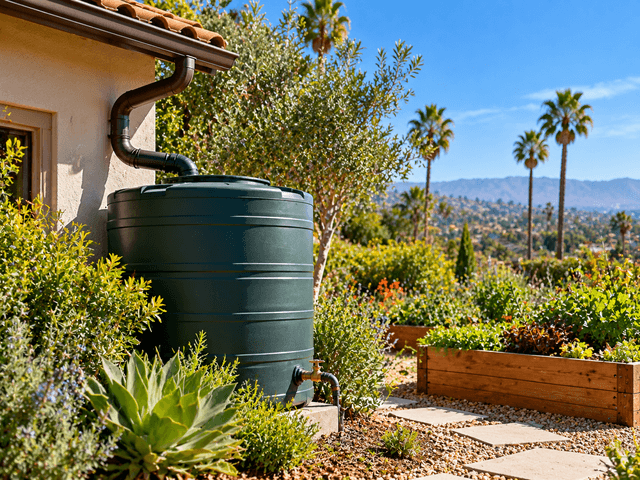
In a region that spends most of the year worried about drought, it is almost ironic how much water Southern California yards throw away during the few big storms they get. A hard rain hits the roof, sheets across the driveway and patio, races down the slope, and vanishes into the street — carrying soil and mulch with it and, on the way, pooling against the foundation. Rainwater harvesting in Southern California flips that around: instead of rushing runoff off the property as fast as possible, you slow it, spread it, sink it into planting, and store some for later. This guide covers where your water goes now, how rain gardens, dry creek beds, swales, and rain barrels capture and reuse it, how grading can route runoff to plants instead of the gutter, and how to handle overflow and permits so the system protects your yard instead of flooding it.
Know Where Your Runoff Goes Right Now
Before you capture anything, you have to know where your water travels during a storm. Most of the runoff a yard loses comes from a few predictable sources, and mapping them is the first step of any capture plan.
- The roof: A large roof sheds a surprising volume of water through a few concentrated downspouts.
- Hardscape: Driveways, patios, and walkways do not absorb water, so they accelerate runoff.
- Slope: Grade carries water toward the low point — ideally away from the house, not toward it.
- Compacted or clay soil: Heavy soil absorbs slowly, so more water runs off the surface.
Walk the property during or right after a rain and note where water pools, where it races, and where it exits. That becomes your capture map. If pooling or foundation-directed flow is already a problem, start by learning how to make a grading and drainage map of your yard — the same diagnosis that fixes drainage also tells you where capture will work best.
How a Rain Garden Captures SoCal Runoff
A rain garden SoCal homeowners can actually use is a shallow, planted depression positioned to catch runoff — typically from a downspout or a paved area — and let it soak into the soil instead of running to the street. It is one of the most effective ways to capture roof runoff while adding planting to the yard.
- Site it downslope of a downspout or hardscape, and a safe distance from the foundation.
- Size and shape the basin so it can hold a storm's inflow and drain within a day or two.
- Amend the soil so water infiltrates rather than sitting for days.
- Plant it with species that tolerate both brief flooding and long dry spells.
- Include an overflow path so excess water leaves safely during heavy storms.
Rain-garden planting is a balancing act: the plants must handle a wet spell after a storm and then months of dry. Many drought-tolerant plants suited to occasional wet spells work well once the basin is designed to drain, so the garden looks intentional year-round rather than like a soggy pit.
Slow and Steer Water With Dry Creek Beds
Dry creek bed drainage is one of the most attractive ways to manage runoff, because it doubles as a design feature. A dry creek bed is a rock-lined channel that looks like a seasonal streambed and directs, slows, and spreads water across the property — carrying it from a downspout or high point toward a rain garden, planting zone, or safe exit.
- Use it to move water from where it collects to where you want it to soak in.
- Combine it with swales — shallow, graded channels — to slow water and encourage infiltration along the way.
- Size the rock and channel to the volume of water it will carry in a real storm.
- Route it to a rain garden or planted low area rather than straight to the street when reuse is the goal.
A dry creek bed integrates naturally into a water-wise layout — our guide to a dry creek bed for structure and drainage shows how it works as both a drainage tool and a curb-appeal feature.
Are Rain Barrels and Cisterns Worth It
A rain barrel California homeowners install captures water from a downspout and stores it for later outdoor use. Barrels are the most accessible form of storage, while larger cisterns store much more for properties that want serious reuse capacity. Whether they are "worth it" depends on your roof area, storage size, and how you will use the water.
- Barrels fill fast in a real storm, so a single barrel captures only a fraction of what a roof sheds — multiple barrels or a cistern store more.
- Stored rainwater is typically used for outdoor irrigation of the landscape.
- Screen inlets and keep barrels covered so they do not become mosquito habitat.
- Plan an overflow route so a full barrel spills away from the foundation, not against it.
- Rebates may be available through local water agencies for barrels or cisterns — verify current programs and any requirements before you buy, since these change over time.
Grade Runoff to Planting Zones Not the Street
The highest-leverage move in stormwater reuse yard design is often the simplest: adjust grading so runoff flows toward planting instead of the gutter. Every gallon that soaks into a planted zone is a gallon you did not lose and did not have to irrigate later.
- Direct downspouts and surface flow toward planted beds, rain gardens, or infiltration areas.
- Group plants by water need so the wetter capture zones hold plants that appreciate the extra moisture — the same logic behind grouping plants by water need.
- Break up large paved areas or use permeable surfaces where practical so water can soak in.
- Keep the overall grade moving water away from the house even as you capture it.
Handle Overflow Permits and the Foundation
Capturing water is only safe if the overflow is planned. Every rain garden, barrel, swale, and dry creek bed needs a route for excess water during a storm bigger than the system was designed for — and that route must never send water toward the foundation, a neighbor's property, or a public walkway in a way that causes damage.
- Design overflow to a safe, legal exit that does not undermine structures.
- Keep capture features an appropriate distance from the foundation and slab.
- Small barrels and simple rain gardens are often straightforward, but larger cisterns, plumbing connections, greywater systems, and major grading can trigger permit, plumbing-code, or stormwater requirements.
- Confirm current local permit, overflow, and code requirements for your city and project scope before building.
THE GOLDEN RULE
Capture and reuse water, but never at the cost of the foundation. Solve where excess water goes first, then decide how much to store and infiltrate.
Frequently Asked SoCal Rainwater Harvesting Questions
Do Rain Gardens Actually Work in SoCal?
Yes, when they are designed for the local soil and rainfall pattern. A rain garden SoCal yards can use is sized and amended so it captures storm runoff and drains within a day or two rather than staying soggy, and it is planted with species that tolerate brief flooding and long dry periods. In heavy clay, soil preparation and an overflow path matter most. Done right, it captures roof and hardscape runoff while adding attractive planting.
Are Rain Barrels Worth It in Southern California?
They can be, but set expectations. A single rain barrel California homeowners install fills quickly in a real storm and only captures a fraction of what a roof sheds, so meaningful storage usually means multiple barrels or a cistern. Stored water is typically used for outdoor irrigation. Screen and cover barrels to prevent mosquitoes, plan overflow away from the foundation, and check whether local rebates are currently available before purchasing.
Where Should Runoff Go If Not the Street?
Ideally into your own planting. Grade and route runoff toward rain gardens, swales, dry creek beds, and planted infiltration zones so it soaks into the soil and waters the landscape instead of leaving the property. Any excess should have a planned overflow to a safe, legal exit. The goal of stormwater reuse yard design is to keep water on site where it is useful, without directing it toward the house or a neighbor.
Will Rain Capture Also Help My Drainage Problems?
Often yes, because good rain capture and good drainage are the same skill: understanding where water goes and controlling it. Slowing, spreading, and infiltrating runoff can reduce pooling, erosion, and water racing toward the foundation, while a dry creek bed or swale both directs water and manages a drainage problem. The key is that overflow is always planned so a big storm does not overwhelm the system and flood a structure.
Get a Rain-Capture & Drainage Plan Today
If you want rainwater harvesting in Southern California that captures roof and yard runoff, protects your foundation, and reuses water in the landscape, contact BuildCal Landscape for a rain-capture and drainage consultation or call +1 (818) 303-1570. Our hardscaping and drainage services can design the grading, dry creek beds, rain gardens, and overflow so your Glendale or Los Angeles yard keeps the water it needs and safely sheds the water it does not.
Thinking about a new outdoor space?
We’d love to hear your ideas. Let’s explore what’s possible—no pressure, just a friendly conversation.
Give us a call:
+1 (818) 303-1570
Frequently Asked Question
DO YOU USE A LOT OF HARSH CHEMICALS AND PESTICIDES IN YOUR LANDSCAPE MAINTENANCE SERVICE?
No – We prefer a more naturalistic approach to practices of fertilization, pest problems, and weed control. While uses of chemicals are at times necessary, they should always be used minimally and in the recommended application