
OUR MISSION IS TO TAILOR FOR EACH CLIENT A BEAUTIFUL, FUNCTIONAL AND ENDURING OUTDOOR ENVIRONMENT THAT WILL PROVIDE A PLACE OF SERENITY FOR FRIENDS AND FAMILY TO APPRECIATE FOR YEARS TO COME.

BuildCal Landscape Landscape Design & Outdoor Living Article
Santa Ana-Proofing Your Yard - Wind-Tough Plants, Pergolas & Shade That Won't Blow Away
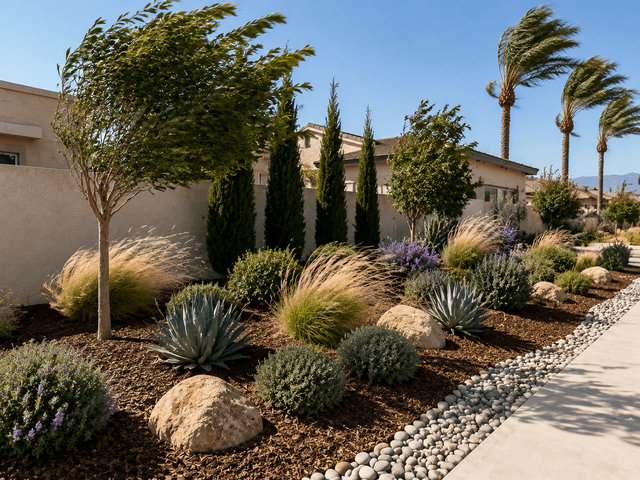
When the Santa Anas kick up, a beautiful backyard can turn into a cleanup project overnight — mulch scattered across the lawn, a young tree leaning, a shade sail flapping loose, and debris packed into every drain. The wind resistant landscaping Santa Ana homes need is more than a list of sturdy plants; it is a plan that accounts for how the site actually experiences those gusts. Exposure, soil, drainage, plant maturity, structural connections, privacy screens, and inspection access all matter, and two neighboring yards can behave completely differently depending on walls, rooflines, and gaps between buildings. This guide walks through wind-tough planting, windbreaks, pergola and shade-sail design, and correct tree staking — plus the honest reminder that no plant or structure is immune to extreme weather, so inspection stays part of the plan. BuildCal helps Glendale and Los Angeles homeowners design outdoor spaces that hold up when the wind arrives.
What Does Wind Resistant Landscaping Santa Ana Require?
Effective wind resistant landscaping Santa Ana properties often combines wind-tolerant planting, secure structural connections, flexible rather than brittle materials, protected irrigation, and a planned windbreak. Start by mapping the strongest exposure and the outdoor features most affected by gusts. Then choose plants for mature size and root conditions, design pergolas and shade systems for the site, stake young trees correctly, and keep loose materials contained. No structure or plant is immune to extreme weather, so inspection and maintenance remain part of the plan.
Why Are Santa Ana Winds Hard on Southern California Yards?
Santa Ana wind events can affect a yard in several ways at once. Dry air can increase plant stress, while strong gusts increase transpiration, shake branches, move containers, and push debris into drains. Homes in foothill and valley locations may experience very different conditions from a neighboring property because of topography, walls, fences, rooflines, and gaps between buildings.
Which Wind Tough Plants Work in SoCal?
Wind tough plants SoCal landscapes use should be selected for the actual exposure, not simply labeled "low maintenance." A plant may tolerate drought but still have brittle stems, a broad canopy, shallow roots, or foliage that catches gusts. Conversely, a flexible, well-rooted plant may perform well when established but need protection during its first seasons.
Plant establishment matters as much as plant selection. Young plants need a stable root zone, appropriate watering, and support while they develop. Avoid overwatering simply because a plant looks wind-stressed; inspect soil moisture and irrigation coverage first. A varied, low-maintenance plant palette for a Glendale garden is a useful starting point, as long as each species is also checked for branch flexibility and root conditions rather than drought tolerance alone.
How Does Windbreak Landscaping Protect a Yard?
Windbreak landscaping is a planned arrangement of plants, fencing, walls, berms, or structures that changes how wind moves through a property. The best arrangement depends on the direction, speed, height, and frequency of the wind as well as the areas that need protection. A windbreak should not simply form an impenetrable wall. Some permeability can reduce turbulence on the protected side, while a solid barrier may concentrate force at its edges. A layered privacy hedge or living screen can filter wind while preserving light and airflow better than a single solid barrier.
What Should You Know About Pergola Wind Rating?
Pergola wind rating is not a universal number that applies to every design. It depends on the structure's material, span, roof or shade system, post size, footing, connections, site exposure, and applicable design requirements. A pergola installed in a sheltered backyard may experience very different forces from one placed on an exposed hillside or beside a tall building. Reviewing how pergola permits and structural requirements work in Glendale early helps ensure the footings and connections match the site's exposure.
BuildCal's custom pergola design and installation services can be considered when a homeowner wants a shade structure coordinated with paving, planting, privacy, lighting, or outdoor living. The final approach should follow the site assessment, selected materials, manufacturer requirements, and any required approvals.
Is Shade Sail Wind a Problem?
Shade sail wind performance depends on the fabric, shape, tension, attachment points, post design, edge details, and exposure. A sail that is loosely installed may flap, stretch, or become noisy. A sail that is tensioned aggressively may transfer significant force to posts, walls, trees, or roof structures. The mounting points must be planned rather than improvised after the fabric is purchased.
How Should You Approach Staking Trees in Wind?
Staking trees wind planning is most useful during establishment or when a specific site condition requires temporary support. A tree that is tied too tightly or left supported too long may develop a weaker trunk response. A tree that is planted too deeply, watered poorly, or placed in compacted soil may lean regardless of the staking method.
Use flexible ties that do not cut into the trunk, allow appropriate movement, and are checked regularly. Stakes should be positioned to stabilize the root ball rather than immobilize the entire canopy. Remove or adjust temporary support according to the tree's establishment and the recommendation of a qualified arborist or landscape professional. Inspect after strong winds for root-ball movement, broken leaders, split branches, exposed roots, and damaged ties.
What to Check Before You Start a Wind-Resilient Yard Project
- Map exposure: Identify wind tunnels, open edges, slopes, corners, roof gaps, and areas where debris or dust collects.
- Inspect existing plants: Look for leaning trunks, weak branch unions, deadwood, exposed roots, broken ties, and branches contacting structures.
- Review structures: Check pergola posts, shade attachments, fences, gates, screens, umbrellas, containers, and outdoor equipment for movement or corrosion.
- Plan plant maturity: Account for the mature height, canopy, root zone, spacing, and irrigation needs of every tree, shrub, and vine.
- Protect drainage: Keep downspouts, drains, cleanouts, and irrigation components accessible and prevent windblown material from blocking them.
- Choose removable elements: Decide which sails, curtains, umbrellas, furniture, and containers should be secured, stored, or removed before a wind event.
- Confirm approvals: Check city, HOA, utility, structural, and manufacturer requirements before building a new pergola, fence, wall, or shade system.
Which Wind-Resilient Improvements Fit Different Yards?
| Project type | Typical scope of work | Permit or HOA approval usually required? | Key considerations |
|---|---|---|---|
| Wind-tolerant planting | Plant selection, soil preparation, irrigation, spacing, pruning, and layered screening | Usually depends on the property and HOA; tree or utility conflicts may require review | Mature size, root zone, water needs, and branch structure matter |
| Pergola or gazebo | Design, posts, footings, connections, shade elements, paving, and lighting coordination | May depend on structure, attachment, height, property, city, and HOA requirements | Confirm site-specific wind design, uplift, access, and maintenance |
| Shade sail | Fabric selection, engineered attachment points, posts, tensioning, and drainage planning | Varies with posts, footings, attachments, and local or HOA rules | Design for removal, inspection, fabric tension, and wind exposure |
| Windbreak or privacy screen | Layered planting, open fencing, walls, grading, drainage, and access planning | Can vary with wall, fence, grading, setbacks, and HOA requirements | Avoid creating a rigid sail or blocking drainage and maintenance access |
What Mistakes Cause Wind Damage to Repeat?
One mistake is choosing plants by drought tolerance alone. Another is installing a dense screen without considering its mature size, edge turbulence, irrigation, or structural support. Homeowners may also bolt a shade feature to an unverified wall, leave a fabric sail installed during severe weather, or use rigid ties that damage a young tree.
Ignoring the ground beneath a structure can be just as costly. Loose fill, shallow footings, poor compaction, clogged drains, and water collecting beside posts can reduce performance, and recognizing how weak footings and drainage lead to structural failure shows why the base matters as much as the visible frame. Landscape and hardscape quality depends on what is below the visible finish: grading, drainage, base preparation, compaction, and properly coordinated connections.
How Do You Choose a Wind-Resilient Landscaping Contractor?
Look for a licensed landscape contractor who asks about exposure, wind direction, existing structures, soil, drainage, utilities, plant maturity, and maintenance. The proposal should distinguish landscape work from electrical, structural, arboricultural, or permitting tasks that require other qualified professionals. Request an itemized scope covering demolition, grading, irrigation, planting, footings, materials, connections, cleanup, and follow-up care.
How BuildCal Landscape Helps With Santa Ana Wind Planning
BuildCal Landscape serves Glendale, Los Angeles, and surrounding Southern California communities with design-informed landscaping, pergolas, planting, irrigation, fences, lighting, hardscape, and outdoor-living work. Since 2012, the company has approached outdoor projects as connected systems rather than isolated purchases. The founder has a bachelor's degree in landscape architecture from Cal Poly Pomona and prior project-management experience. Review its landscaping services in Los Angeles for related work, and its list of drought-tolerant, wind-aware planting for palette ideas that also hold up to gusts.
Steps to Start Your Wind-Resilient Design With BuildCal
- Schedule a wind-resilient design consultation. Share the problem areas, recent damage, desired shade, privacy goals, and outdoor-living plans.
- Assess the site. Review wind exposure, sun, soil, grades, drainage, trees, structures, utilities, access, and existing irrigation.
- Develop a coordinated concept. Compare wind-tough plants, windbreaks, pergolas, shade sails, fencing, hardscape, lighting, and maintenance options.
- Confirm professional coordination and approvals. Identify electrical, structural, arboricultural, manufacturer, city, or HOA requirements before construction.
- Install and maintain. Complete the agreed work, test irrigation and drainage, inspect connections, establish plant care, and plan seasonal reviews.
Frequently Asked Questions About Wind Resistant Landscaping Santa Ana
What Does Wind Resistant Landscaping Santa Ana Include?
Wind resistant landscaping Santa Ana homeowners need should combine wind-tolerant plants, appropriate spacing, secure structures, protected irrigation, controlled drainage, and a maintenance plan. Start by mapping the strongest exposure and identifying the features that repeatedly fail. A site-specific design may include layered planting, an open windbreak, a properly supported pergola, removable shade, tree staking during establishment, or changes to paths and hardscape.
What Are Good Wind Tough Plants for SoCal Yards?
Wind tough plants SoCal yards can use should be selected for mature size, flexible branching, root conditions, soil depth, sun, irrigation, and the property's exposure. Drought tolerance alone is not enough. A plant that handles dry weather may still have brittle stems or a canopy that catches wind. A landscape professional can create a varied palette and place larger plants where their mature growth will not conflict with structures.
How Do I Evaluate a Pergola Wind Rating?
Pergola wind rating should be evaluated from the complete system, including materials, spans, posts, footings, roof or fabric, fasteners, site exposure, and manufacturer or professional design requirements. There is no single rating that applies to every pergola. Ask how the structure handles uplift and lateral force, whether shade additions change the load, and how the installation complies with applicable approvals. Exposed hillside sites may need more careful review.
Are Shade Sails Safe in Santa Ana Winds?
Shade sail wind performance depends on fabric, shape, tension, attachment points, posts, and exposure. A sail may need to be removed or retracted during strong wind events, depending on the product and design. Do not attach one to an unverified tree, fence, or wall. Plan the mounting system, drainage, inspection, and removal process before buying the fabric, and follow the manufacturer's instructions for operation and weather limits.
How Should I Handle Staking Trees in Wind?
Staking trees wind planning is usually intended to stabilize a young tree or root ball while it establishes, not to immobilize the trunk permanently. Use flexible ties, avoid girdling, allow appropriate movement, and inspect the system after strong winds. The tree also needs correct planting depth, soil preparation, watering, and enough room for mature roots and canopy. An arborist or qualified landscape professional can advise on site-specific support.
Does Windbreak Landscaping Require a Solid Wall?
Windbreak landscaping does not always require a solid wall. Layered plants, open fencing, screens, berms, and carefully placed structures may filter wind while preserving light, airflow, views, and maintenance access. A solid barrier can create turbulence at its edges or impose substantial loads on posts and footings. Choose the approach based on wind direction, slope, desired protection, drainage, privacy, fire-wise needs, and local requirements.
Start Your Wind-Resilient Yard Plan Today
If you need wind resistant landscaping Santa Ana homeowners can plan around seasonal exposure, contact BuildCal Landscape for a wind-resilient design consultation or call +1 (818) 303-1570. BuildCal can help you coordinate wind-tough plants, pergolas, shade, screening, tree support, drainage, and outdoor-living features for your Glendale or Los Angeles property.
Thinking about a new outdoor space?
We’d love to hear your ideas. Let’s explore what’s possible—no pressure, just a friendly conversation.
Give us a call:
+1 (818) 303-1570
Frequently Asked Question
CAN YOU MAINTAIN MY LANDSCAPE AFTER THE FINAL INSTALLATION?
Yes – We have a complete team of highly trained maintenance professionals to provide weekly, daily or even monthly services for your property. While a growing number of people have become dissatisfied with the poor quality of the typical ‘mow, blow, and go’ service, we take the time to maintain your property to perfection while providing a reliable service you can trust.